
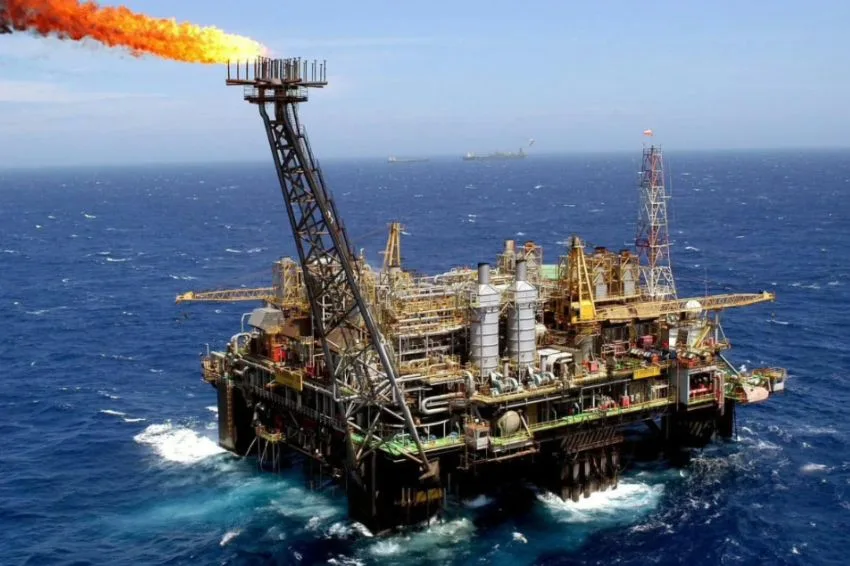
Gross greenhouse gas emissions in Brazil fell 16,7% in 2024, reaching 2,145 billion tons of carbon dioxide equivalent, compared to 2,576 billion in 2023. This is the second largest drop ever recorded since measurements began in 1990, and the largest since 2009, when the decline was 17,2%.
The data is part of the 13th edition of the SEEG (System for Estimating Greenhouse Gas Emissions), from the Climate Observatory, released this week. Even with the significant reduction, the study warns that Brazil remains the fifth largest emitter on the planet and that deforestation is still the main climate villain.
Overall, the country emits more gross carbon from deforestation alone than Saudi Arabia and Canada combined, two of the world's largest oil producers. Among sectors, livestock farming continues to lead in emissions—whether through enteric fermentation of methane or through energy use and deforestation.
The activity accounts for 51% of national emissions, equivalent to 1,1 billion tons of CO₂e. If it were a country, "Brazilian beef" would be the seventh largest emitter in the world, ahead of Japan. Next come agriculture (19%), freight transport (6%) and passenger transport (5%). Together, agriculture and deforestation account for two-thirds of Brazil's emissions.
Click here and check out the full study.
Second hottest year on record
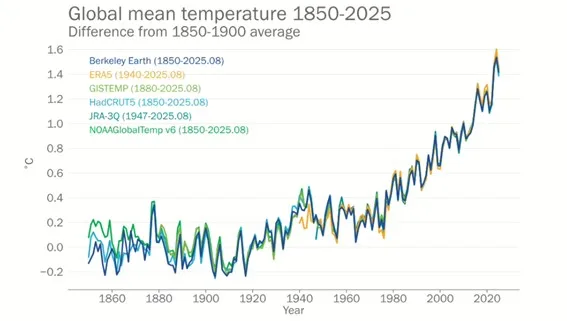
Despite the drop in emissions, the planet continues to warm. According to the WMO (World Meteorological Organization), 2025 is on track to become the second warmest year on record, maintaining the trend of extreme heat observed in the last decade.
The bulletin, released by the UN Agency on the eve of COP30 in Belém (PA), shows that concentrations of greenhouse gases and heat in the oceans have reached unprecedented levels. Glaciers and polar ice caps also continue to retreat at an accelerated rate.
“This unprecedented sequence of high temperatures, combined with the record increase in greenhouse gas levels last year, makes it clear that it will be virtually impossible to limit global warming to 1,5°C in the coming years without temporarily exceeding that target,” warned Celeste Saulo, Secretary-General of the WMO.
She considered, however, that it is still possible to reverse the scenario. "The science is equally clear: it is still entirely possible and essential to reduce temperatures to 1,5°C by the end of the century," she added.
all the content of Canal Solar is protected by copyright law, and partial or total reproduction of this site in any medium is expressly prohibited. If you are interested in collaborating or reusing part of our material, please contact us by email: redacao@canalsolar.com.br.




Comments
Comments are moderated before publication.Comments should be respectful and contribute to a healthy debate. Offensive comments may be removed. The opinions expressed here are those of the authors and do not necessarily reflect the views of the author. Canal Solar.