
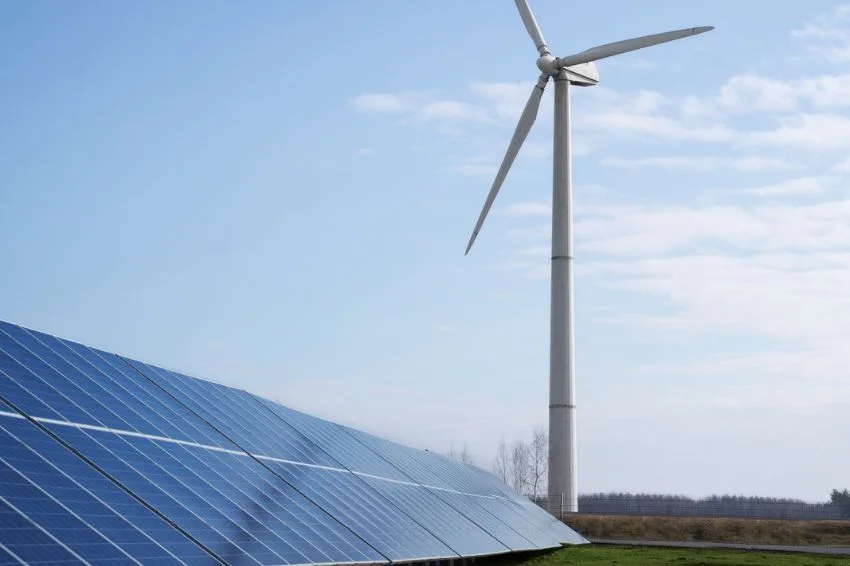
Brazil resumed the process of joining IRENA (International Renewable Energy Agency) during an event held by the entity in Abu Dhabi, in the United Arab Emirates, last Saturday (11).
The measure is seen by the MME (Ministry of Mines and Energy) as a significant advance in Brazilian energy policies, aligning the country with the main international efforts to face the challenges of climate change.
The process had been interrupted by the previous government. The measure reaffirms Brazil's commitment to the energy transition and the strengthening of international cooperation in renewable energy.
With this accession, Brazil is expected to have greater influence in global discussions on renewable energy and a greater contribution to the development of new technologies and sustainable practices in the energy sector.
Global Coalition for Energy Transition Planning and Energy Security
In addition to formalizing membership of IRENA, during his meeting with IRENA Director General Francesco La Camera, Minister Alexandre Durante delivered a formal letter inviting the entity to serve as secretariat for the Global Coalition for Energy Transition Planning and Security.
The coalition is a direct result of discussions held during the Brazilian presidency of the G20 in 2024, with the aim of promoting collaborative solutions to plan the global energy transition in an integrated and sustainable manner, ensuring energy security and universal access to clean and renewable energy sources.
The Coalition will be officially launched in Rio de Janeiro in June and aims to create a space for dialogue and joint action between countries, companies and non-governmental organizations.
all the content of Canal Solar is protected by copyright law, and partial or total reproduction of this site in any medium is expressly prohibited. If you are interested in collaborating or reusing part of our material, please contact us by email: redacao@canalsolar.com.br.



Comments (1)
Comments are moderated before publication.Comments should be respectful and contribute to a healthy debate. Offensive comments may be removed. The opinions expressed here are those of the authors and do not necessarily reflect the views of the author. Canal Solar.
Brazil's accession to IRENA (International Renewable Energy Agency) can be seen as a step forward in the energy transition agenda, but this stance contradicts several domestic policies. The increase in taxes on the import of solar modules, for example, results in higher costs for the adoption of renewable energy, directly affecting the development of solar energy in the country. This type of measure goes against the discourse of encouraging the energy transition, as it makes clean technologies more expensive and less accessible.
Furthermore, government intervention in the energy market, especially in the Free Contracting Environment (ACL), to benefit financial speculators, creates distortions and insecurity, harming competitiveness and attracting investment in the sector. Instead of creating a more efficient and transparent market, this stance contributes to speculation, moving the country away from sustainability goals.
Another crucial point is the lack of integration between regulatory agencies, such as the ANEEL, CCEE, ANA, INMET and ONS, which prevents more efficient and coordinated management of the electricity sector. The lack of harmonized regulations makes it difficult to implement energy transition policies, making the regulatory environment even more complex.
Therefore, although joining IRENA is a positive move in terms of its international image, Brazil needs to align its domestic policies with its commitments, ensuring an effective and conflict-free energy transition. Otherwise, the country could find itself trapped in a cycle of empty speeches with no real impact.