
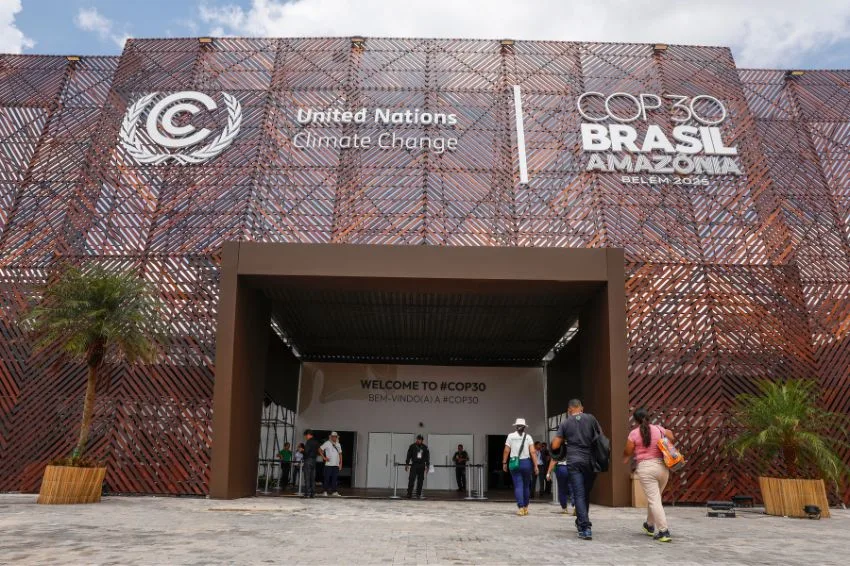
This is the second time I've participated in a COP. The first was in Dubai. Now, in Belém (PA). It wasn't planned. It was last minute, amidst a lot of work with partners 3E and Revolusolar. Upon arriving, I was truly moved by what I found.
We spent two years hearing that Belém lacked the capacity, that Brazil wouldn't be able to handle it, that it would be a fiasco. The narrative was always the same: to disqualify. And, ironically, improvisation became a virtue.
The city welcomed, functioned, and showcased what much of the country stubbornly refuses to see. Belém faces challenges familiar to any region experiencing structural inequality: airport, logistics, intense heat.
Still, what I found here was enchanting. The hospitality of the people, the energy of the streets, life happening in every corner. After Dubai, with its power and ostentation, landing in the Amazon reveals a clear difference: here there are people, there is diversity, there is reality.
A COP It is divided into two areas. The Blue Zone is the restricted diplomatic space where governments and delegations negotiate agreements. It has rigorous accreditation, security, and clear access barriers.
The Green Zone is an open space where civil society, organizations, communities, universities, businesses, and territorial initiatives meet to present ideas and discuss real solutions. And it was precisely in the Green Zone that the difference between Dubai and Belém became evident.
In Dubai, access to the Green Zone involved complex accreditation, queues, entry controls, and even the need to be affiliated with a particular country or organization. In Belém, the Green Zone is vibrant and open.

Self-managed rooms, free circulation, people from everywhere. Ministers and authorities sharing the same space as children, indigenous leaders, residents of remote communities, representatives from California, and river dwellers from the Amazon. The city brought the people into COP, and that changes everything.
The advancement of storage
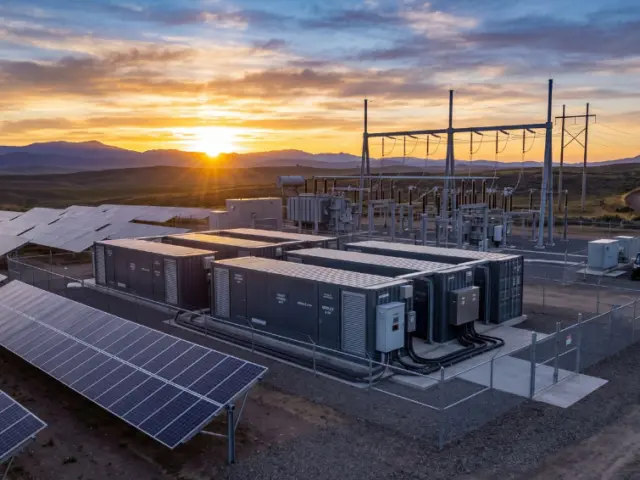
Even before the start of COP, we had already experienced important weeks for the Brazilian electricity sector and for our energy transition. MP 1.304 / 2025 It provided structural foundations for modernizing the sector and advanced on a point that had been expected for years: recognizing energy storage within the official architecture of the electrical system.
This measure removes batteries from regulatory limbo and creates conditions for them to be used in grid reinforcement, demand modulation, integration with renewables, and support for isolated regions.
This is a step forward because it puts storage on the agenda and paves the way for unlocking projects, even if the operational rules still depend on further regulation.
This movement, coupled with the announcement of Battery Capacity Reserve AuctionThis shows that the country is beginning to treat storage as a strategic part of its infrastructure.
At COP, these themes gained prominence. The discussion about energy policy, transition, and demand appeared in virtually every forum. Brazil needs to attract growth to consume the renewable energy it already produces. We need industry, data centers, new production chains. That's what drives demand and brings rationality to the system.
Three points became evident: Batteries as a central element of energy security; demand as the engine of development; and flexibility as the basis for a competitive market, with prices that vary according to the time of day and bring efficiency.
Belém also provided an opportunity to revisit our trajectory. The Proálcool program is 50 years old. Now, initiatives like MOVER point towards hybrid routes between ethanol and batteries. The Brazilian energy transition has a history, a foundation, and the potential to continue evolving consistently.
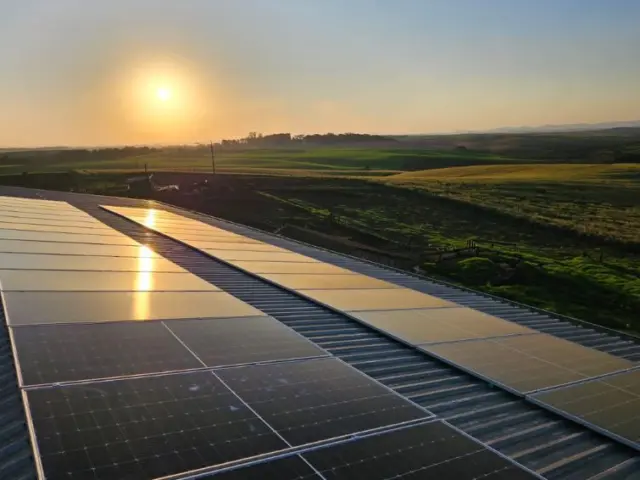
Another striking point was the presence of decentralized solutions. Universalization, hybridization of power plants in the Amazon, solar energy with batteries for isolated communities, economic development projects based on the local bioeconomy. For those who live in remote regions, transition is not just talk. It's survival. And stability depends directly on energy storage.
The work of our partner FAS (Amazonas Sustainable Foundation), with whom we collaborate on the Sempre Luz Project, bringing energy to remote Amazonian communities using UCB Power battery systems, reinforced this perception with a survey conducted among 160 riverside communities.
Three questions guided the study: What is climate change? What is the biggest challenge? And what is the solution? Most of the answers pointed to "energy." And clean energy. The result became a document delivered to the president of COP.
Brazilians are divided on the importance of COP30 for the country, study shows.
And it is for all these reasons that I conclude this experience with a simple conviction: Belém did not change because of the COP. The COP changed because of Belém.
Those who complain about the heat need to remember that Belém has always been hot. You can't discuss climate change without experiencing the discomfort. Possibly, inside the Blue Zone parking area, the air conditioning didn't get a break.
But at some point, all the suits had to feel the heat, and change only happens when there's discomfort. Belém made everyone feel that.
I leave here feeling emotional and proud. And with even more conviction that the head doesn't think where the foot doesn't tread.
The opinions and information expressed are the sole responsibility of the author and do not necessarily represent the official position of the author. Canal Solar.


Comments
Comments are moderated before publication.Comments should be respectful and contribute to a healthy debate. Offensive comments may be removed. The opinions expressed here are those of the authors and do not necessarily reflect the views of the author. Canal Solar.