
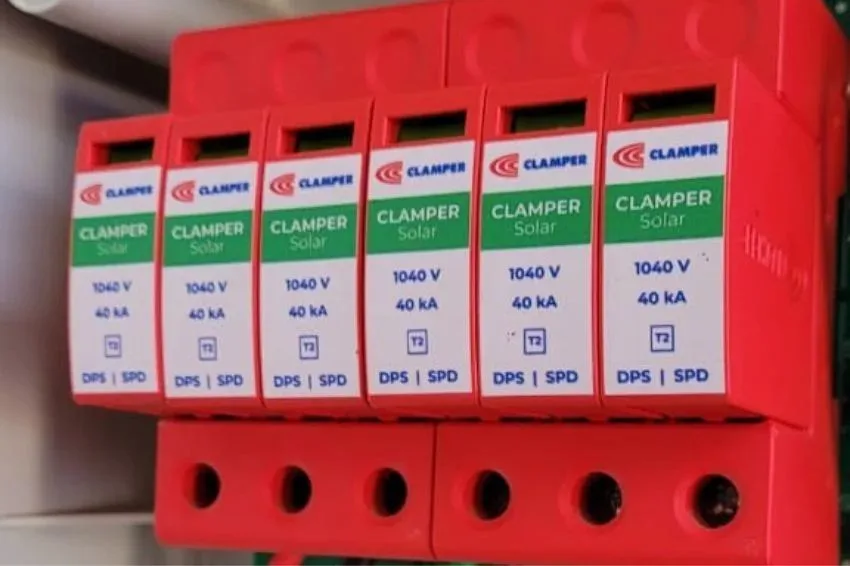
CLAMPER has just launched its new technical e-book focused on protection against electrical surges in photovoltaic systems, with the aim of supporting engineers, integrators, designers and installers in the correct specification and installation of SPDs (Surge Protection Devices).
The company brings together in its new material a compilation of technical and laboratory evidence, field examples, and best installation practices to consolidate surge protection as a strategic, not optional, element in distributed generation (DG) projects and large-scale photovoltaic plants.
What the e-book covers
Across 15 chapters, the material presents, in a didactic and technical way, the main aspects related to electrical surges in photovoltaic systems. Among the central themes are:
- The concept of electrical surges, their characteristics, and differences compared to temporary overvoltages;
- The main sources of surges in PV systems, including direct discharges, indirect discharges, and switching surges;
- The direct impacts on inverters, modules, cables, and monitoring systems, with data showing failures after only a few pulses when there is no adequate protection;
- A technical analysis of the myth of "internal protection" in inverters, demonstrating through laboratory tests that it does not replace the use of external surge protection devices (SPDs).
- The function, operation, and technical selection parameters of surge protection devices (SPDs), both on the DC (direct current) and AC (alternating current) sides;
- Coordination between surge protection devices (SPDs), equipotential bonding, and integration with lightning protection systems (LPS).
- Key applicable technical standards and regulations, such as ABNT NBR 5419, NBR 16690, IEC 61643 and the Normative Resolution. ANEEL No. 1000;
- Good installation practices, preventive maintenance, and prevention of recurring failures;
- Economic impact of protection, showing that investment in surge protection devices (SPDs) represents only 1% to 3% of the system's value, preventing losses up to 20 times greater.
The material also presents scientific studies and experimental evidence, including tests demonstrating that inverters without external surge protection devices (SPDs) can fail after 1 to 7 surges, while protected systems withstood more than 100 simulated impulses.
all the content of Canal Solar is protected by copyright law, and partial or total reproduction of this site in any medium is expressly prohibited. If you are interested in collaborating or reusing part of our material, please contact us by email: redacao@canalsolar.com.br.




Comments
Comments are moderated before publication.Comments should be respectful and contribute to a healthy debate. Offensive comments may be removed. The opinions expressed here are those of the authors and do not necessarily reflect the views of the author. Canal Solar.