
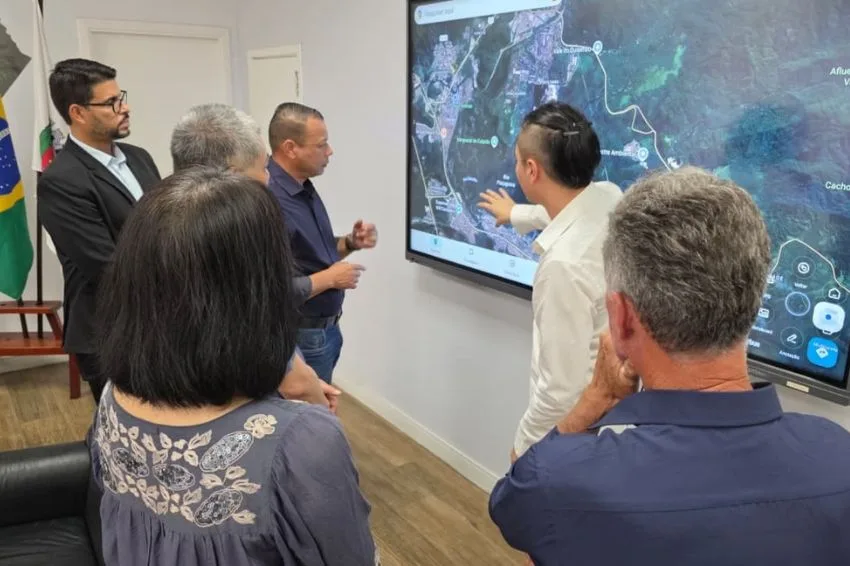
The city of Cubatão (SP) is studying the implementation of a WTE (Waste-to-Energy) plant that will transform urban solid waste into electricity and thermal steam using WTE (Waste-to-Energy) technology.
The project will be installed in an area that formerly housed a landfill and aims to transform the site into a circular economy hub focused on serving the industrial sector.
The initiative is part of the municipality's future Sustainable Energy Hub and runs parallel to negotiations for the installation of a green hydrogen plant in the city.
To make the plant viable, the city government began negotiations with the China Civil Engineering Construction Corporation, a partner of SUS Environment.
The proposal envisions the use of advanced thermal efficiency technologies and filtration systems to convert urban waste into energy for the Cubatão Industrial Complex and the future Port-Industry Corridor.
According to César Nascimento, the city's mayor, there is already coordination with the state and federal governments to make the projects viable.
“We are already in advanced talks to bring the green hydrogen industry to the city, with the support of the State and Federal governments. Now we are also advancing on another promising front, aligned with global trends,” he stated.
Wang Kay, manager of the Technology and Projects Department at China Civil Engineering Construction Corporation, says that China has practically eliminated its landfills after building more than six hundred Energy Recovery plants, similar to the one that could be installed in Cubatão.
“It is a safe and globally consolidated process. Our technology already operates on a large scale in several countries in Asia and Europe, converting waste into valuable resources,” the executive stated.
The municipality is still awaiting evaluation of the implementation model, which may occur through a PPP (Public-Private Partnership), in addition to the necessary environmental licensing and technical analysis stages.
all the content of Canal Solar is protected by copyright law, and partial or total reproduction of this site in any medium is expressly prohibited. If you are interested in collaborating or reusing part of our material, please contact us by email: redacao@canalsolar.com.br.



Comments
Comments are moderated before publication.Comments should be respectful and contribute to a healthy debate. Offensive comments may be removed. The opinions expressed here are those of the authors and do not necessarily reflect the views of the author. Canal Solar.