
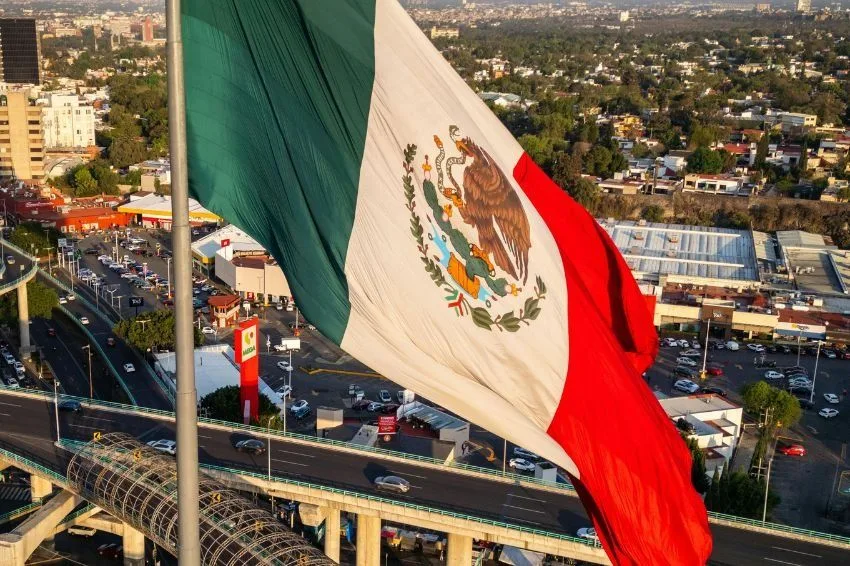
Mexico has an electricity sector with a strong state presence, but it has been undergoing reforms to allow greater private participation and expansion of renewable energy. In recent years, the country has sought to balance security of supply, growth of clean energy sources, and investments in electrical infrastructure.
Historically centralized system
Historically, the generation, transmission, and distribution of energy in Mexico were controlled by state-owned companies, especially the CFE (Comisión Federal de Electricidad). This centralized model allowed for uniform coordination but limited competition and the entry of private investors.
In recent years, reforms have opened the market to private companies in generation, allowing for large-scale solar, wind, and hydroelectric power projects, while transmission and distribution remain heavily regulated.
Matrix in transformation
Mexico has a diversified electricity grid:
- Traditional hydroelectric power plants;
- Natural gas and coal-fired power plants;
- Renewable energy generation is growing rapidly, primarily solar and wind.
The abundance of solar radiation in regions like the Sonora Desert and the wind potential of the Isthmus of Tehuantepec place Mexico among the Latin American leaders in clean energy generation.
Competitive generation and private contracts
Private power generation in Mexico is primarily conducted through auctions and long-term contracts. Private companies compete in the regulated market, while CFE maintains a central role in operating the system and supplying regulated consumers.
The role of CFE and Cenace
The operation of the electrical system and market coordination are the responsibility of... Cenace (National Energy Control Center), responsible for:
- Dispatch from power plants;
- To guarantee security and continuity of supply;
- Managing the short-term market;
- Plan the expansion of the system.
Cenace acts as an independent technical operator, although the government retains strong regulatory influence.
Regulated transmission and distribution
Electrical transmission is controlled by CFE, with public and private investments in high-voltage lines. Distribution is also regulated, serving both regulated and free consumers, allowing large consumers to negotiate direct supply contracts.
Energy regulation and policy
The Mexican electricity sector is regulated by bodies such as the SENER (Energy Secretariat) and CRE (Energy Regulatory Commission), which define expansion policies, tariffs, and operating rules. Recent reforms have sought to increase the share of renewables and system efficiency, although issues of centralization still persist.
Pricing and tariff formation
Energy tariffs reflect the costs of generation, transmission, and distribution, with variations between regulated and free market consumers. Private contracts guarantee predictable revenue for investors and encourage the expansion of renewable energy sources.
Challenges and prospects
Despite the growth of renewables, the Mexican electricity sector faces challenges such as:
- To ensure a balance between state and private generation;
- Expand and modernize the transmission network;
- Integrate storage and intermittent sources;
- Maintaining reliability in the face of increasing demand.
Mexico is making slow progress in transitioning to a cleaner and more competitive energy matrix, attempting to reconcile centralized energy policy with the expansion of renewable energies.
all the content of Canal Solar is protected by copyright law, and partial or total reproduction of this site in any medium is expressly prohibited. If you are interested in collaborating or reusing part of our material, please contact us by email: redacao@canalsolar.com.br.



Comments
Comments are moderated before publication.Comments should be respectful and contribute to a healthy debate. Offensive comments may be removed. The opinions expressed here are those of the authors and do not necessarily reflect the views of the author. Canal Solar.