
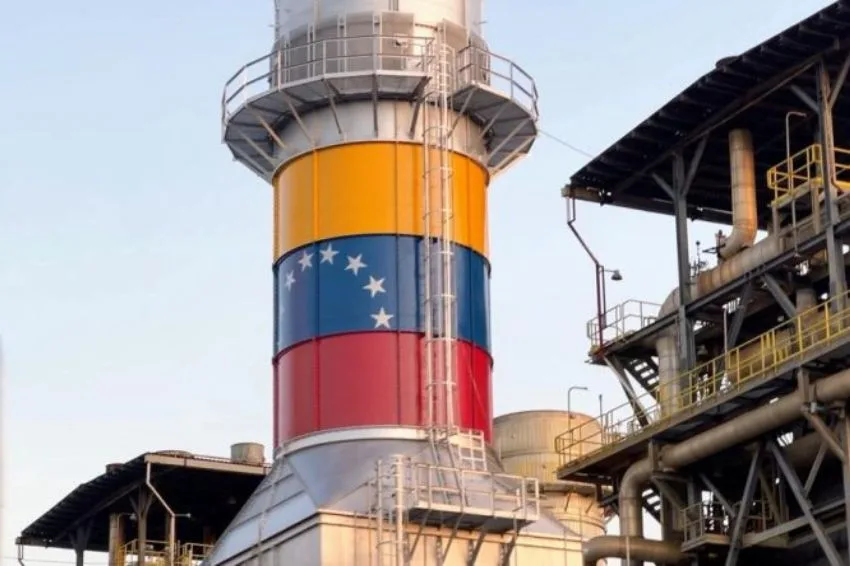
The United States' intervention in Venezuela and the capture of President Nicolás Maduro have placed the South American country once again at the center of the international geopolitical debate.
This episode marks a significant break in a scenario of more than a decade of political isolation, economic sanctions, and severe institutional deterioration.
Amid discussions about economic reconstruction, state reorganization, and the possible reopening to foreign investment, another point that is now being analyzed more closely is the Venezuelan electricity sector.
This is because the local energy infrastructure is currently one of the country's main bottlenecks, with recurring blackouts and prolonged rationing becoming part of the population's daily routine.
A matrix concentrated on hydroelectric power plants.
Despite possessing one of the world's largest oil reserves, Venezuela operates a centralized electrical system that is heavily dependent on hydroelectric power.
Data World Fact Book, from the CIA (Central Intelligence AgencyData indicates that 77,6% of the electricity generated in Venezuela in 2022 came from hydroelectric plants, while 22,3% came from fossil fuels such as oil and natural gas.
More recent surveys reinforce this scenario. According to Low Carbon Power, which compiles data from international databases, such as the EIA (Energy Information AdministrationApproximately 78% of the electricity consumed in the country in 2023 came from hydroelectric sources, while 15% came from natural gas, with the remainder coming from other fossil fuel sources.
The main pillar of this energy matrix is the Simón Bolívar Hydroelectric Power Plant, known as Guri, located on the Caroní River in the state of Bolívar, which today accounts for more than 70% of all electricity consumed in the country – making the system highly vulnerable to operational failures, prolonged droughts, and maintenance problems.
A thermal power plant that is not fulfilling its purpose.
Although Venezuela has a significant thermal power plant fleet, these plants operate with low availability. Lack of investment, maintenance difficulties, obsolete equipment, and limitations in fuel supply – paradoxical in a country rich in oil and gas – mean that thermal generation operates well below its installed capacity.
As a consequence, the Venezuelan electrical system has low operational redundancy, which helps explain the frequency and scale of blackouts recorded in recent years. When hydroelectric generation fails or is reduced, there is not enough thermal capacity to compensate.
Who governs the electricity sector in Venezuela?
Unlike the Brazilian model, which has multiple independent bodies – such as the ANEEL (National Electric Energy Agency) and the ONS (National System Operator) - the Venezuelan electricity sector is highly centralized and state-owned.
The main body responsible is the MPPEE (Ministry of Popular Power for Electric Energy), created in 2009 to concentrate national energy planning and policy.
The operation of the system is almost entirely in the hands of the state-owned Corpoelec (Corporación Eléctrica Nacional) – which controls everything from large hydroelectric and thermoelectric power plants to transmission and distribution networks, as well as billing and customer service.

Long and fragile transmission
Most of Venezuela's hydroelectric power generation is concentrated in the southern region of the country, especially in the state of Bolívar, while the main consumption centers are in the north and west, in municipalities such as Caracas and Maracaibo.
Because of this, the energy travels long distances through high-voltage transmission lines, also operated exclusively by Corpoelec.
However, the lack of adequate maintenance of these lines contributes to frequent failures and instability in supply. The government of Nicolás Maduro even announced preventive maintenance targets, but the practical results are still limited.
A collapsing infrastructure
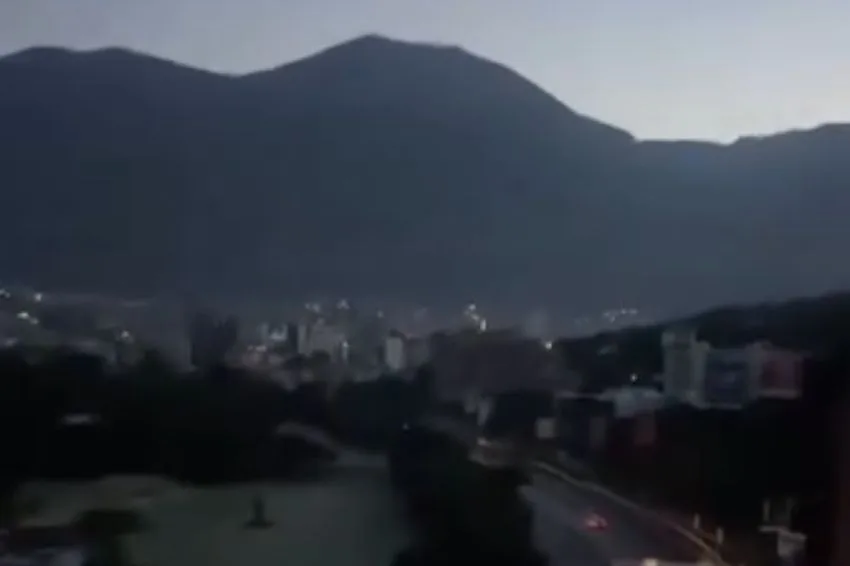
Despite being designed as a robust system, the Venezuelan electricity sector is currently facing a deep structural crisis, with daily power outages across much of the country.
To try and prevent larger collapses, the government implemented "load management" plans, with scheduled rationing of about four hours a day in different regions. Even so, these cuts do not prevent unscheduled blackouts.
In August 2024, unofficial estimates pointed to around 200 daily blackouts across the country. In March 2025, the government even ordered public offices to operate only half-days, citing a "climate emergency" that had reduced reservoir levels.
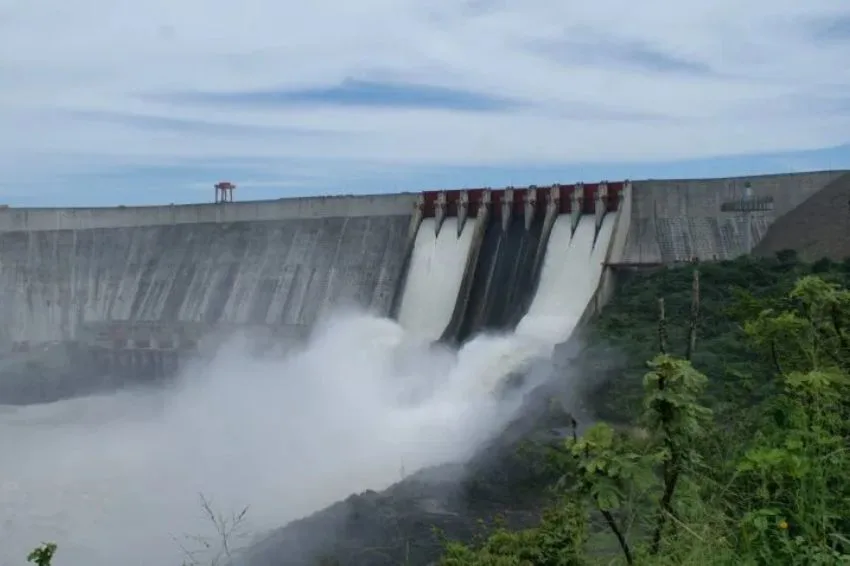
The Guri hydroelectric plant: a strategic giant and a point of weakness.
The Guri hydroelectric plant, with an installed capacity of 10.200 MW, is one of the largest in the world. Its construction began in the 1960s, with major expansion phases in 1974 and 1986, and it was a landmark in Venezuelan electrification.
However, despite its strategic importance, the plant has suffered for years from inadequate maintenance, obsolete equipment, and a lack of investment. International analyses indicate that the problems are not due to sabotage, as frequently alleged by the government, but rather to neglect of infrastructure, corruption, and loss of technical capacity.
How did the Venezuelan electricity sector collapse?
The collapse of the Venezuelan electrical system is the result of a combination of structural, political, and economic factors, accumulated over decades and intensified during the government of Hugo Chávez, which lasted from 1999 until his death in 2012.
The crisis did not arise suddenly, but was gradually built up by decisions that compromised the governance, financing, and technical capacity of the sector.
One of the milestones in this process occurred in 2007, when the Venezuelan government nationalized the electricity sector, creating the state-owned company Corpoelec. This measure resulted in the exit of private companies and the concentration of energy generation, transmission, and distribution activities under the direct control of the State.
Following nationalization, there was a sharp decline in investments in infrastructure maintenance and modernization. Resources allocated to the sector were frequently misallocated or diverted, while power plants, transmission lines, and substations began operating with obsolete equipment and insufficient maintenance.
Meanwhile, the excessive reliance on the Guri hydroelectric dam intensified. The overload of the complex, combined with prolonged periods of drought and the absence of reliable complementary sources, increased the system's vulnerability to large-scale failures.
Another critical factor was the loss of human capital. Extremely low wages, institutional instability, and precarious working conditions led to the departure of thousands of engineers, technicians, and specialists from Corpoelec, compromising operational capacity and emergency response in the electrical system.

The prolonged freeze on energy tariffs also contributed to the collapse. By eliminating the generation of sufficient revenue to cover operating costs and investments, the tariff policy created a cycle of chronic underfunding, deepening the financial deterioration of the state-owned utility.
Finally, the crisis was also exacerbated by international sanctions, which limited the Venezuelan government's access to external financing, equipment, spare parts, and technology. This context further reduced the country's capacity to invest in the recovery of the electricity sector.
What changes in Venezuela's electrical system after Maduro's capture?
In an interview with Canal SolarAccording to Nivalde Castro, professor at the Institute of Economics and coordinator of GESEL (Study Group of the Electric Sector) at UFRJ (Federal University of Rio de Janeiro), it is still too early for definitive conclusions, but some signs allow us to draw hypotheses about the future of the sector.
"It's very difficult to analyze a topic of this magnitude in such a short space of time. What we're doing here is almost an exercise in prediction, working with hypotheses that may or may not come true," he stated.
According to the professor, the strategy adopted by the United States differs from previous interventions in countries like Iraq and Afghanistan. Instead of completely dismantling the local power structure, the action sought to preserve part of the Venezuelan institutional apparatus to avoid a prolonged political vacuum.
"The United States has demonstrated unparalleled military and planning capabilities, but at the same time, it has signaled that it does not intend to repeat the mistake of destroying the existing structure and trying to create a new government from scratch," he assessed.

According to Castro, the indication of a conciliatory stance, with Chavismo remaining in power—albeit under a new direction—suggests a strategic rapprochement with Washington.
"What is emerging is a Chavismo that is ceasing to be leftist and is beginning to operate under a logic more aligned with American interests," stated the coordinator of GESEL.
From an energy standpoint, the expectation is that the sector will occupy a central position on the investment agenda. Oil should be the top priority, followed by the electricity sector.
"The United States now possesses the world's largest oil reserves and expands its influence over price formation in the international market, with American companies leading production and exports," he highlighted.
Castro's assessment is that investments in infrastructure tend to reduce historical problems, such as blackouts. "The electricity sector should receive significant attention, although not at the same level as the oil sector. The trend is towards a gradual improvement in the reliability of the system," he said.
The professor cautions, however, that this is a preliminary assessment. "There is, obviously, a risk that we could be completely wrong. But looking ahead and anticipating scenarios is part of our role," he concluded.
all the content of Canal Solar is protected by copyright law, and partial or total reproduction of this site in any medium is expressly prohibited. If you are interested in collaborating or reusing part of our material, please contact us by email: redacao@canalsolar.com.br.


Comments
Comments are moderated before publication.Comments should be respectful and contribute to a healthy debate. Offensive comments may be removed. The opinions expressed here are those of the authors and do not necessarily reflect the views of the author. Canal Solar.