
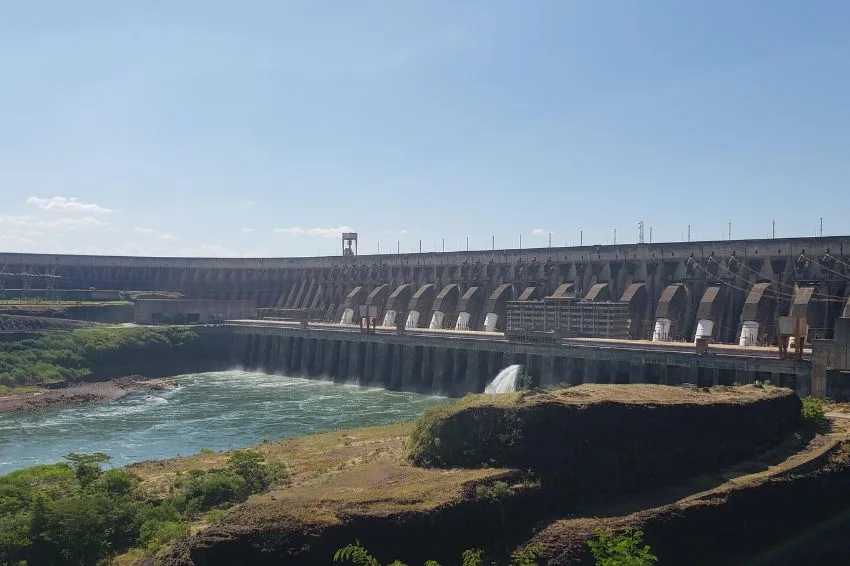
After a four-year cycle dedicated to preparatory activities, executive projects, and logistical mobilization, Itaipu Binacional anticipates the scheduled shutdown this year of the first of its 20 generating units for effective technological upgrade.
According to a survey prepared at the request of Canal SolarThe company highlights that this milestone opens a new phase of the PAT (Technological Upgrade Plan), which foresees an average modernization rate of two generating units per year, ensuring that the company maintains its high performance levels through the transition to state-of-the-art digital systems.
Centralized Control
One of the main focuses of the work at this time is the modernization of the centralized control system, considered the "brain" of the hydroelectric plant. The project includes the implementation of the new SCADA (supervisory control and data acquisition) system and the RTA (Automation Technology Network), a highly complex industrial communication and control arrangement.
These systems are vital for the real-time operation of the generating units and for integration with the electrical systems of Brazil and Paraguay.
The transition is very meticulous, since equipment that, for the most part, still operates with analog technology since the plant's inauguration in 1984, will give way to integrated digital systems.
The scope includes the replacement of control and protection systems not only for the generating units, but also for the gas-insulated substation, the spillway gates, and the dam.
Furthermore, the auxiliary services, the metering and billing system, and all the plant's power and control cables will be renewed. In contrast, heavy electromechanical components, such as turbines, rotors, and stators, will remain the same, as they are in excellent condition and far from the end of their service life.
Secure Rooms
To support this new digital architecture, the plant is in the advanced stages of implementing what are called Secure Rooms. These are controlled, highly available physical environments specifically designed to house the servers for the SCADA, RTA, and communication systems.
These spaces guarantee rigorous standards of reliability, redundancy, and physical security, in addition to maintaining ideal environmental conditions for the uninterrupted operation of critical systems.
The teams are currently working on installing the RTA's electrical and telecommunications infrastructure, while the new software... SCADA It undergoes factory acceptance testing.
Another essential area of work is the civil preparation for the installation of the SFC (Static Frequency Converter). This equipment will be fundamental for the future modernization of the emergency diesel generators, expanding the operational flexibility of the plant and guaranteeing stability in load changes between the 50 Hz and 60 Hz sectors in system restoration situations.
3D Scanning
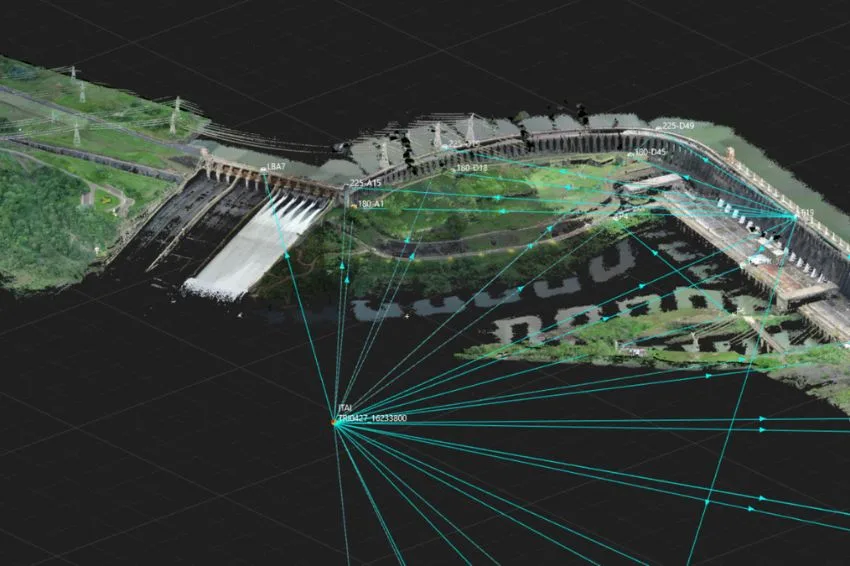
Although the current focus is on shutting down the machines, the success of the 2026 phase is due to the prior work of digitizing the infrastructure. In May 2023, Itaipu completed the three-dimensional laser scanning (3D) of a large part of the plant, generating precise models of the powerhouse, dam, and spillway.
This survey was integrated into the BIM (Building Information Modeling) methodology, allowing all phases of the PAT (Preventive Action Plan) — from planning to future maintenance — to be visualized virtually. The use of BIM is strategic for reducing rework, as it allows for the identification and resolution of interferences between projects before physical execution on the construction site.
History
The Technological Upgrade Plan is Itaipu's most comprehensive project since its construction, with approximately US$670 million in investments already contracted. The PAT was divided into different fronts to ensure efficiency in the execution of a schedule that extends over 14 years, until 2036.
The main contract comprises an investment of approximately US$649 million. The tender was won by CMI (Consórcio Modernização de Itaipu), a binational group led by the Brazilian company GE Vernova, in partnership with the Paraguayan companies CIE and Tecnoedil.
In addition to the main contract, the plan includes key ancillary contracts. The Paraguayan company Aponte Latorre has been constructing two large warehouses since 2022, at a cost of US$13,9 million.
The binational consortium Worley-Inconpar has been providing specialized support since August 2023, under a US$3,8 million contract lasting 48 months.
Capacity
A central pillar for the binational company's technical autonomy is Cintesc (Systems Integration and Training Center), completed by the Paraguayan company Ricardo Díaz Martínez for US$1,8 million.
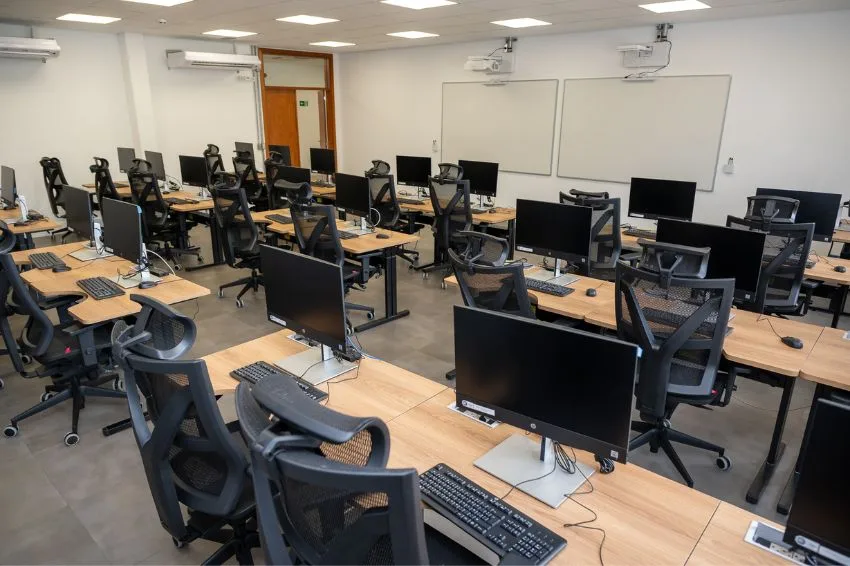
Inaugurated in January 2025, Cintesc is a 1.257,59 m² complex with the capacity to train up to 100 people simultaneously. The space includes laboratories for integration testing of new digital systems, allowing Itaipu teams to perform testing and training procedures internally, reducing costs and speeding up the schedule.
The PAT also includes the modernization of the Right Bank Substation, located on the Paraguayan side. This facility is critical because it connects Itaipu to the Paraguayan electrical system and to Eletrobras' high-voltage direct current system, which transmits energy to the Brazilian market.
This phase has already had its technical specifications finalized, and the bidding documents are in the final stages of preparation, consolidating the continuous and technical progress of the entire modernization program.
Paraguay maintains Itaipu tariffs and postpones agreement with Brazil.
all the content of Canal Solar is protected by copyright law, and partial or total reproduction of this site in any medium is expressly prohibited. If you are interested in collaborating or reusing part of our material, please contact us by email: redacao@canalsolar.com.br.

Comments
Comments are moderated before publication.Comments should be respectful and contribute to a healthy debate. Offensive comments may be removed. The opinions expressed here are those of the authors and do not necessarily reflect the views of the author. Canal Solar.