
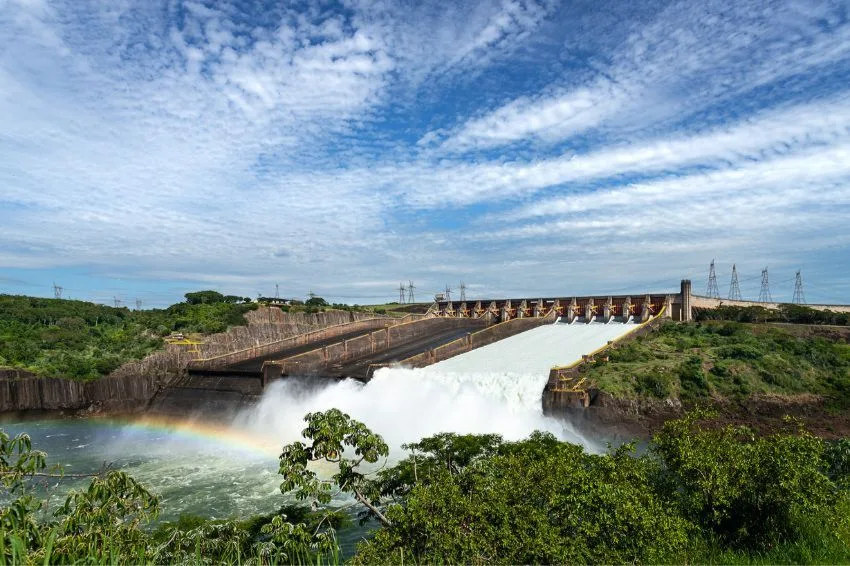
Itaipu defends its role in lowering tariffs, but faces criticism in Congress.
The power plant claims to be contributing to cost reduction, but lawmakers are questioning the expenses.
Itaipu Binacional released a statement affirming that the plant's energy generation "has directly contributed to the reduction of electricity tariffs in Brazil."
According to the hydroelectric plant, the distributors that purchase energy from the plant have been passing on reductions to consumers due to the highly competitive tariff established after the settlement of the historical debt in 2023.
The state-owned company highlighted that the current price of US$19,28 per kilowatt is one of the lowest in the country and helps to alleviate costs for businesses and families in states such as Paraná, São Paulo, Minas Gerais, and Rio Grande do Sul.
The statement was released on the same day that the National Congress held a public hearing on the binational company's spending, last Wednesday, October 29th.
The session brought together experts and former leaders of the electricity sector who stated that Itaipu maintains billions in expenses without the approval of Congress, in violation of the treaty governing the operation of the power plant.
These expenses — estimated at US$1,5 billion per year — would be borne by approximately 130 million Brazilian consumers.
During the debate, former director-general of Aneel, Jerson Kelman, pointed out that, even fully amortized, Itaipu still presents higher-than-expected costs, which increases the price of energy passed on to the regulated market.
The president of the National Front of Energy Consumers, Luiz Eduardo Barata, stated that the lack of renegotiation of Annex C of the Itaipu Treaty keeps the tariff artificially high.
In defense of the management, Itaipu's financial director, André Pepitone, reiterated that the power plant practices one of the lowest tariffs in the country and that its socio-environmental actions are supported by bilateral agreements.
He emphasized that, with the debt being paid off, the cost of energy for the binational company fell by 33,5%, and that the agreement between Brazil and Paraguay foresees maintaining the current value until 2026.
Recently, Minister Alexandre Silveira spoke again about the issue of the transfer fee from Itaipu Binacional.
He stated that the Brazilian government will advocate for the end of Itaipu's socio-environmental spending starting in 2027, during the renegotiation of Annex C. According to Silveira, the objective is to reduce the price of electricity and direct the binational company's resources exclusively to the operation and maintenance of the power plant.
On that occasion, Silveira also highlighted that the Brazilian board had implemented a transparency portal, with publicly detailed information on all the hydroelectric plant's expenses.
According to the minister, Itaipu's energy is an essential input for national development, and reviewing these expenses is necessary for Brazil to maintain a competitive and attractive electricity matrix for new investments — especially in the industrial and technology sectors.
all the content of Canal Solar is protected by copyright law, and partial or total reproduction of this site in any medium is expressly prohibited. If you are interested in collaborating or reusing part of our material, please contact us by email: redacao@canalsolar.com.br.


Comments
Comments are moderated before publication.Comments should be respectful and contribute to a healthy debate. Offensive comments may be removed. The opinions expressed here are those of the authors and do not necessarily reflect the views of the author. Canal Solar.