
The Brazilian Supreme Court (STF) has reinstated the collection of ICMS (Tax on the Circulation of Goods and Services) on surplus solar energy generated by consumers in the state of Piauí.
The decision suspends a preliminary injunction granted last October by the TJ-PI (Court of Justice of Piauí) (Court of Justice of Piauí), which had suspended the collection of the tax after action by the PP (Progressive Party) and Sefaz-PI (Piauí State Finance Secretariat).
At the time, the state court understood that the energy injected into the grid by micro and mini photovoltaic generators does not constitute a commercial operation, but rather a free loan to the distributor, as provided for in Law 14.300/2022 – which created the legal framework for the segment in the country.
During the proceedings at the STF (Supreme Federal Court), the PGR (Attorney General's Office) expressed its support for maintaining the suspension of the collection, arguing that it was not appropriate for the State Government to appeal to the Supreme Court in this extraordinary manner.
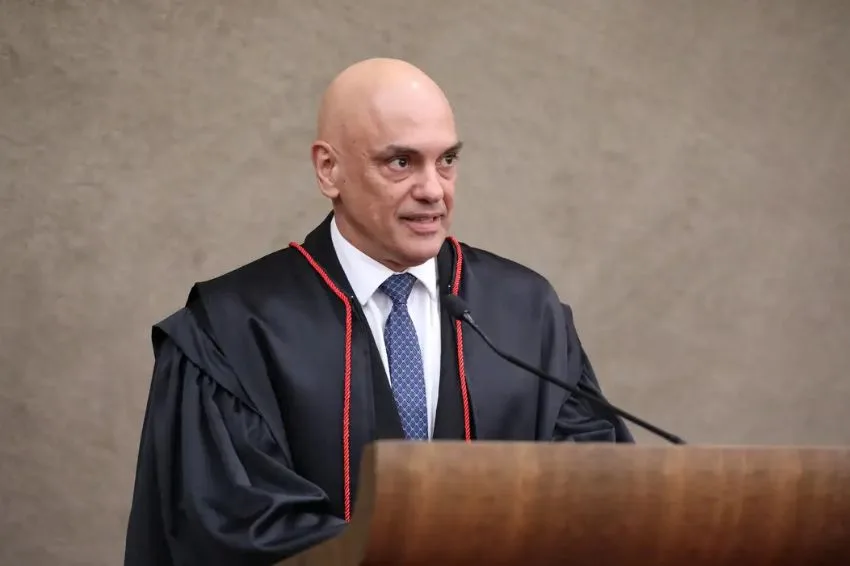
Nevertheless, the appeal was reviewed by Minister Alexandre de Moraes, who decided to reinstate the tax. With this single-judge decision, the injunction from the Piauí State Court of Justice loses effect, and the collection of ICMS (a state sales tax) in the sector is once again valid in the state. The decision is still subject to appeal.
Why did Moraes make that decision?
In granting the request from the Government of Piauí, Moraes considered the arguments regarding the economic impact presented by the State, which alleged estimated losses of R$ 31 million in 2025 alone. The total loss, according to the state government, could reach R$ 175 million, since the government was also prevented from issuing infraction notices during that period.
"The state provides specific and detailed justification regarding the impact of the judicial decision on the economic order, depriving it of significant revenue. This is a substantial amount, the lack of which could compromise the provision of public services," the minister wrote in his decision.
Apisolar criticizes the Supreme Court's decision.
In an interview with Canal Solar, Marco Melo, president of Apisolar (Piauí Association of Solar Energy Companies), stated that the STF's decision was based exclusively on fiscal arguments, without addressing the legal merits of the case.
According to him, the appeal filed by the Government of Piauí was limited to pointing out impacts on public accounts, without contesting the understanding of the TJ-PI (Court of Justice of Piauí) that the compensated energy does not constitute a taxable event for ICMS (Tax on Circulation of Goods and Services).
“The case was initially assigned to Justice Edson Fachin, who forwarded it to the Attorney General's Office, as is the norm for actions of the ADI (Direct Action of Unconstitutionality) type. After the Attorney General's Office issued a favorable opinion on ending the collection, the case returned to the Supreme Court and was assigned to Justice Moraes,” he said.
According to the president of Apisolar, there are still uncertainties regarding the practical effects of the decision, especially concerning the stance of the concessionaire Equatorial Energia. "We still don't know how this will affect Equatorial, nor if the charges will resume next month," he commented.
Even so, Melo reassured the market with a message of optimism. "We are working to ensure that the TJ-PI (Court of Justice of Piauí) makes a final ruling on the case as quickly as possible. We are very hopeful," he stated.
all the content of Canal Solar is protected by copyright law, and partial or total reproduction of this site in any medium is expressly prohibited. If you are interested in collaborating or reusing part of our material, please contact us by email: redacao@canalsolar.com.br.


Comments
Comments are moderated before publication.Comments should be respectful and contribute to a healthy debate. Offensive comments may be removed. The opinions expressed here are those of the authors and do not necessarily reflect the views of the author. Canal Solar.