

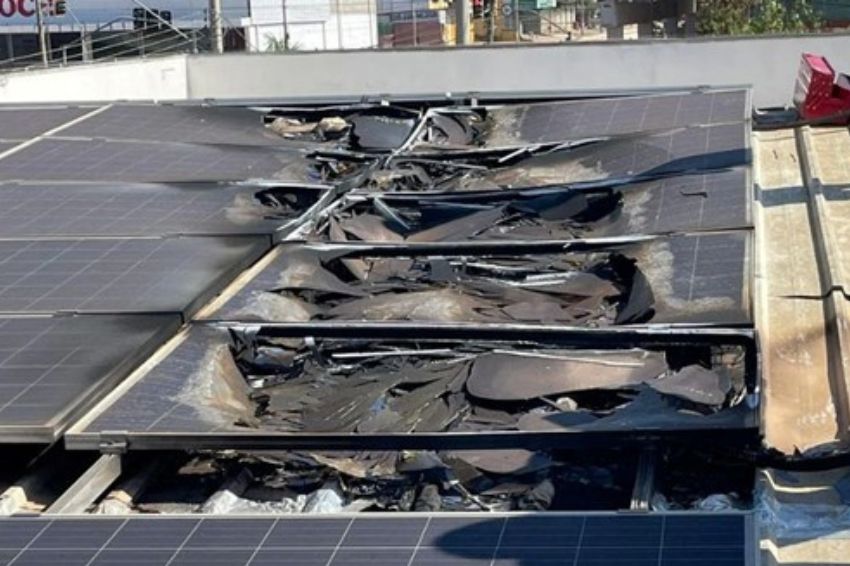
As in Mato Grosso e Minas Gerais, the recent decision by the Goiás State Fire Department to release a technical note with measures of stricter security for solar energy systems, raised a series of questions from professionals working in the photovoltaic sector.
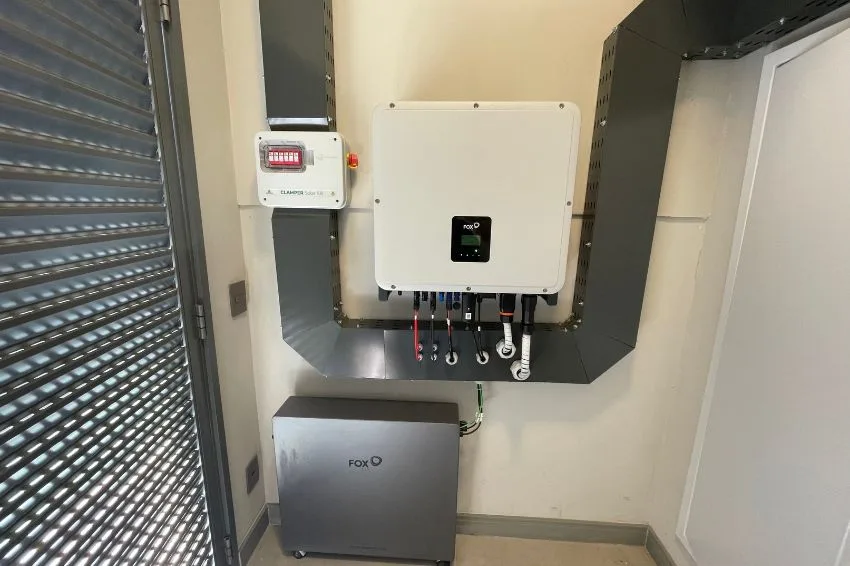
Many question the real need for the corporation to impose new requirements that imply, for example, the use of additional equipment, such as rapid shutdown, and retrofitting facilities that already have solar energy systems on their premises. For some of the professionals interviewed by the editorial team of Canal Solar, the adoption of these measures alone is not what will guarantee the safety of photovoltaic systems against fires and accidents in properties, but rather the actions and inspections of the Fire Department itself.
Businesspeople working in the sector also question the publication of the document, since the ABNT (Brazilian Association of Technical Standards) would already have the role of establishing safety regulations to be followed by companies installing photovoltaic projects. Despite this, lawyers who were also interviewed by the report of Canal Solar, assess that the publication of firefighters' documents does not necessarily conflict with ABNT standards.
“Normally, when firefighters issue regulations like this, it is due to accidents and fires that have already occurred. So, they attended to some incidents and when carrying out the investigations they came to the conclusion that the non-use of specific equipment was what led to the accidents. Based on this, they establish preventive standards”, explains Arthur Rollo, specialist in consumer law and former national consumer secretary.
The lawyer also emphasized that even though ABNT standards are the main basis for normative consultation, they do not necessarily provide absolute guarantees of safety. “I had a case in my office, for example, of a baby crib that met ABNT standards and which, even so, caused the death of a baby. So, these ABNT standards are the baseline for what must be followed. In other words, the marketing of products and services that fall short of what is provided for in the standards cannot take place, but requirements that go beyond ABNT standards can be made as long as they are justified,” he commented.
Pedro Dante, partner at Lefosse Advogados, explained that the technical note published in Goiás came into effect on November 14 in all municipalities in Goiás. “Buildings that do not yet have a photovoltaic system installed must follow all the safety measures stipulated from the date the standard came into effect,” the lawyer emphasized.
On the other hand, with regard to buildings that already have a photovoltaic system installed, Dante commented that a period of one year was granted for consumers to fully adapt to the requirements established by the document. In other words, in short, consumers who do not yet have a photovoltaic system installed in their buildings must comply with the regulatory provisions as of November 14, 2023, while those who already have such installations must adapt to the new requirements by November 14, 2024.
Which facilities will be affected?
Peter Yu, the professional responsible for Ecori units in Goiás and the Federal District, explains that the document issued by the fire department is mandatory for all properties that require an operating license, such as commercial and industrial establishments and multi-family units (condominiums), since it is not the fire department's technical responsibility to inspect residential buildings. “Until the adjustment is made, the permit cannot be obtained and, consequently, the permit cannot be processed in several bureaucratic procedures at the government and banking levels, among others,” he says.
Safety above all
According to Heber Galarce, president of INEL (National Institute of Clean Energy), the technical note from the Goiás corporation, even though it is an unpopular measure, is correct. According to him, it is a document that seeks to bring benefits to the modernization of the solar sector and prevent accidents that, according to Galarce, would currently be happening due to the lack of additional equipment that the firefighters want to implement.
The executive even reveals that other fire departments in other states are also planning to do the same. “The standard (in relation to the safety of solar plants) has already risen in many countries and I think we must adhere to the best international safety practices, considering that Brazil has today become a global power in solar energy”, he comments.
The president of INEL also said that DG (distributed generation) has been developing with great difficulty in Brazil, given the obstacles such as regulations and bills that are against its growth. “It is a republican agenda, the fire departments are asking for an increase in safety standards. If there are international references for best practices, discussions that have already been held with specialist firefighters, I don’t see why we shouldn’t do it,” he emphasizes.
Fire letter
In February of this year, the Fire Department had already sent a letter to ABNT signed by Lieutenant Colonel Alysson Krüger Figueira, president of the Conaci (National Fire Fighting Committee), calling for urgency in the development of safety standards that help reduce the risk of fires in solar plants.
Firefighters request standards to contain fires in PV systems
At the time, Conaci stated that the main concern is that some of the photovoltaic systems in Brazil do not have the means to de-energize the aforementioned direct current circuits that can be activated in places that are easily accessible to firefighters. “Therefore, the activity of fighting fires in these buildings becomes very dangerous for the professionals who are fighting the fire,” the entity pointed out, showing that the Fire Department’s concern with the safety of photovoltaic installations in Brazil is something that has been going on for a long time.




Answers of 3
I want to be sympathetic to the firefighting professionals, but deciding to act ABNT is a bit much…. They should have called ABNT and CREA to create this standard, considering that some requirements are already covered in the new NBR-5410 standard that will come into force next year (2024). But looking at life protection in terms of quick shutdown, it only makes sense when we have an accident caused by an intruder who climbed onto the roof. It's the same thing as creating a protection system for people who climb energy transmission towers.
In cases where signs catch fire, the only thing to do is throw water, which the fire department does very well. Turning off the plates to stop the power, as many people suggest, is not possible... unless someone invents how to turn off the sun.
The biggest problems are: inexperienced labor, the rest is the result of this, such as: MC4 connectors loose in the metal tile gutters, water and electricity do not mix, and even though the MC4 has protection, it shorts out when submerged in dirt that accumulates water, and causes a short circuit... it catches fire and the technicians don't know why, because I say that's the reason... With an experienced team, the MC4 is secured under the modules, preventing them from coming into contact with water or metal tile…. think about it…. real experience that I report.
What equipment could contain the reverse current? This is certainly one of the causes of some fires. Who will bear these expenses?