
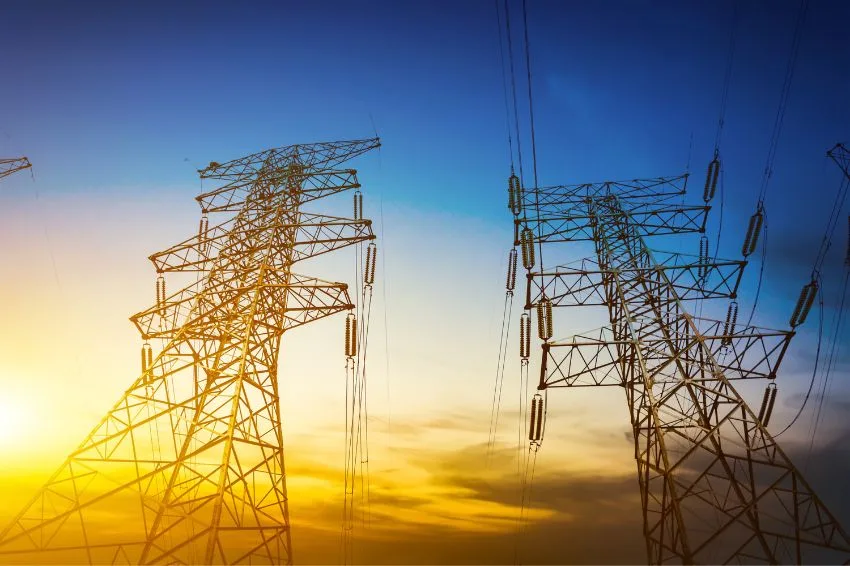
The Brazilian electrical and electronics sector is expected to experience greater dynamism in 2026, especially in GTD (Generation, Transmission and Distribution).
According to Abinee (Brazilian Association of the Electrical and Electronic Industry), the forecast is to reach a revenue of R$ 34,9 billion next year, compared to R$ 31.5 billion recorded in 2025, a variation of 7% – or about 3%, discounting inflation.
According to the director of Generation, Transmission and Distribution of Electrical Energy at the entity, Marcelo Machado, the performance in GTD will be directly linked to the significant volume of infrastructure investments expected due to both the transmission auctions already held and those planned for next year.
During a year-end press conference held on Thursday (4), by Abinee, Machado recalled that the transmission auction last October moved R$ 5,5 billion in new assets — between lines and substations — and that two new auctions are confirmed for 2026, one in the first semester, estimated at R$ 3,5 billion, and another in the second, with approximately R$ 20 billion, aimed at integrating renewables and systemic reinforcements in the basic network.
This perspective is reinforced by the president of Abinee, Humberto Barbato, who highlighted that distributors should also sustain a significant investment cycle in 2026.
According to him, concessionaires are facing tariff cycles that require the inclusion of new assets for regulatory recognition, in addition to the growing need to invest in automation and digitalization.
Barbato drew attention to the urgency of making the network more resilient in the face of extreme weather events, which have been occurring with greater frequency and intensity.
"At Concessionaires "They are investing heavily to reduce outage times and strengthen the network, because weather events are occurring earlier than summer and are already causing significant impacts," he stated.
Solar recovery
Regarding the solar photovoltaic market, Machado acknowledged that 2025 was marked by a significant drop in demand for modules—around 40%—influenced by regulatory uncertainties and the temporary inability of the interconnected system to absorb surplus generation, which led the ONS (National System Operator) to extend cuts (curtailment) in big plants.
The director, however, assessed that this situation should begin to change. According to him, the new legislation for the electricity sector — 15.269 Law — It brought greater clarity regarding compensation and the role of storage in the network, which tends to give renewed impetus to investments.
Machado cited the expectation of a capacity reserve auction for storage systems in April 2026, an element that, in his view, will unlock the expansion of both large solar plants and mini and micro distributed generation.
Barbato added, pointing to additional factors that are driving the market. In other words, in the view of the president of Abinee, both the technological evolution of the modules and the drop in prices of this equipment will have positive impacts on this segment.
According to him, current solar panels already have significantly higher power outputs than those seen in recent years, which increases their competitiveness and broadens consumer interest.
"Interest in solar energy remains strong. What we are seeing is a direct result of technological advancements and price reductions, partly because Brazilian manufacturers are beginning to gain market share and put pressure on international competitors," he said.
Meters for the free market
When questioned about the capacity of the smart electronic meter industry to fully meet the demands of the completely open free energy market (ACL), now scheduled for 2028, Machado assured that the national sector is prepared.
He explained that the production of meters simultaneously meets the requirements of Inmetro and the minimum characteristics defined by... ANEEL and to the guidelines that have been discussed with the MME (Ministry of Mines and Energy), especially those related to the digitization of networks and time-of-use tariffs.
Machado also stated that the capacity of Brazilian industry is currently about three times the current demand from distributors, indicating that the country will be able to meet the influx of new consumers into the ACL (Free Contracting Environment) without bottlenecks.
The GTD director also highlighted that the advancement of smart metering involves both hardware and software, requiring integration with operating systems and digital network platforms.
He further noted that modernizing this equipment will be essential for the functioning of the residential free market, since metering needs to guarantee accuracy, security, telemetry, and adherence to the regulated tariff structure.
The arrival of this new market, he stated, represents one of the most significant drivers of industrial growth in the short and medium term.
all the content of Canal Solar is protected by copyright law, and partial or total reproduction of this site in any medium is expressly prohibited. If you are interested in collaborating or reusing part of our material, please contact us by email: redacao@canalsolar.com.br.


Comments
Comments are moderated before publication.Comments should be respectful and contribute to a healthy debate. Offensive comments may be removed. The opinions expressed here are those of the authors and do not necessarily reflect the views of the author. Canal Solar.