
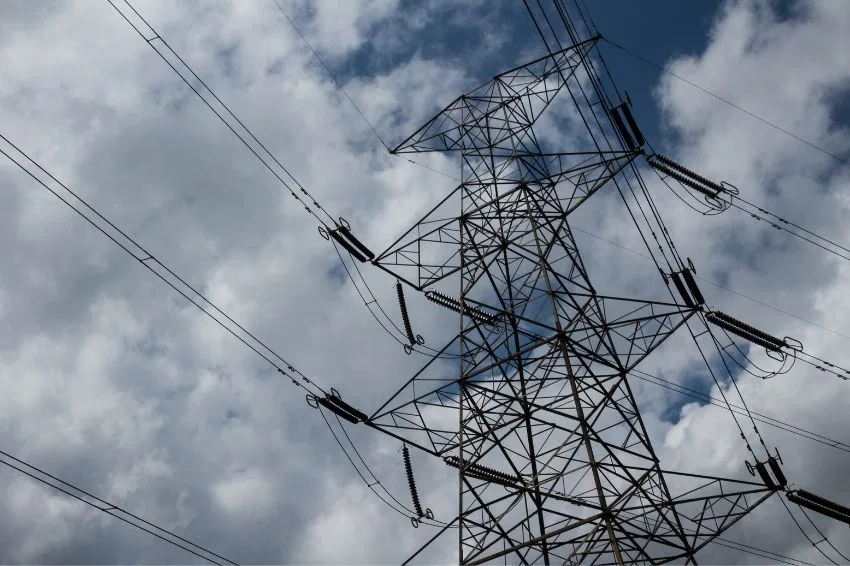
Three associations in the electricity sector have joined forces to request a veto of a provision inserted in Provisional Measure No. 1.304/2025 that imposes new costs on energy trading companies and, consequently, on consumers in the free energy market.
According to the Provisional Measure, energy trading companies will now allocate 1% of their Net Operating Revenue from the sale of energy to the end consumer to R&D and Energy Efficiency – with half (0,5%) going to Research and Development programs and the other half (0,5%) to Energy Efficiency initiatives.
In addition, these companies will also be required to collect the TFSEE (Electricity Services Inspection Fee), equivalent to 0,4% of the annual volume of energy traded with end consumers.
According to the president of HUG (Brazilian Association of Electric Energy Trading Companies), Rodrigo Ferreira, there is a lack of equality in the calculation basis for the various market segments, because while some pay for the benefit received, the trading sector will pay for net operating revenue.
"So whoever formulated this proposal forgot that the majority of our revenue comes from expenses related to purchasing energy," said the executive.
Furthermore, ABRACEEL believes that charging for R&D and energy efficiency will give generators a competitive advantage.
"At a time when the government and Congress intend to increase competition,
"This measure reduces competition because the generator will only be exposed to this rate once, when it sells to the end consumer or to the marketer, and we marketers will be exposed to the rate twice, when I buy from the generator and when I sell to the consumer," Ferreira explained.
ABRACEEL's demands have the support of HUG (Brazilian Association of Large Industrial Energy Consumers and Free Consumers) and ANACE (National Association of Energy Consumers).
The executive explains that the veto request is not related to the merits of the bill, but to the way this provision was included in the provisional measure, "without any prior discussion."
ABRACEEL requests that the Ministry of Mines and Energy open a public consultation to discuss these points with the market.
“These are our concerns regarding these fees. That is why we, Abrace and ANACE, are requesting a veto of these fees and the opening of a public consultation by the Ministry of Mines and Energy so that we can better formulate this issue,” he concluded.
Expectations regarding vetoes
The market expects President Lula to approve the bill later today (Monday, 24). PM 1.304 with their respective vetoes. The main point of attention involves the provisions dealing with compensation for cuts in renewable generation, the curtailment.
There is consensus between the Ministry of Mines and Energy (MME) and the Ministry of Finance regarding the veto of Article 1-A, inserted into Law 10.848/2004. The amendment, proposed by Congressman Danilo Forte, effectively creates a loophole to expand the reimbursement for energy not generated, passing this cost on through charges on the electricity bill.
The article establishes compensation for wind and solar power generation cuts caused by factors external to the facilities, regardless of the contracting environment, excepting only situations of oversupply of renewable energy. In practice, the provision significantly expands the level of compensation for curtailment.
Other points that generate disagreement, and which may also be vetoed, involve the extension of contracts for coal-fired power plants until 2040 and the mandatory contracting of 4,9 GW in hydroelectric plants with up to 50 MW. Despite this, there is strong political pressure for these sections to be maintained.
There is also a request to veto the provision inserted in article 16-B, paragraph 8, of Law 9.074/1995, which determines that new self-production arrangements must necessarily involve the contracting of energy from new generation projects.
There is also a request to veto the use of CDE (Energy Development Account) funds to finance TV reception antennas.
all the content of Canal Solar is protected by copyright law, and partial or total reproduction of this site in any medium is expressly prohibited. If you are interested in collaborating or reusing part of our material, please contact us by email: redacao@canalsolar.com.br.
Comments
Comments are moderated before publication.Comments should be respectful and contribute to a healthy debate. Offensive comments may be removed. The opinions expressed here are those of the authors and do not necessarily reflect the views of the author. Canal Solar.