
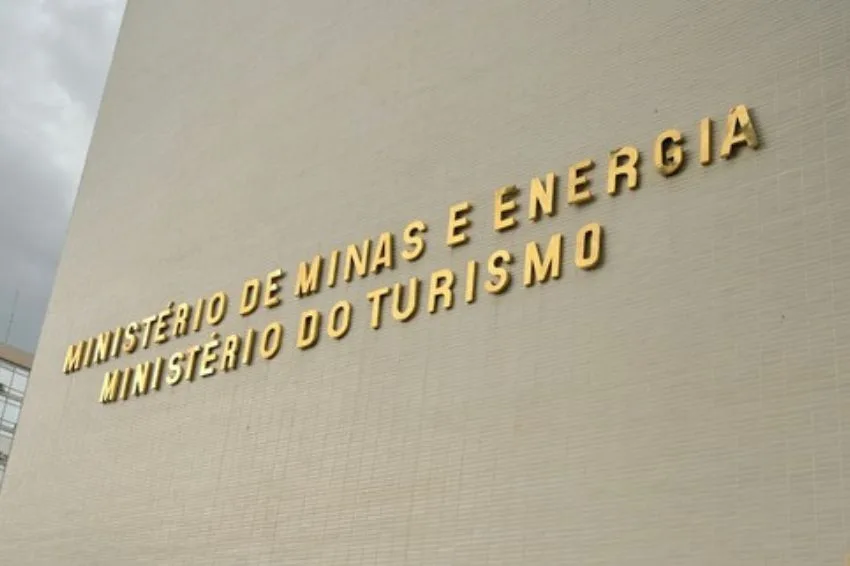
This Thursday (12), the MME (Ministry of Mines and Energy) launched the Strategic Agenda 2026 focusing on strengthening the security and reliability of the national electricity system.
The plan organizes the year's priorities into categories focused primarily on meeting peak demand and minimum load requirements, in the face of a scenario of greater operational complexity and increasing participation of renewable sources.
LRCAP of existing and new plants
In terms of meeting demand, the agenda for the first quarter highlights the achievements of the LRCAP (Capacity Reserve Auction) for existing plants and new projects, with the aim of reinforcing supply security during periods of higher demand.
It is worth remembering that ANEEL (National Electric Energy Agency), called for this Friday (13), an extraordinary meeting to review the bidding rules for the power auctions, after the government set price ceilings, which generated dissatisfaction in the sector.
The expectation is that the analysis of values and contractual conditions will have a direct impact on the attractiveness of the tenders and, consequently, on the expansion of service capacity at the end of the line.
LRCAP batteries
Scheduled for April, the Ministry also plans to auction off batteries. The auction is considered strategic because it introduces, in a structured way, storage systems as a power resource to meet peak demand.
DST
Also in the second quarter, the plan includes evaluating the potential resumption of daylight saving time as a tool to mitigate peak load and optimize the use of electrical infrastructure.
Daylight saving time was last adopted in Brazilian territory between November 4, 2018 and February 17, 2019.
Export of surplus energy
Regarding meeting minimum load requirements, the highlight is the definition of criteria for exporting surplus energy, a measure that seeks to provide greater flexibility to the system during periods of high generation, especially from renewable sources, and reduced consumption, contributing to the balance between supply and demand throughout the year.
all the content of Canal Solar is protected by copyright law, and partial or total reproduction of this site in any medium is expressly prohibited. If you are interested in collaborating or reusing part of our material, please contact us by email: redacao@canalsolar.com.br.



Comments
Comments are moderated before publication.Comments should be respectful and contribute to a healthy debate. Offensive comments may be removed. The opinions expressed here are those of the authors and do not necessarily reflect the views of the author. Canal Solar.