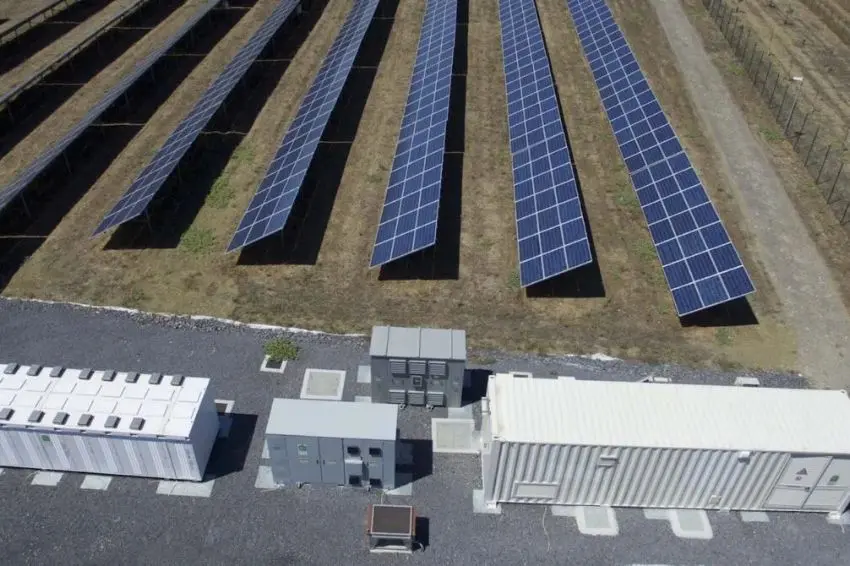

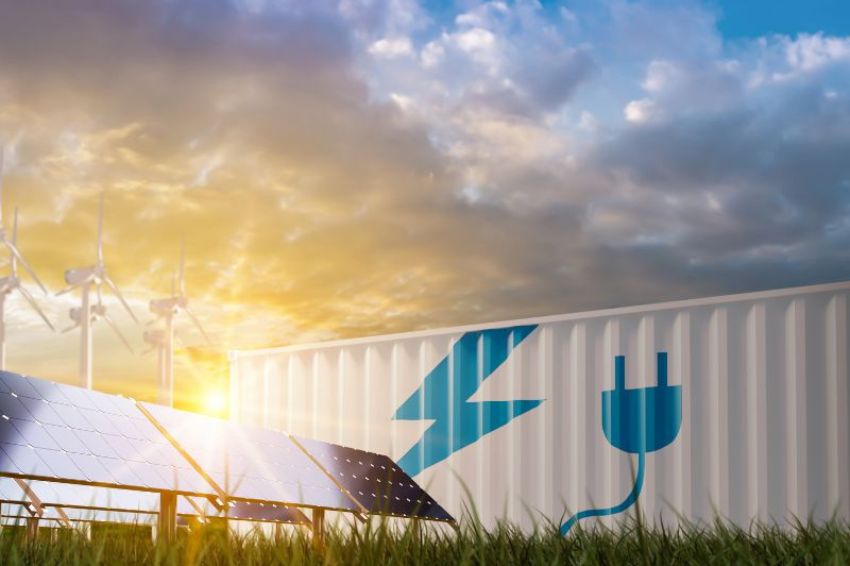
O Storage will be a fundamental element in the new energy scenario, whether alongside renewable generation or utility scale, bringing more reliability, greater resilience and quality to the energy system in Brazil. That's what he said Márcio Takata, director of Greener.
During the GoodWeek 2023, held last Thursday (09), the executive spoke about the role of energy storage systems, placing emphasis on application behind the meter.
“When we think about a solution like this, what value are we bringing to the potential consumer? We can talk about backup solutions, used for different consumer profiles, whether medium and high voltage (Group A) or low voltage (Group B)”, he reported.
“We can also highlight peak shaving, which can be an alternative, especially for medium voltage consumers. Furthermore, there are opportunities to manage consumption times, that is, to manage it in such a way that you reduce the energy consumed during times of high consumption, and DG (distributed generation) solutions reducing the injection of energy into the grid”, he exemplified Takata.
Reduction in peak hour consumption
According to the expert, reducing energy consumption during peak hours is among the most attractive applications. “Some energy distributors have a very high difference between the price of energy at the peak and the off-peak”.
“The greater this difference, the greater the savings that can be obtained. Consumers with poor load management capacity can store energy during off-peak hours, when it is cheaper, and consume it during peak hours, when it is more expensive,” he said.
During off-peak hours, from 4am to 9am, the batteries are charged, while during peak hours, from 17pm to 20pm, the batteries are discharged instead of purchasing from the grid.
Peak shaving
According to the director of Greener, the reduction in contracted demand, also known as peak shaving, can bring significant savings to consumers with short peak and load intervals. These short intervals can be covered by the storage system, allowing for reductions in energy bills.
“This modality is not attractive for consumers with long-lasting peaks or with an average demand close to the contracted level (high load factor). Consumers who are often fined for exceeding demand can also benefit. The higher the demand rate, the greater the attractiveness of the storage system for this application”, he pointed out.
DG without grid injection
Reducing the injection of energy into the grid, in his view, could be an alternative for users who have high losses in the compensation of credits. Currently, the regulation of DG does not make this model viable, but in scenarios of reduction of the compensable portion (Alternatives 1 to 5 of ANEEL), this modality can become attractive.
Power backup
In many regions of Brazil, consumers suffer from a high rate of power outages. In addition to interruptions, there is a high incidence of network fluctuations that are not in official statistics.
“There is a demand for improved services. Although this demand alone cannot justify the investment in a storage system, it will certainly help to make it viable”, emphasized Márcio Takata.
Electricity consumers spend, on average, 14 hours a year without electricity supply. In some distributors, this average can triple.
Battery represents almost 50% of the system cost
Throughout the event, Takata also commented on the battery market, which is gaining more and more space in the country, especially in the last four years. “Batteries represent, on average, almost 50% of the system cost. This technology has been evolving rapidly.”
“We started with lead acid, which we use in our cars, but recently, with the strong advance in the electric mobility market, lithium ion technology has been adopted, which is the same technology we use in cell phones, allowing for greater energy density. Which is the best? It depends. For each application you have characteristics that can be better utilized,” he said.
For Markus Vlasits, director of NewCharge Projetos and coordinator of the storage GT (working group) ABSOLAR (Brazilian Association of Photovoltaic Solar Energy), both batteries have their justifications.
“For situations where you do loading and unloading, placed in a system mainly aimed at backup, UPS, the lead acid one has a perfect justification, as well as in hostile, very hot climates, for example. But, effectively, in daily cycling, frequent use, lithium-ion ones clearly have their profile and their market niche,” he explained.
“What do we have to expect for the future? On the one hand, we see fundamental developments in lithium-ion batteries, which will contribute to the increase in energy density, which until now has been the Achilles heel, and in parallel with the reduction of costs”, commented Vlasits.
“Today, we are at more or less US$ 120, 130 kWh of capacity. It is perfectly plausible as this value will reduce to something around US$ 50 to 70 over the next five years”, he estimated.
For commercial projects, the executive said that the integrator will be able to choose between lead and lithium. “Within lithium, it is interesting to look at lithium iron phosphate for three reasons: firstly because it is a technology that has a greater tolerance for high temperatures. Secondly because it is a more stable technology from an electrochemical point of view, and thirdly because it does not use any toxic materials”.
Storage and solar energy
Therefore, experts concluded that storage is essential to help increase control over energy generation, making the grid more profitable and the grid having a more viable operational level and capacity.
“Storage is a central element of this process. Solar will evolve, we are just at the beginning, and storage comes next as an element that will allow solar energy and other renewable energy to gain the attraction we need to expand generation capacity in Brazil”, concluded Takata.
Launches for the storage market
Alexandre Pereira, service manager at GoodWe and GE Inversores Brasil, was also present at the meeting and discussed the company's upcoming launches for the storage market.
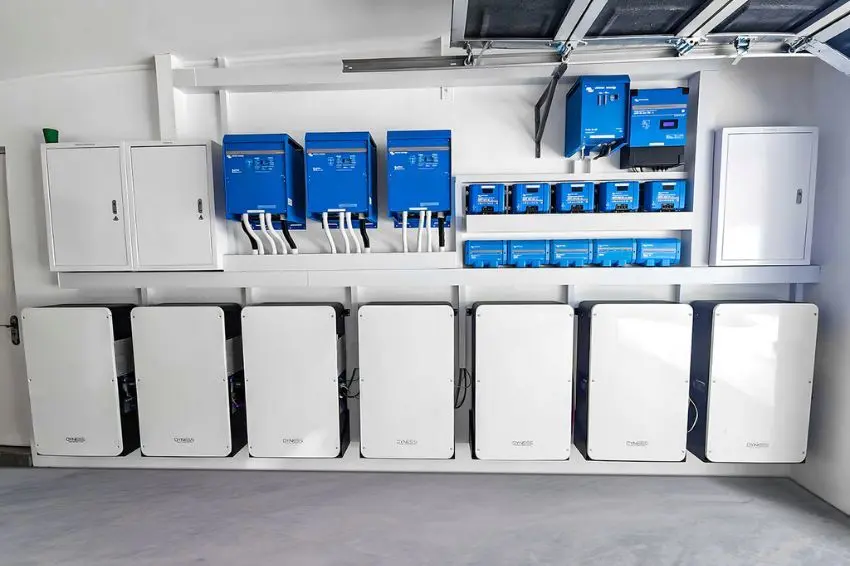
“We are going to have a new application, a different way of using ET inverters and F Plus batteries in an application inside an office. So, GoodWe will provide this solution for the 15 – 30 kW inverter, with 60 kWh battery, inside a cabinet”, he explained.
The cabinet is suitable for large residential applications and small commercial applications. The advantages include: lower LCOE, greater efficiency; complete design, easy transmission and turnkey solution; IP55 design, suitable for all installation scenarios; and multiple operational logic.
In addition to this product, Pereira commented that the manufacturer will have most inverters being launched. “The company’s largest three-phase hybrid inverter, for example, was 30 kW. Now, we will have 50 and 100 kW models.”
“In this case, we will have two versions: ETC (hybrid) and BTC (retrofit). These models should arrive at the end of the third quarter of 2023 in the 100 kW version. The 50 kW model is now available, and certification is underway”, he highlighted.
In this inverter model, the company works with a specific battery, which is also being launched, which is the Lynx C. “The equipment starts with a storage capacity of 156 kWh and we can connect up to four towers in parallel with a total of 468 kWh ”. Below are other features:
- LiFePO4;
- From 11 to 17 9.2 kWh modules;
- High voltage (370..724Vdc);
- 100% DoD (discharge);5-year warranty;
- IP21 (rack use);
- Compatibility with ETC and BTC models.
Finally, the engineer highlighted that GoodWe is developing a container, which has a local EMS interface for configuration and precise temperature control + – 2ºC. 'We shouldn't have this solution in 2023 in the Brazilian market.”
“However, we will soon have an event dedicated to single-phase hybrid inverters already certified by INMETRO in Brazil this year. Regarding three-phase, we are finalizing the certification part and will soon launch it in Brazil”, he concluded.