The think tank Ember published the report. Global Electricity Mid-Year Insights 2025, with data showing China leading the renewable energy sector. In the 12-month period ending in June 2025, the country produced 2.073 TWh from solar and wind power alone, surpassing other energy sources such as hydroelectric, nuclear, or bioenergy, which generated 1.936 TWh.
Solar and wind
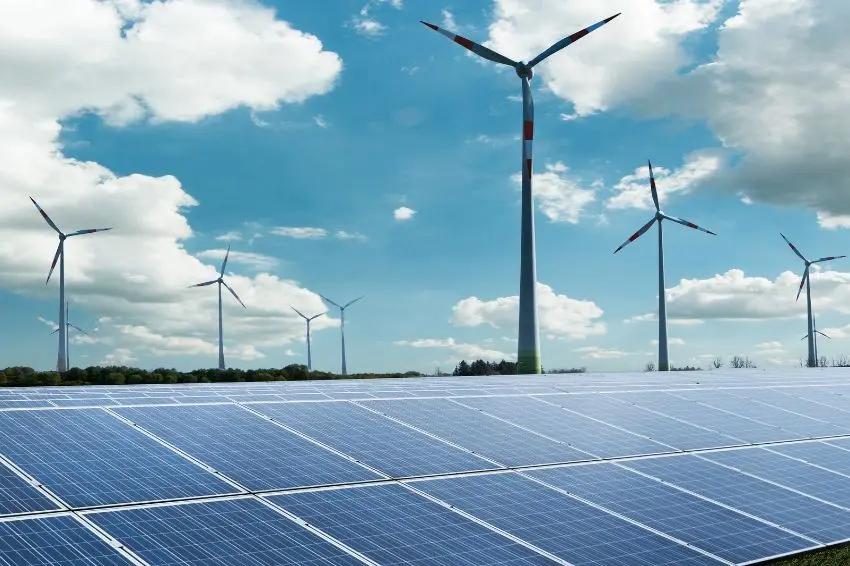
Between 2021 and 2024, the installed energy capacity Solar and wind power in China It more than doubled, going from 635 GW to 1.408 GW. In the first half of 2025, production from these two sources registered a growth of 27% compared to the same period in 2024. Solar and wind alone represented about 18% of the electricity matrix in 2024, double the value recorded in 2020.
Investments and storage
In 2024 alone, China invested approximately 31% of the global total in clean energy, equivalent to US$625 billion. Battery storage has been a major focus of investment, particularly lithium-ion systems, whose installation has tripled in recent years. In 2024 alone, the country commissioned 37 GW/91 GWh of batteries, more than the US and Europe combined.
Electric vehicles and Brazil's participation
China also stands out in the clean mobility sector. The share of electric vehicles (EVs) in car exports increased from 7% in 2020 to 41% in the first five months of 2025.
In 2024, emerging markets surpassed the European Union as the largest destination for Chinese EVs, with exports jumping from US$0,5 billion in 2020 to US$16,5 billion in 2024.
In Brazil, the impact is already visible: vehicles like the BYD Dolphin Mini scooters were launched for around US$20, while models like the BYD Seagull, sold in China for less than US$8, could arrive in the country with competitive prices, depending on taxes, logistics, and local regulations.
Since 2020, Chinese companies in the EV and battery sector have announced approximately US$80 billion in investments to build factories in markets such as Brazil, Indonesia, and Thailand.
Lower CO₂ emissions
By the first half of 2025, China will have fully met its electricity demand from renewable sources, resulting in a significant drop in greenhouse gas emissions and a reduction in coal use.
The growth of the renewable energy sector in the country contrasts with the trajectory of other countries, such as the USA, which were unable to meet their demand solely with clean sources, making it necessary to resort to coal again, which increased emissions by approximately 33 million tons of CO₂.
In April 2025, at the leaders' meeting on climate and just transition, hosted by the UN Secretary-General and the President of Brazil, China reaffirmed its commitment: "The world may change, but China will not slow down its climate action."
The statement signals continued political and financial support for the next phase of the energy transition, with concrete effects on industries and markets around the world.
all the content of Canal Solar is protected by copyright law, and partial or total reproduction of this site in any medium is expressly prohibited. If you are interested in collaborating or reusing part of our material, please contact us by email: redacao@canalsolar.com.br.