

• Mon, July 13, 2026
Facebook X-twitter Instagram Youtube LinkedIn Spotify
  • GC Solar: 22,51 GW
  • GD Solar: 49,74 GW
  • advertise here
  • About Us
  • Expedient
logo site solar channel
  • News
    • Market & Investments
    • International market
    • Politics & Regulation
    • Projects & Applications
    • Renewable
    • Sustainability & ESG
    • Technology & Innovation
    • Electric Vehicles
  • Articles
    • Opinion Article
    • Manufacturer's Article
    • Technical Article
  • Latam
  • Batteries
  • Blog
  • Solar Energy Companies
    • Integrators
  • Magazine
    • Magazine Canal Solar
    • Conecta Magazine
  • Firmare
  • Courses
  • News
    • Market & Investments
    • International market
    • Politics & Regulation
    • Projects & Applications
    • Renewable
    • Sustainability & ESG
    • Technology & Innovation
    • Electric Vehicles
  • Articles
    • Opinion Article
    • Manufacturer's Article
    • Technical Article
  • Latam
  • Batteries
  • Blog
  • Solar Energy Companies
    • Integrators
  • Magazine
    • Magazine Canal Solar
    • Conecta Magazine
  • Firmare
  • Courses
  • News
    • Market & Investments
    • International market
    • Politics & Regulation
    • Projects & Applications
    • Renewable
    • Sustainability & ESG
    • Technology & Innovation
    • Electric vehicles
  • Articles
    • Opinion
    • technicians
    • Manufacturer Items
  • Latam
  • Blog
  • Solar Energy Companies
  • Integrators
  • Magazine
    • Conecta Magazine
  • About Us
  • Advertise Here
  • CS Consulting
  • Courses
  • International market
  • News
    • Market & Investments
    • International market
    • Politics & Regulation
    • Projects & Applications
    • Renewable
    • Sustainability & ESG
    • Technology & Innovation
    • Electric vehicles
  • Articles
    • Opinion
    • technicians
    • Manufacturer Items
  • Latam
  • Blog
  • Solar Energy Companies
  • Integrators
  • Magazine
    • Conecta Magazine
  • About Us
  • Advertise Here
  • CS Consulting
  • Courses
  • International market
logo site solar channel
Home / News / Congress analyzes vetoes of Law 14.300 this Thursday (24)

Congress analyzes vetoes of Law 14.300 this Thursday (24)

The expectation is that one of the articles vetoed by the Presidency of the Republic will be overturned by parliamentarians 
Follow on Whatsapp
  • Photo by Henrique Hein Henrique Hein
  • March 23, 2022, at 15:44 AM
3 min 21 sec read
Congress analyzes vetoes of Law 14.300 this Thursday (24)
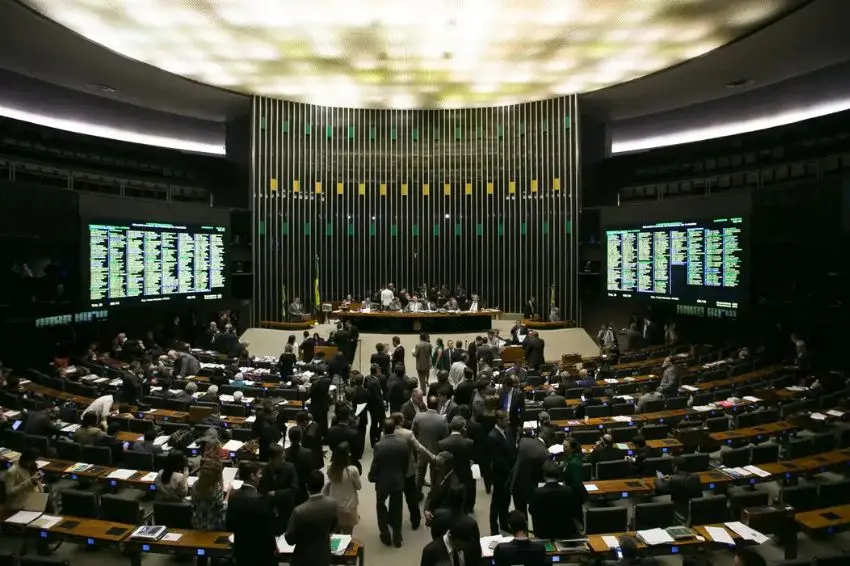
Vetoes of Law 14.300 will be evaluated by the National Congress. Photo: Geraldo Magela/Agência Senado

At the beginning of 2022, the National Congress approved the 14.300 Law, which established the Legal Framework for microgeneration and distributed minigeneration in Brazil, in a text that included several agreements between public and private sectors. 

The new legislation, however, had two articles vetoed by President Jair Bolsonaro (PL): one on so-called floating solar plants and another on benefits to the distributed generation sector.

This Thursday (24) Congress will analyze the two vetoes and the expectations of professionals in the sector, heard by the Canal Solar is that one of them is overthrown and the other is not. 

According to Alexandre Leite, energy specialist and partner at Cescon Barrieu Advogados, the veto of art. 11, which allowed floating plants to fit into the distributed generation segment, should be maintained. 

“There is an expectation that this veto will possibly be maintained, considering that such an exception could lead, at the limit, to the construction of reasonably large plants in dissonance with the regulations applicable to projects of the same size”, he commented. 

However, according to the area's partner at Cescon Barrieu, Rafael Baleroni, the veto on benefits should fall, considering that parliamentarians should take into account the fact that the segment suffers from the difficulty of obtaining financing at affordable prices. competitive. 

He explains that the law deals with three groups of incentives into which distributed generation could be classified:

  • In Law 12.431, for debentures and FIDCs encouraged; 
  • In Law 11.488, for the Special Incentive Regime for Infrastructure Development (REIDI); It is,
  • In Law 11.478, for Equity Investment Funds – Infrastructure (FIP-IE).

The three groups of incentives 

Incentivized debentures and FIDCs allow for cheaper fundraising by reducing the tax burden on the holder of the paper. But, among other requirements, it is necessary to have a grant (authorization or concession) for the project, according to Baleroni. 

“As distributed generation projects do not have a grant from the ANEEL, we had a technical note and decisions from the MME (Ministry of Mines and Energy) that prevented these projects from being classified as priorities and the raising of debt with tax reduction”, he highlights.

REIDI, in turn, allows the suspension of PIS and COFINS on the acquisition of new machines, devices, instruments and equipment, provision of services and construction materials for use or incorporation intended for the fixed assets of a qualified legal entity. 

Read also

New Legal Framework for Distributed Generation in Brazil

Law No. 14.300: GD's Legal Framework is sanctioned by Bolsonaro with two vetoes

Law 14.300: main changes to the GD Legal Framework

Although the law allows its use for infrastructure works in the energy sector, Baleroni highlights that the decree that regulated it limited it to the generation, transmission and distribution of electrical energy and the production and processing of natural gas in any physical state.

FIP-IE allow equity investment in infrastructure projects in certain sectors, including energy. “Here we had no formal decision to the contrary, and there are funds that invest in distributed generation, but there is a degree of uncertainty”, according to Baleroni.

Review 

If the veto is overturned by Congress, experts expect that several distributed generation projects will seek to benefit from the measure.

“Whenever there is distributed generation, we face these discussions about the benefits and there would always be more investment appetite if they were applicable”, says Baleroni. 

Leite assesses that the possible maintenance of the veto relating to floating plants would be in accordance with current regulations, in which distributed generation is limited to smaller projects and for own consumption.

Congress Law 14.300 / 2022 GD legal framework
Photo by Henrique Hein
Henrique Hein
He worked at Correio Popular and Rádio Trianon. He has experience in podcast production, radio programs, interviews and reporting. Has been following the solar sector since 2020.
PreviousPrevious
NextNext

Leave a comment Cancel reply

Your email address will not be published. Required fields are marked with *

Comments should be respectful and contribute to a healthy debate. Offensive comments may be removed. The opinions expressed here are those of the authors and do not necessarily reflect the views of the author. Canal Solar.

News from Canal Solar in your Email

Posts

Canal Solar - Brazilian technology approved by utilities helps unlock projects with reverse energy flow.

Brazilian technology approved by utilities helps unlock projects involving reversed traffic flow.

Canal Solar - TotalEnergies concludes sale of distributed generation assets in Europe; focus shifts to large power plants.

TotalEnergies concludes sale of distributed generation assets in Europe; focus shifts to large power plants.

More news

Read More
Canal Solar - Congress legislates extensively on renewables, but falls short in the quality of its proposals, according to FGV.

Congress legislates extensively on renewables, but falls short in the quality of its proposals, according to FGV.

Canal Solar - Congress analyzes this Thursday (18) vetoes that could alter the rules for distributed generation and offshore wind power.

Congress analyzes this Thursday (18) vetoes that could alter the rules for distributed generation and offshore wind power.

Canal Solar - Consumers will pay almost R$ 1 trillion more on their electricity bills due to decisions by the Government and Congress.

Consumers will pay almost R$ 1 trillion more in their electricity bills due to decisions by the Government and Congress.

It is a news and information channel about the photovoltaic solar energy sector. Channel content is protected by copyright law. Partial or total reproduction of this website in any medium is prohibited.

Facebook X-twitter Instagram Youtube LinkedIn Spotify

Site Map

Categories

  • News
  • Articles
  • Interviews
  • Consumer Guide
  • Authors
  • Videos
  • Projects
  • Magazine
  • Electric Vehicles

Channels

  • About Us
  • Contact
  • Privacy
  • Quality Policy
  • Work with us
  • Expedient
  • advertise here

Membership and certifications

Copyright © 2026 Canal Solar, all rights reserved. CNPJ: 29.768.006/0001-95 Address: José Maurício Building – Mackenzie Avenue, 1835 – Floor 3, – Vila Brandina, Campinas – SP, 13092-523

We use cookies to make your experience on this site better Find out more about the cookies we use or turn them off in your .

Receive the latest news

Subscribe to our weekly newsletter

Fill in the information above and receive your free copy of Canal Solar magazine.

Canal Solar
Powered by  GDPR Cookie Compliance
Privacy

This website uses cookies so that we can provide you with the best user experience possible. Cookie information is stored in your browser and performs functions such as recognizing you when you return to our website and helping our team to understand which sections of the website you find most interesting and useful.

Cookies strictly required

Strictly Necessary Cookie should be at all times so that we can save your preferences for cookie settings.

Cookies for third parties

This website uses Google Analytics to collect anonymous information such as the number of visitors to the site, and the most popular pages.

Keeping this cookie enabled helps us to improve our website.