
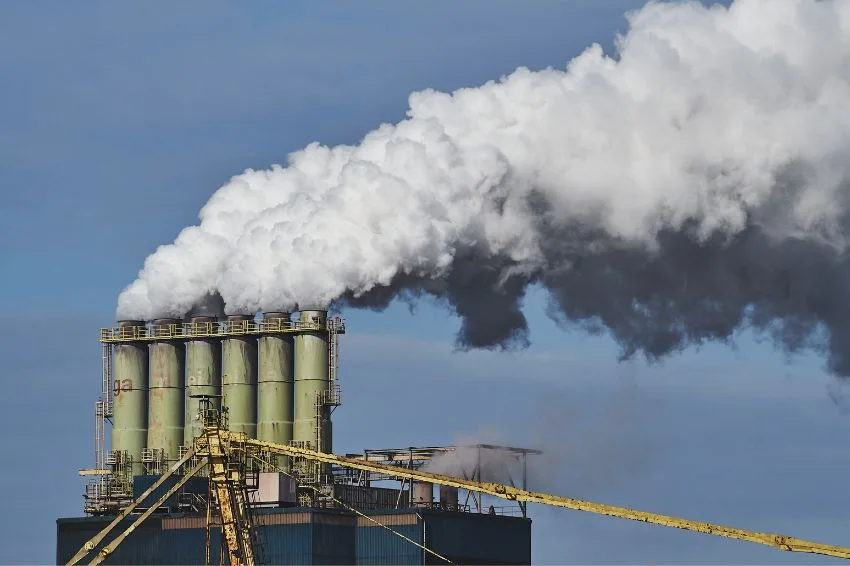
Less than a third of the 197 countries that signed the Paris Agreement have any kind of plan to phase out fossil fuels from their energy mix.
The conclusion is part of a report published this Tuesday (6) by the IISD (International Institute for Sustainable Development) research center, from Canada, with the participation of the organizations E3G (United Kingdom), Ecco (Italy), Sefia (Turkey) and the Climate Observatory (Brazil).
According to the survey, only 46 countries have some kind of structured plan to decarbonize the electricity sector. Furthermore, only another 11 countries—including the United Kingdom, Norway, Colombia, and Brazil—are discussing measures to limit or reduce the supply of oil, gas, and coal.
The debate over the global path to reducing dependence on fossil fuels has gained even more urgency in recent weeks, amid the war in the Middle East—which has triggered a surge in oil prices. The conflict has reignited concerns about the impacts of energy volatility on inflation and global economic growth.
In this context, governments and professionals are scheduled to meet in April in the city of Santa Marta, Colombia, for the first international conference dedicated to discussing energy transition strategies.
According to public policy experts, progress on decarbonization worldwide will depend on the adoption of clear national roadmaps aligned with climate science, as well as greater international coordination.
In practice, this involves linking the decline in the use of fossil fuels to the expansion of renewable energies and the electrification of the economy, as well as reforming subsidies for oil, gas, and coal.
The study also recommends that countries plan for the decommissioning of fossil fuel assets, promote environmental recovery in affected areas, and develop economic diversification strategies—especially in economies heavily dependent on the production of these resources.
According to the authors, without these elements, the energy transition risks occurring in a fragmented and uncoordinated manner, with countries expanding the supply of fossil fuels that may not find demand in the future.
According to the report, this scenario would increase fiscal risks and the possibility of stranded assets, as well as compromise opportunities to strengthen economic competitiveness and energy security.
Access here the study.
all the content of Canal Solar is protected by copyright law, and partial or total reproduction of this site in any medium is expressly prohibited. If you are interested in collaborating or reusing part of our material, please contact us by email: redacao@canalsolar.com.br.


Comments
Comments are moderated before publication.Comments should be respectful and contribute to a healthy debate. Offensive comments may be removed. The opinions expressed here are those of the authors and do not necessarily reflect the views of the author. Canal Solar.