
The DG (distributed generation) market in Brazil faced a first half of the year marked by challenges and transformations. This is what Greener's latest Strategic Study, released this Tuesday (30), points out.
The survey highlights a decline in system sales and financing volume, changes in the profile of integrating companies, and technical and financial difficulties that have impacted the sector. The study also details variations in the prices of photovoltaic kits and the emergence of new trends.
Furthermore, it highlights that the current scenario highlights a structural change in the DG segment, in which the traditional model of selling and installing systems no longer guarantees competitiveness in a market increasingly pressured by more demanding consumers, new entrants and macroeconomic challenges.
With more than 100 pages, the report gathers data from 1.188 companies and was summarized by Canal Solar in a summary of key insights. Check out the main highlights below:
Race and record module import
According to Greener, the increase in import tax on photovoltaic modules at the end of last year, from 9% to 25%, sparked a buying rush at the beginning of the year. Manufacturers anticipated volumes by taking advantage of exempt quotas, resulting in a record number of imported modules in the first quarter of 2025.
On the other hand, with the end of the tax benefit and the rise in interest rates, the market slowed down in the second quarter, registering a 38% drop compared to the previous quarter, with monthly volumes below 1 GWp, 2022 levels.
In the first half of the year, Brazil nationalized 10,6 GWp in modules, the same volume observed in the first half of 2024. Of the total, 78% (8,2 GWp) were allocated to DG projects, which represented an advance of 7,5 pp (percentage points) compared to the first half of last year.
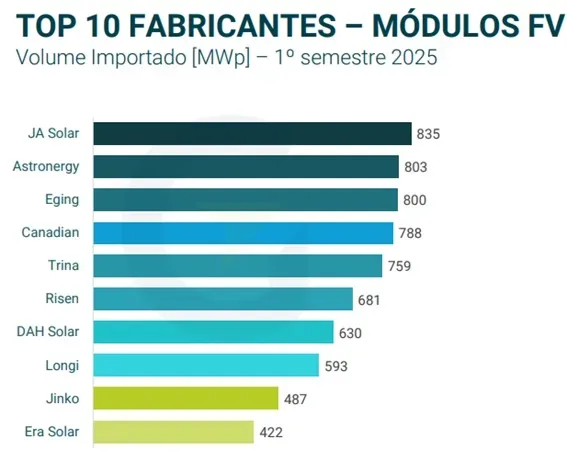
Of the 80 manufacturers that supplied photovoltaic modules to Brazil in the first half of the year, ten accounted for 60% of the imported volume. Together, the market leaders totaled 6,4 GWp in the period, a decrease of almost 16% compared to the first six months of 2024 (7,6 GWp).
Inverter market
Greener's survey highlights differences in performance across power ranges:
- Up to 9,9 kW: of the 58 manufacturers, the 10 market-leading companies concentrated 78% of imports, but the volume fell by 32% (from 2,5 GW to 1,7 GW).
- Between 10 kW and 100 kW: among 38 suppliers, the top 10 accounted for 87% of the volume, which grew by 26% (from 2,3 GW to 2,9 GW).
- Above 100 kW: in a group of 27 manufacturers, the 10 leaders accounted for 93,6% of imports, with an increase of 77% (from 2,7 GW to 4,8 GW).
Integrators profile
According to the study, 52% of integrators installed more than 500 kWp of photovoltaic systems in the first half of the year. Furthermore, 90% of those with portfolios above 501 kWp have been operating in the market for more than three years.
Already, 56% of companies operating up to three years have installed up to 200 kWp. "Experience favors larger portfolios, but organized structures and appropriate strategies allow new entrants to also add services and, consequently, installed volume," Greener highlights.
Drop in budgets and commercial efficiency
The research shows that there was a 46% drop in the average monthly volume of budgets issued in the first half of 2025, compared to the same period in 2024. Companies up to two years old had an average of 11 monthly budgets, while the most experienced ones reached 22.
Despite the downturn, the study identified an increase in sales conversion rates, reflecting customer segmentation strategies and resource optimization. "It's time to dedicate efforts to studying the market, better qualifying leads, and investing in commercial efficiency," recommends Greener.
Sales, shipping and financing
More than half of the integrators surveyed (57%) stated that they sold up to 100 kWp in the first half of the year. The average size was 8 kWp, equivalent to two residential systems per month.
- 65% of sales were of systems between 4 and 12 kWp, consolidating the leading role of residential consumers and small businesses.
- 24% remained between 12 kWp and 75 kWp, a commercial range that remained stable even with high interest rates and credit restrictions.
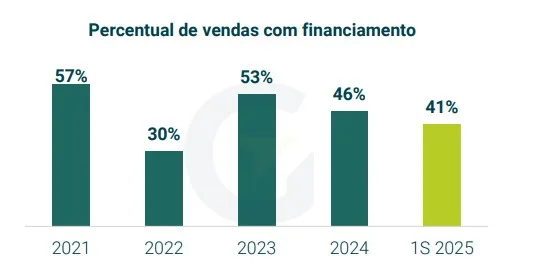
According to Greener, 41% of sales in the first half of the year were financed, involving 18 traditional banks, 9 development banks and 13 fintechs.
This percentage represents a decrease compared to 2024, driven by the impact of the high interest rate scenario, which increases the cost of installments and reduces the attractiveness of financing, combined with greater credit restrictions, with banks becoming more selective following the increase in defaults in other consumer lines.
"Financing is a key factor for market expansion and competitiveness. For integrators, it's strategic to maintain a good reputation with financial institutions, ensuring access to differentiated conditions for customers."
Challenges and flow reversal
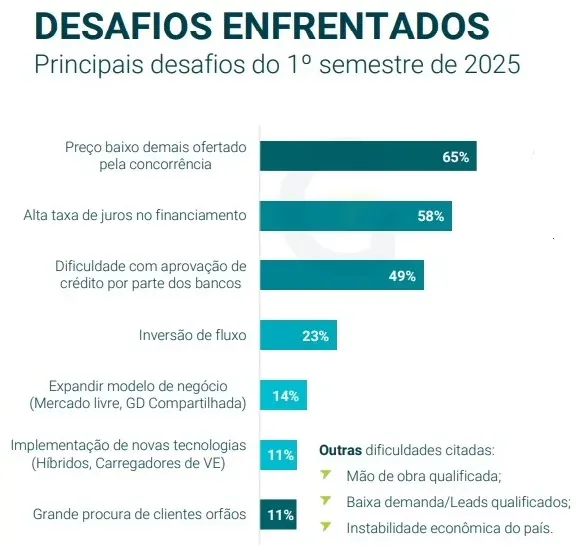
The survey shows that 65% of integrators point to price competition as the biggest obstacle they faced in the first half of the year. Next are high interest rates (58%) and difficulty in obtaining credit approval (49%).
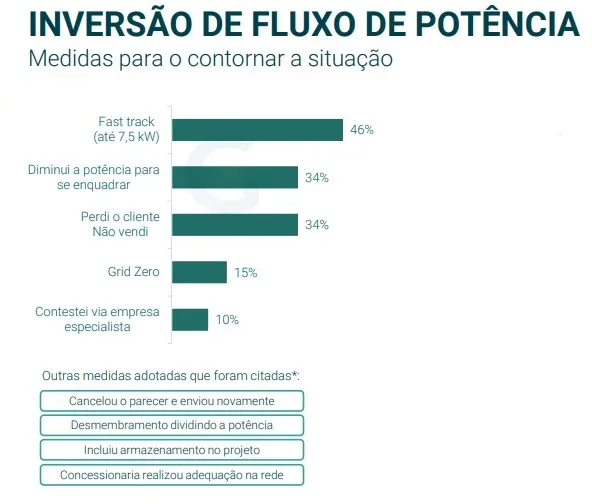
Flow reversals affected 28% of projects in the first half of the year, a figure that remains stable compared to 2024. Minas Gerais leads the way, with 81% of integrators reporting the issue. To address the situation, approximately 46% of the market resorted to fast track.
“Upon receiving a connection quote with a flow reversal declaration, the integrator must analyze whether the distributor has complied with the requirements of Art. 73 of Normative Resolution 1.000/2021. If the study is not issued or does not consider all alternatives, it is recommended to file a complaint with the distributor and file it with the ombudsman. ANEEL”, instructed Greener.
Orphaned Customers: Revenue Opportunity
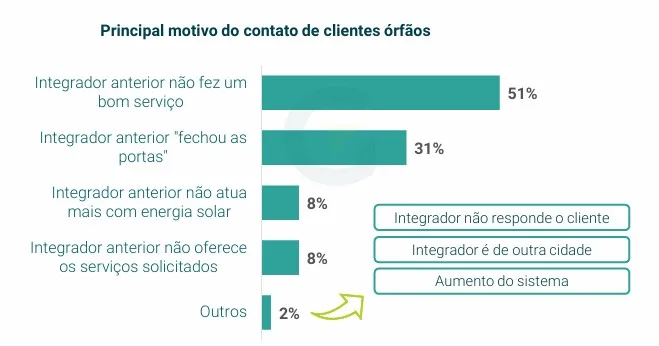
One of the study's highlights is the increase in orphaned customers, meaning customers without support from the company that installed the system. In the first half of the year, 80% of integrators received customers in this category—65% with up to five customers and 35% with more than six.
Furthermore, 94% say they intend to continue meeting this demand. "Orphaned customers reinforce a growing market for integrators who structure recurring service offerings, such as system maintenance and expansion," Greener reported.
Price of photovoltaic kits
The study also identified adjustments in the costs of average photovoltaic kits over the first six months of the year.
- 7,5% drop in systems up to 150 kWp, compared to June 2024.
- 10,9% increase in systems above 150 kWp.
- 3% reduction in 4 kWp systems, with an average price of R$ 11.360,00.
- 9,4% reduction in 50 kWp systems, now at R$101,5 thousand.
- 13% increase in 1 MWp systems, reaching R$2,51 million.
Changes in the GD scenario
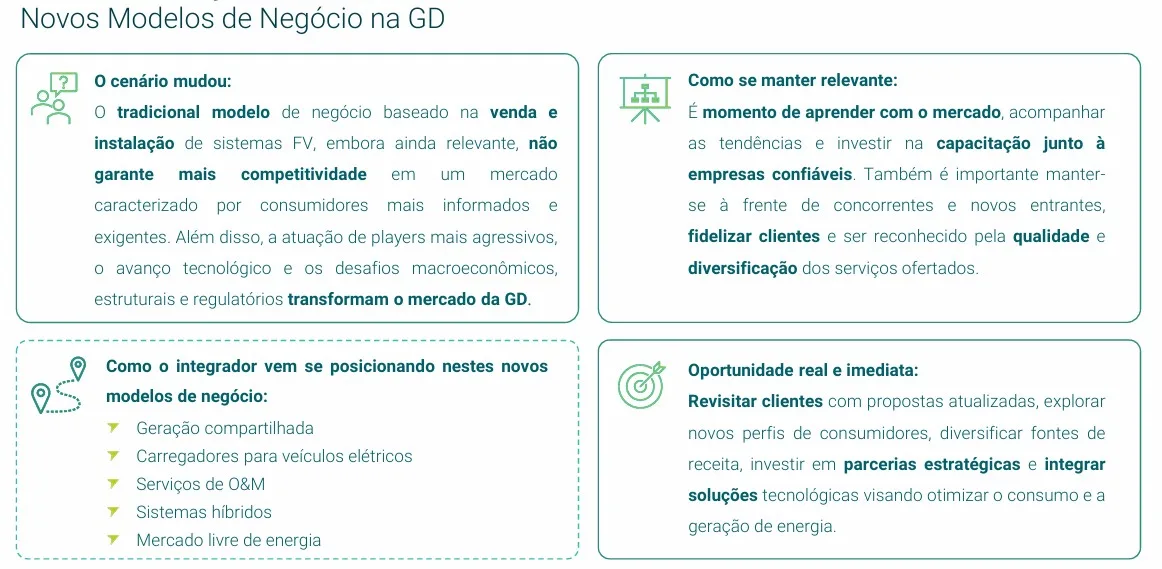
According to Greener, the DG market in Brazil is undergoing a transformation. The traditional model of selling and installing systems no longer guarantees competitiveness in the face of more informed consumers, aggressive new entrants, and macroeconomic and regulatory challenges.
"It's also important to stay ahead of competitors and new entrants, build customer loyalty, and be recognized for the quality and diversity of services offered," the company states.
Among the opportunities, Greener highlights revisiting customers with updated proposals, exploring new consumer profiles, diversifying revenue, investing in partnerships, and integrating technological solutions into the sales portfolio—such as batteries, electric vehicle chargers, and O&M services.
Research
Greener's Strategic Study on the DG market was conducted between July 1st and August 12th of this year and received 1.188 responses from integrators across Brazil. The survey covered companies of varying sizes and maturity levels, offering a comprehensive overview of the photovoltaic integration sector.
Click link to download and check the complete study.
all the content of Canal Solar is protected by copyright law, and partial or total reproduction of this site in any medium is expressly prohibited. If you are interested in collaborating or reusing part of our material, please contact us by email: redacao@canalsolar.com.br.



Comments
Comments are moderated before publication.Comments should be respectful and contribute to a healthy debate. Offensive comments may be removed. The opinions expressed here are those of the authors and do not necessarily reflect the views of the author. Canal Solar.