
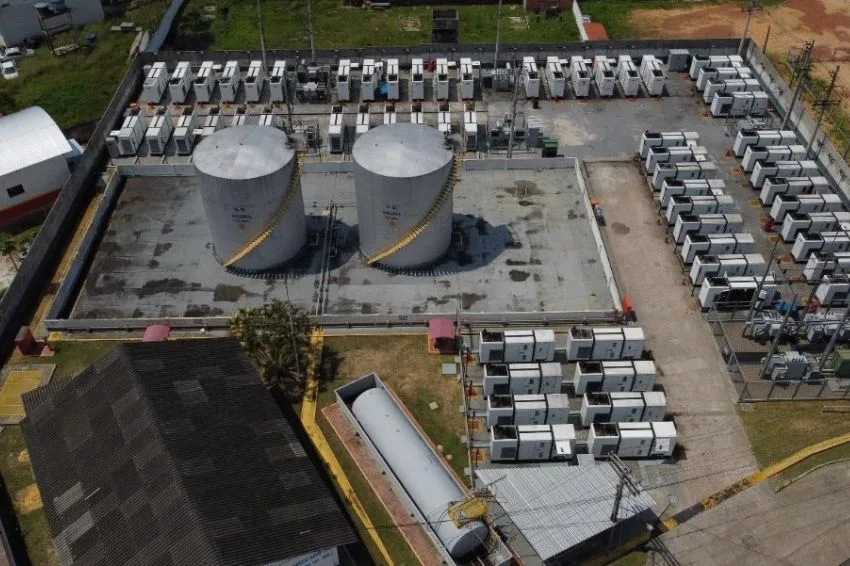
The state of Acre has the potential to have a cutting-edge technological solution to address historical bottlenecks in the electricity supply to the towns of Feijó and Cruzeiro do Sul.
The region could be a pioneer in implementing a battery energy storage system (BESS) with “grid-formingThis will make it possible for the electricity supply to not depend solely on the current infrastructure, which has experienced occasional interruptions.
The proposal aims to provide a rapid response to system failures and increase operational flexibility in the far west of the country. The technological model in focus is based on a technical study that has just been completed by EPE (Energy Research Company).
The analysis identified that the storage solution is technically and economically superior to contracting new thermal power plants in the municipalities of Cruzeiro do Sul, Tarauacá, and Feijó.
One of the main problems detected is that local thermal power plants lack the capacity for synchronized operation with the grid, making them ineffective in preventing immediate power outages after contingencies. In contrast, batteries have an almost instantaneous response to balance the system.
Network-building technology
In the short term, the plan indicates the installation of a 100 MW battery system with a 200 MWh energy capacity. This equipment would be connected to the 69 kV busbar of the Cruzeiro do Sul Substation and would operate as grid-forming.
Unlike conventional systems, this technology acts as a reference for the electrical grid, being able to provide ancillary services and operate independently, which is strategic for a region that currently lacks centralized generation that can be dispatched as needed.
The EPE study used advanced modeling tools, such as... PowerFactory softwareTo simulate the hourly behavior of the batteries, various charge and discharge cycles were tested to ensure that, in emergency situations, the storage system can supply local loads and interact perfectly with the transmission network.
Socio-environmental respect
In addition to batteries, the recommended solution includes a structural plan with the expansion of the 230 kV transmission network. 640 km of new lines are planned, connecting Tucumã, Feijó, and Cruzeiro do Sul.
A critical aspect of this project is the attention given to environmentally sensitive areas. The route of the new lines will seek to take advantage of existing double-circuit structures to minimize the opening of new lanes in complex terrain.
This engineering strategy was specifically designed to reduce the impact on the Campinas/Katukina Indigenous Territory. By using pre-designed infrastructure with special requirements to prevent tower collapses, the project reduces both the risk of licensing delays and the direct socio-environmental impacts on these communities.
Investments and benchmarks
The total amount for the execution of this modernization plan in Acre is estimated at approximately R$ 925,22 million. Of this amount, about R$ 230,48 million will be specifically allocated to the battery storage solution, while R$ 694,74 million will cover the costs of expanding the transmission network.
These figures take into account the tax benefits of the regime. REIDI (Special Incentive Regime for Infrastructure Development). If the taxation were full, the total cost could rise to approximately R$ 397,6 million for the battery system alone.
This transition will likely significantly reduce the need to burn fossil fuels in local thermal power plants, as well as consolidate the use of large batteries as a robust solution to increase reliability in remote regions.
Huawei
The Minister of Mines and Energy, Alexandre Silveira, was in Shanghai, China, last Friday (23), with representatives of Huawei. The focus of the meeting was the use of energy storage systems and the participation of Chinese companies in the battery auction, scheduled to take place in Brazil in 2026.
all the content of Canal Solar is protected by copyright law, and partial or total reproduction of this site in any medium is expressly prohibited. If you are interested in collaborating or reusing part of our material, please contact us by email: redacao@canalsolar.com.br.
Comments
Comments are moderated before publication.Comments should be respectful and contribute to a healthy debate. Offensive comments may be removed. The opinions expressed here are those of the authors and do not necessarily reflect the views of the author. Canal Solar.