
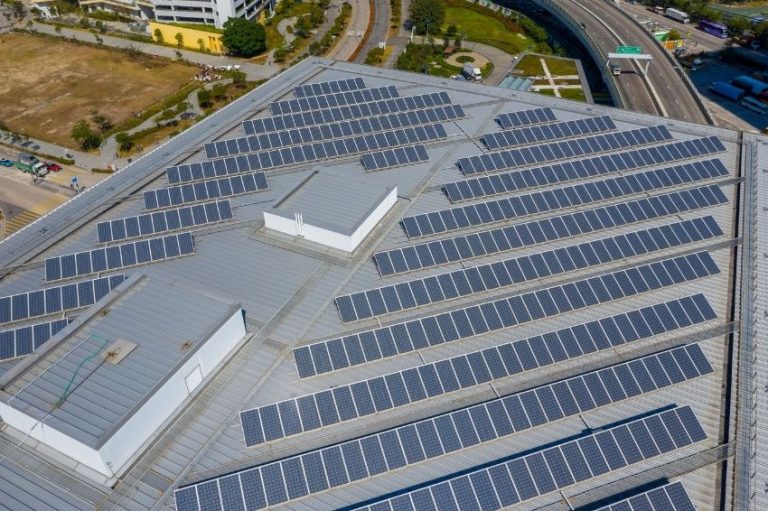
Brazil is currently experiencing a poor energy scenario – the level of hydroelectric power is the lowest in decades, the cost of thermoelectric power is the highest, and the country is preparing to emerge from the recession caused by the coronavirus. All these factors make the ANEEL is forced to increase energy and brand tariffs to discourage consumption and reduce the risk of the country facing rationing and blackouts.
It is natural, then, to expect there to be an increase in demand for photovoltaic systems with the capacity to operate in a hybrid way to provide a reduction in energy bills at more expensive tariff stations or even that can operate as a backup during power outages.
What should customers who already have photovoltaic systems installed do? Fortunately, it is not necessary to install a new project “from scratch” to provide an already installed system with the capacity to operate with batteries. It is possible to adapt existing systems by adding some components for the simplest cases or by replacing inverters in more complex cases.
In this article we will study ways to turn an existing photovoltaic system into a system that can operate with batteries and that can provide the benefits of hybridized systems.
Hybrid systems applications
Today there is no clear regulation by the ANEEL about how the battery of hybrid systems can interact with the grid – can it be charged by the public grid? Can it inject energy into the public grid at any time? It is expected that in the near future, when there is an update of REN 482 and 687, these issues will become clearer.
For now, it is recommended that installed hybrid systems do not have battery interaction directly with the public grid, that is, that the battery is charged only by the solar system and that it only discharges to feed loads in a backup network (operating off-grid) , to supply energy to internal loads or in an islanded manner as long as there is some kind of transfer board to prevent the external network from being energized in times of power outage.
Adapting existing systems
Both the backup solution and the solution of using batteries to alleviate peak consumption can be implemented in two ways: an internal AC grid derived and controlled by the inverter itself, or the creation of a microgrid.
For safety reasons, we can never let batteries power the public grid during a power outage. Therefore, if we want to have part of our installation working during a power outage, we will need some mechanism to prevent the injection of energy into the grid.
Figures 1 and 3 below illustrate the two topologies that we can use to set up a backup network: the one controlled by the hybrid inverter and the microgrid.
In the topology in Figure 1, all energy flow passes through the hybrid inverter. When connected to the conventional electrical grid, the inverter operates in on-grid mode, injecting energy taken from the solar panels into the electrical grid and keeping the batteries charged.
On the other hand, when the conventional electrical grid fails, the hybrid inverter in Figure 1 starts to operate in off-grid mode, acting as a UPS (backup system).
The inverter supplies voltage to the backup AC output (see Figure 2), powering critical loads that are previously chosen to be connected to this output. In this case, the energy from the solar panels and batteries is directed to this output.


The topology illustrated in Figure 3, unlike that illustrated in Figure 1, does not necessarily employ hybrid inverters (i.e., those that have inputs for solar panels and batteries).
This topology can be built with the formation of microgrids that operate in an islanded manner (disconnected from the conventional electrical grid) with two types of inverters: the grid former (which uses batteries) and the traditional on-grid solar inverter.
In the topology in Figure 3, the battery inverter can operate in two modes: on-grid or off-grid. In on-grid mode, the inverter simply connects to the grid and charges or discharges the batteries, according to a schedule or strategy pre-configured in the equipment (for example, supplying energy to the batteries during peak hours). In off-grid mode, the inverter starts to operate as a voltage source, supporting the microgrid in isolation from the conventional electrical grid.
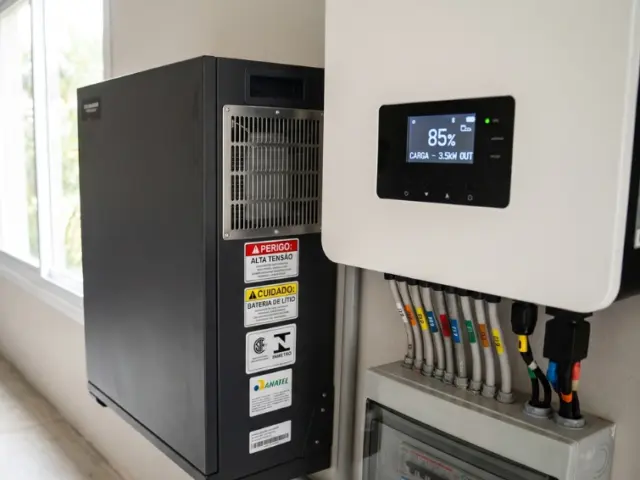
In summary, for operation with batteries and the upgrade of existing photovoltaic systems we can use two different types of inverters: a battery inverter, which is equipment that does not have an interface with the solar panel, but can charge and discharge the battery through from the AC grid, and the hybrid inverter (solar+battery) with backup AC output.
The battery inverter solution is the easiest to apply, as it can be integrated into any installation, even those that do not have a solar inverter.
Some solar inverter manufacturers even manufacture battery inverters that can communicate with each other to allow for the development of more complex strategies – such as prioritizing battery charging at a specific time and scheduling the battery to discharge at another specific time.
For this type of solution, it is recommended to install an energy flow meter to make the best decision about charging and discharging times. The second solution, which is a little more laborious for systems already in operation (as it requires replacing the existing inverter), is the installation of a solar inverter with the capacity to operate simultaneously with batteries and solar panels.
These hybrid inverters already have all the necessary electronics internally for integrating the battery into the grid. The advantage of this solution is that in new works, the cost is reduced and installation becomes simpler than the solution with a separate battery inverter – especially in low power systems.
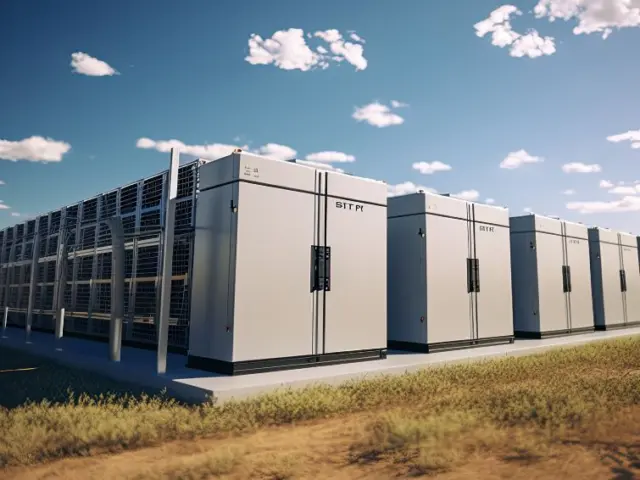
A system with batteries will obviously be more expensive than a system without batteries. However, we have to take into account the direct and indirect benefits of energy storage.
As a direct benefit, we can mention the reduction in the cost of the tariff in situations of consumption during peak hours, as well as the mitigation of possible costs related to the stoppage of production or the loss of products that need to be permanently refrigerated, for example.
As an indirect benefit, we have the comfort of being able to use electricity at any time, safely and reliably, without exposure to the risks of blackouts or increases in electricity tariffs.

Comments (11)
Comments are moderated before publication.Comments should be respectful and contribute to a healthy debate. Offensive comments may be removed. The opinions expressed here are those of the authors and do not necessarily reflect the views of the author. Canal Solar.
I already have a solar system, but I would like to add batteries or another model to generate energy, as there is a huge lack of energy here at home.
Good night, Thales!
I'm not an expert on the subject, but I believe that the battery inverter blocks the flow of energy to the boards and they will consider the microgrid as an open circuit.
I would like to hire a project for application in companies I serve. Can you tell me?
Congratulations on the article, very enlightening.
Very good article. The issue with using an off grid system, connected to the utility's electrical network, is the difference in waves produced. Even with an automation system, controlling which circuit operates at which moment, some electronic equipment senses this difference in waveforms, and may experience problems. I say this from my own experience with some systems I have set up.
I am interested in a course in the area of hybrid systems.
Congratulations, Matthew!
Excellent subject!
It brings in a very enlightening way the issue of autonomy, of not needing to depend on systems for energy.
I kindly ask you to state the cost of the batteries and inverters and which stores would offer them at the most appropriate price.
Thank you.
Good morning, could you send me the project of this system you would like to make?
Good morning, I use both. Very good, exceeded my expectations.
Congratulations! Very well explained, in a simple and objective way.
I would like to contact a reliable company for the sale and after-sales of this solution, for a free quote. I already have an on greed system, I intend to expand it and do an off greed system.
In topology 3, in a case where there is a power outage from the grid and the system becomes isolated, what happens if the batteries are fully charged, there is a lot of radiation and there is no charge? With no place for solar energy to flow, what will make the on-grid inverter reduce production?