
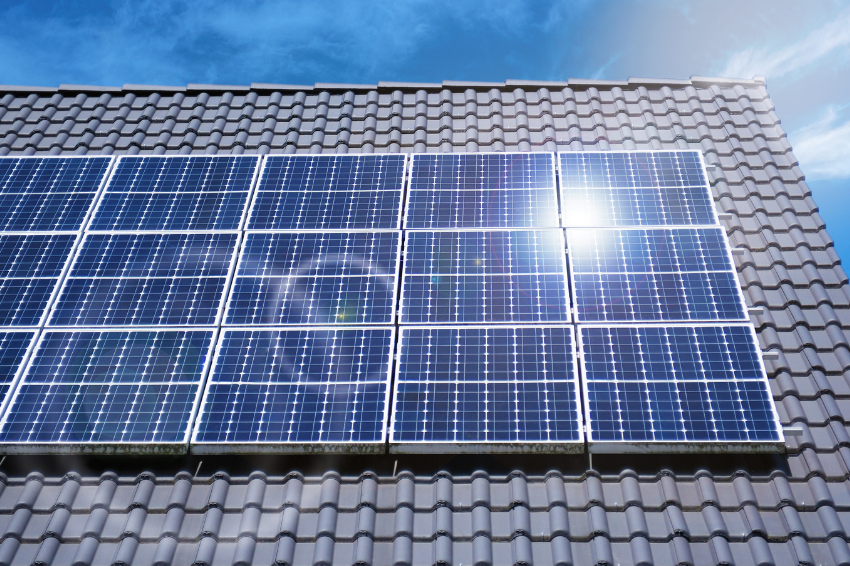
Photovoltaic modules are at the heart of solar energy generation. The presence of this equipment on rooftops, power plants, and public projects continues to grow rapidly. In fact, the License plate imports hit a record in 2024..
Despite this, many questions still remain about how the boards workWhat technologies are available on the market and how to choose the most suitable solution for each situation?
In this guide, you will find clear explanations about what photovoltaic modules are, how light is converted into electricity, what characteristics deserve attention, and where this type of equipment is commonly used.
The content also features main technologies and the differences between them. Continue reading and understand how to evaluate, with more confidence, the The ideal solar system for your needs..
What are photovoltaic modules?
Photovoltaic modules are panels made up of multiple cells capable of... to transform sunlight into electrical energy.
Each cell generates a small amount of electricity and, when grouped together, they form a device capable of supplying electricity to homes, businesses, or rural properties.
These cells are made of semiconductor materials, such as silicon, which react to solar radiation by releasing electrons. The entire structure is coated with layers of glass, polymers, and metal profiles for protection and durability.
The result is a unit designed to capture radiation and produce a continuous and silent electrical current.
How does a photovoltaic module work?
A photovoltaic module works based on the photovoltaic effect, a phenomenon in which sunlight releases electrons in the semiconductor material of the cells.
Each cell has a PN junction Formed by combining two regions of silicon with different dopants, which can increase the positive or negative charges. This junction creates an internal electric field capable of directing electrons when radiation hits the surface of the material.
The movement of these charges generates direct currentThe cells are connected in series, linking the positive terminal of one to the negative terminal of the next, which adds the individual voltages and allows the board to deliver values suitable for the system.
Multiple panels combined form larger arrays that increase the power available to the property.
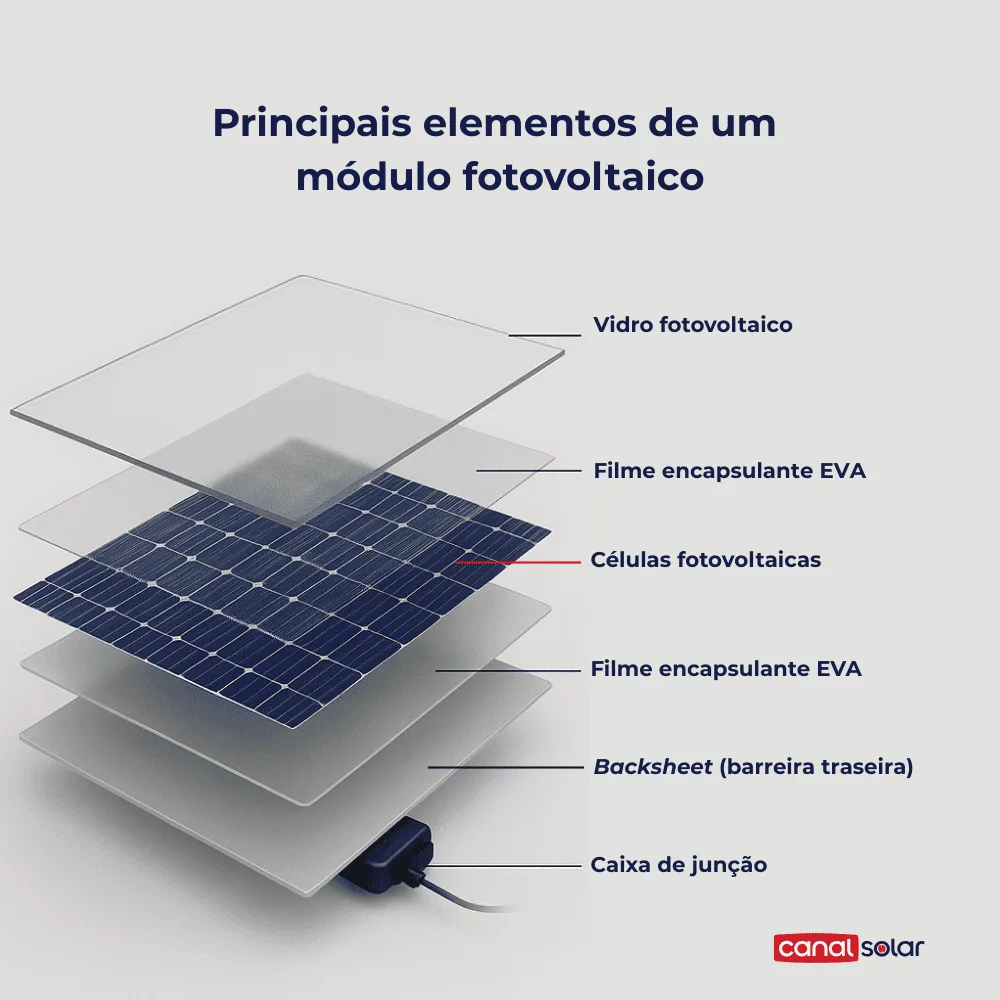
Now let's look at the main components of a photovoltaic module:
- Photovoltaic cells responsible for converting light into electricity.
- Photovoltaic glass which protects the active surface and allows high light transmission.
- EVA encapsulating film which secures, insulates and protects the cells against moisture and impacts.
- Backsheet which acts as a rear barrier and ensures electrical insulation.
- Junction box, the point where the internal connections and protection diodes are located.
After generation, the inverter converts the direct current into alternating current to power the building's loads. When production exceeds consumption, the surplus goes to the public grid or, if available, to the battery.
This extra energy generates consumption credits that can be recovered in subsequent bills, according to the rules of the compensation system created by REN 482. ANEEL.
See also other features: Check out how photovoltaic module quality tests are carried out
Main characteristics of photovoltaic panels
Below are the main parameters found in the technical specifications of photovoltaic panels that help to understand how each model performs:
- Rated power (Wp): This value indicates how much power the panel delivers under standard test conditions (STC). This power serves as a reference for sizing residential, commercial, or rural systems.
- Efficiency: It shows the relationship between the solar energy that reaches the surface and the electrical energy produced. The greater the efficiency, the smaller the area needed to generate the same power.
- Temperature coefficient: This indicates how much power is reduced when the module temperature increases. Lower values mean less power loss on hot days.
- Manufacturer's Warranty: This refers to the period during which the manufacturer ensures the minimum performance of the photovoltaic module, especially energy generation. This period is usually longer than 25 years, but the module may continue to function after this period, although outside the manufacturer's warranty.
- Power tolerance: This shows the actual variation around the stated power due to power measurements taken after the manufacturing process. Modern models operate with positive tolerance, delivering values equal to or greater than specified.
- Operating current and voltage: For sizing, the maximum current (short-circuit current) and voltage (open-circuit voltage) values of the module are used. These values ensure that the system is sized for extreme conditions. Operating values, such as the maximum power point voltage, are used to verify if the string is within the tracking range of the inverter's MPPT.
These technical characteristics define the performance and the amount of energy that the modules can generate in a solar system.
Types of photovoltaic modules
Photovoltaic modules are available in different technologies, each with its own construction properties, efficiency levels, and recommended applications. The main types are:
- monocrystalline silicon
- Polycrystalline silicon
- Thin film modules
- Other technologies: PERC, bifacials, HJT, TOPCon, thin film.
monocrystalline silicon
Monocrystalline modules utilize cells formed from a single silicon crystal. This uniform structure favors electron flow and ensures greater efficiency per area.
The result is panels capable of generating More energy in smaller spaces.This increases the installed capacity on smaller rooftops or in plants seeking high energy density.
The main advantage of this technology is that superior performanceRoofs with limited space, for example, benefit from higher power per module, which improves the return on investment.
In contrast, the The industrial process is more complex. It consumes more energy and raw materials, which explains the higher cost compared to other technologies.
Its use is recommended when available space is limited, when the project requires high production per square meter, or when the goal is to maximize annual generation.
Polycrystalline silicon
Polycrystalline modules are produced by fusing several smaller crystals, which creates internal boundaries that hinder the movement of electrons.
This feature reduces efficiency compared to monocrystalline models. As a result, the power per module tends to be lower.
Although the manufacturing of polycrystalline modules consumes less energy and generates less waste of raw materials, the price per watt of power tends to be higher currently due to decreased market demand.
With the transition to monocrystalline technology, polycrystalline modules have become less common and harder to find.
In any case, its use is recommended when there is sufficient space on the roof or ground to accommodate more units, or when the priority is to reduce investment without compromising the reliability of the system.
Read more: Mono or polycrystalline silicon: who wins the duel?
Thin film modules
The modules of thin film They use a very thin photovoltaic layer deposited on glass, plastic, or metal. This process results in products lighter and more flexible, capable of adapting to unconventional surfaces or structures that cannot support much weight.
Despite these advantages, the efficiency is lower than in crystalline silicon panels, which requires a larger area to generate the same energy.
In return, the Performance tends to be more stable. In locations with diffused light, such as on cloudy days, or in applications with partial shading.
This technology is suitable for facades, curved roofs, special architectural projects, and installations where the weight of the structure is a limiting factor.
Other technologies
In addition to traditional versions, there are technologies that combine new materials or improve cell behavior to increase efficiency, reduce losses, and extend lifespan. Among the main solutions are:
- Perc: Cells with an additional layer of aluminum on the back reflect light that cannot be absorbed on the first pass, allowing for a new absorption attempt and increasing efficiency.
- Hjt (Heterojunction): A combination of monocrystalline silicon with thin layers of amorphous silicon to increase the electric field and reduce electrical losses. This type of cell is known as a heterojunction, as it has more than one type of semiconductor at the junction.
- TOPCon: Cells with advanced passivation featuring a kind of "tunnel" made of silicon oxide that creates an easier and faster passage for electrons, reducing the chances of these electrons being lost along the way and increasing efficiency compared to PERC.
- Thin film (CdTe): Cadmium telluride (CdTe) technology, widely used and primarily manufactured by First Solar, is a more flexible and, in some cases, cheaper module, but less efficient compared to crystalline silicon.
These technologies appear mainly in larger power plants or in projects that seek efficiency gains without expanding the area occupied.
How much does a photovoltaic module cost?
Currently, the module monocrystalline It is the best option in terms of cost benefitDespite having a higher production cost, the increased supply and demand have reduced prices, making this the most competitive technology.
Today, the prices of monocrystalline modules are lower than... polycrystalline, which have fewer options on the market and are more expensive per watt due to low demand.
To exemplify, the wording of Canal Solar did a quick price search. Here's what we found:
- PolycrystallineA 160W module was found for R$ 497, which results in R$ 3,10 per watt.
- monocrystallineA 615W module was found for R$ 572, resulting in R$ 0,93 per watt. Another 540W module is being sold for R$ 365, which gives R$ 0,675 per watt.
In other words, although the production cost of monocrystalline glass is higher, its greater availability on the market makes this technology the most advantageous option in terms of price.
Regarding the technology of thin filmWe did not find any available options for purchase in our search.
Typical applications of photovoltaic modules
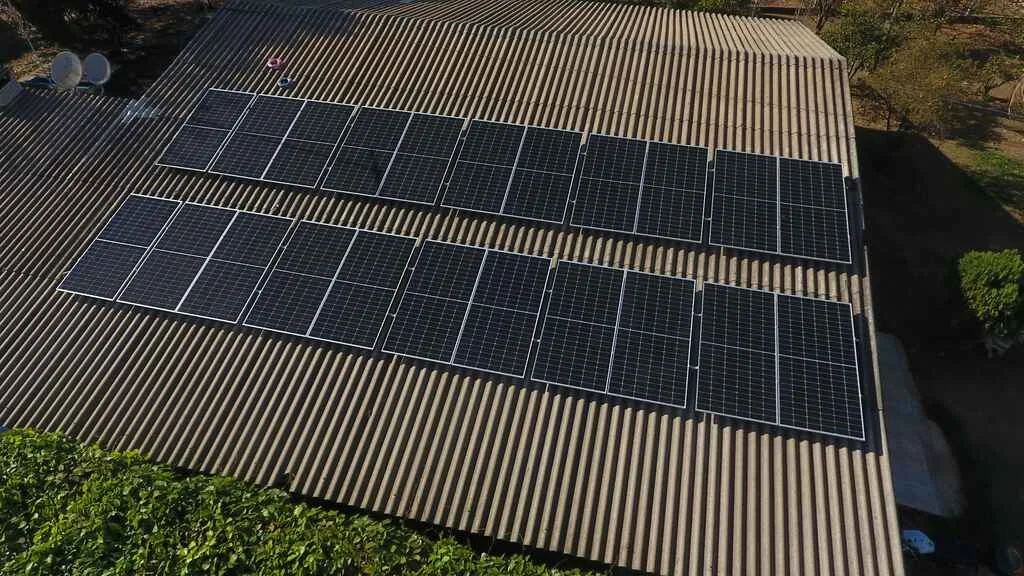
Photovoltaic modules are used in various scenarios, ranging from small residential systems to large ground-mounted power plants.
Moreover, this variety of applications helps to boost the Brazilian market, which imported approximately 20,19 GW of solar panels between January and November 2024..
The most common applications are:
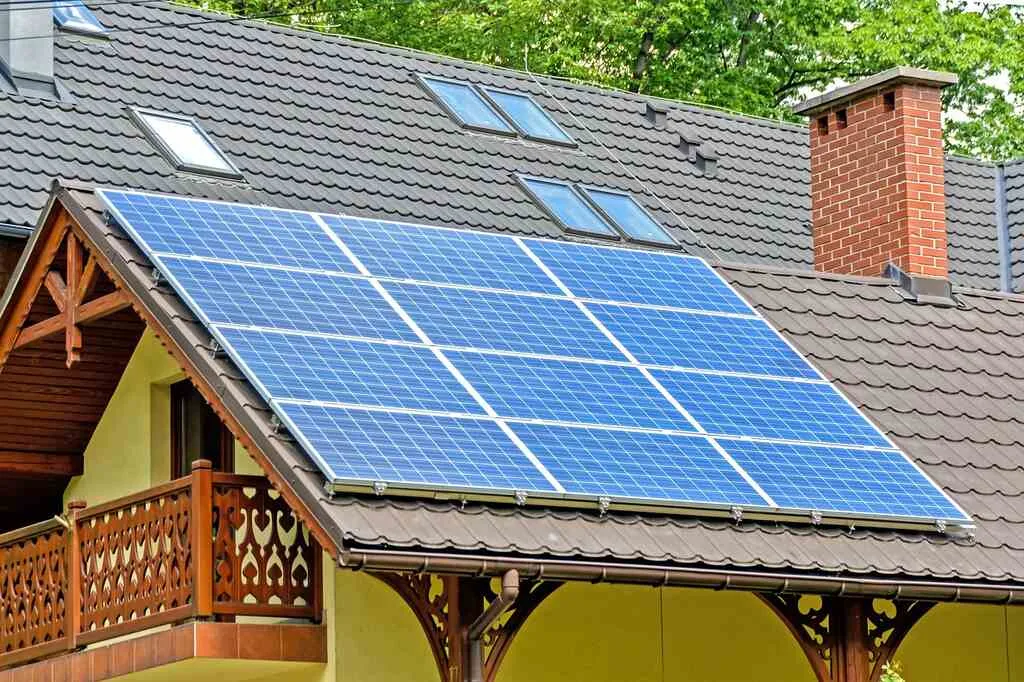
- Residences: distributed generation on pitched roofs or slabs.
- Businesses and industriesInstallation in warehouses, parking lots, and distribution centers.
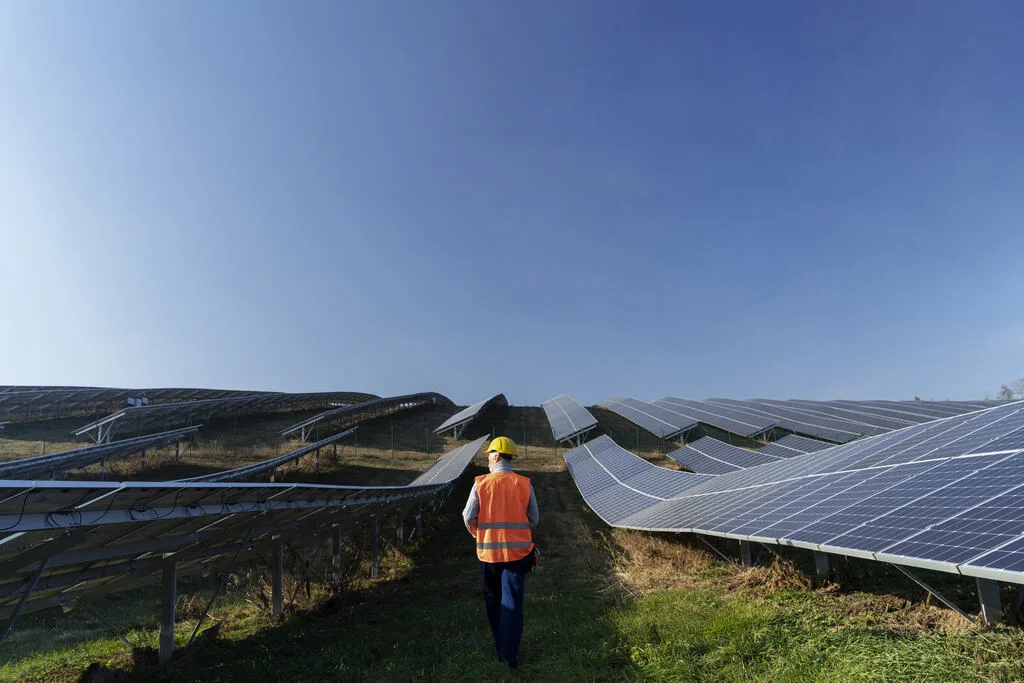
- solar plants: land-based arrangements that bring together thousands of units for large-scale production.
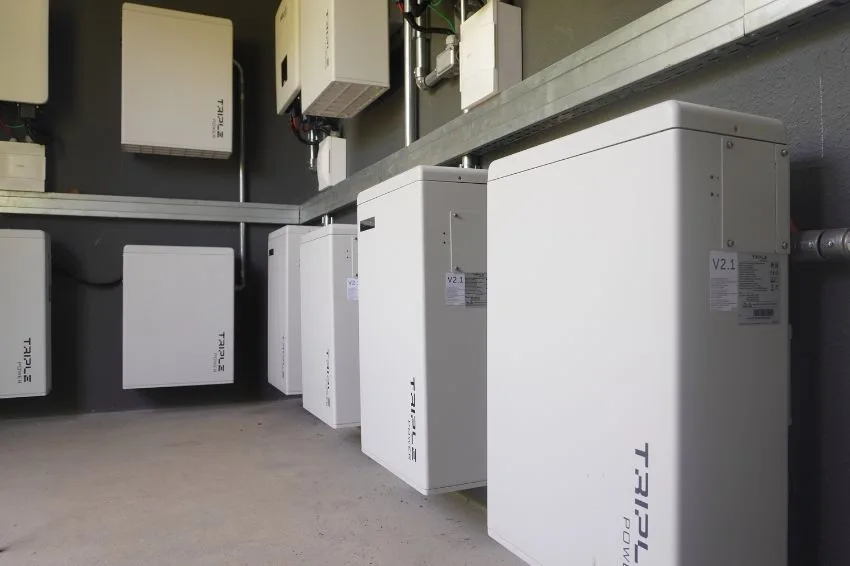
- Off-grid systemsProviding power to isolated locations without network access using batteries.
- On-grid systemsDirect connection to the public grid, with energy compensation.
- hybrid systemsA combination of panels and batteries for greater autonomy.
To give an example, a project on-grid de energy efficiency In Osasco, mini solar power plants were installed in a hospital and four municipal schools.
In the hospital, the installation of 328 modules and the replacement of old equipment should generate an annual reduction of 640 MWhequivalent to the consumption of more than 200 homes.
In schools, the implementation of 232 modules Combined with the replacement of more than two thousand light bulbs with LEDs, this should reduce approximately... R $ 310 thousand per year in public accounts.
Read the full article: Energy efficiency project brings mini solar plants to hospitals and schools in São Paulo
Monitoring and maintenance
O monitoring do photovoltaic system It allows you to monitor generation in real time and identify abnormal variations in performance.
This check helps detect unexpected shading, connection failures, or production drops related to weather or natural wear and tear of components.
A preventive maintenance It's simple and helps maintain efficiency over the years. The most frequent maintenance tasks are:
- Cleaning surfaces to remove dust and debris.
- Inspection of electrical connections
- Inspection of cables, supports and inverters
- Analysis of alerts issued by the monitoring platform.
Take advantage and see on video A practical test demonstrating how cleaning photovoltaic modules resulted in a 6% increase in energy production:
As regards storageThere are variations depending on the manufacturer. Therefore, it is advisable to read the manual provided by the company and take the necessary precautions to preserve the quality and effectiveness of your modules.
If you want to deepen your technical knowledge and learn how to analyze systems more confidently, check out... Solar Energy Courses Canal, with some of the country's leading experts.
Conclusion
By now, you know how photovoltaic modules are built, how they work, and what technologies are available on the market. With this understanding, it becomes easier to compare proposals, evaluate equipment, and identify which solution makes sense for your situation.
The wide variety of options available in Brazil allows you to find everything from compact models for homes to equipment used in commercial, industrial, and power plant projects.
The important thing is to choose modules that are suitable for your space, your consumption, and the type of system you intend to install.
Take advantage and check out our Tips on how to care for photovoltaic modules. and ensure its durability.
Frequently Asked Questions (FAQ)
What is the difference between a module and a cell?
A photovoltaic cell is the basic unit that converts light into electricity. The module is the assembly of several cells connected and encapsulated in glass, EVA, and a backsheet. In common language, it is known as a solar panel.
How many modules do I need for my home or business?
The quantity depends on monthly consumption, the power of each unit, the area available for installation, and the location. The calculation considers historical energy usage, the irradiance of the region, and the type of technology chosen.
Does a photovoltaic system require maintenance?
Yes, the modules can be cleaned occasionally to remove dirt or debris, especially in regions with little rainfall. Additionally, the inverter may need monitoring to ensure optimal operation, but in general, the systems are quite durable and require little maintenance effort.

Comments
Comments are moderated before publication.Comments should be respectful and contribute to a healthy debate. Offensive comments may be removed. The opinions expressed here are those of the authors and do not necessarily reflect the views of the author. Canal Solar.