

The global energy transition is moving towards renewable sources, and solar photovoltaic energy occupies a central position in this movement. Within this scenario, hybrid photovoltaic systems emerge as a natural evolution, integrating solar generation, battery storage, and connection to the electrical grid.
This combination enhances user autonomy, improves energy management, and increases the resilience of the installation. However, it also requires additional care regarding protection against electrical surges, given the greater complexity and sensitivity of the equipment involved.
Unlike on-grid systems, which are connected to the grid without storage, or off-grid systems, which operate in isolation, hybrid systems offer the best of both models. They allow surplus energy generated to be stored for nighttime use, on cloudy days, or during periods of higher consumption, while maintaining a connection to the utility company for additional supply or injection of energy into the grid.
This more flexible and intelligent architecture has driven the adoption of hybrid systems, favored by the reduction in battery costs and the growing search for energy security and independence from the public grid.
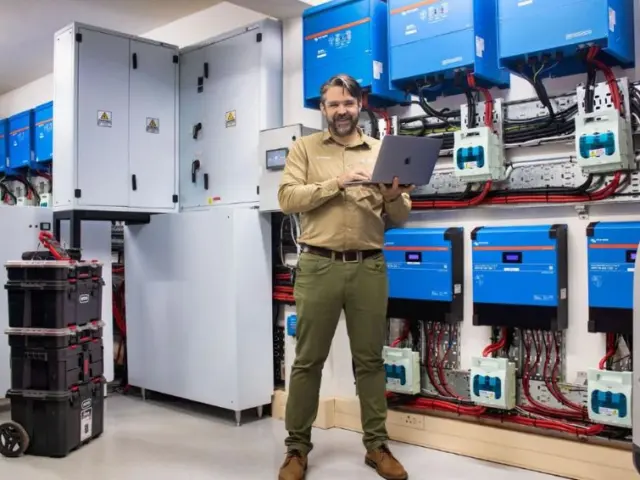
The simultaneous presence of multiple interfaces, photovoltaic panelsHybrid inverters, batteries, controllers, and the electrical grid itself increase vulnerability to electrical surges, which can occur due to direct or indirect lightning strikes, power grid maneuvers, switching of internal loads, or prolonged voltage faults and fluctuations.
These surges can seriously compromise high-value components, such as batteries, inverters, and controllers, as well as affect the operation of the system as a whole. It is in this context that surge protection ceases to be merely recommended and becomes fundamental to ensuring the reliability and longevity of the investment.
CLAMPER and Specialized Protection for Hybrid Systems
“The architecture of a hybrid photovoltaic system requires a very well-applied surge protection strategy,” emphasizes Douglas Lara, Applications Engineering Coordinator at [Company Name]. CLAMPER, national manufacturer of DPS (Surge Protection Devices).
Lara emphasizes that protection must cover all critical points in the system: “It is essential that direct current connections, such as the inputs from the panels and batteries, and the alternating current output from the inverter are properly protected. The adoption of specific surge protection devices (SPDs) for DC and AC ensures continuity of operation and prevents damage caused by surges,” she explains.
CLAMPER surge protection devices (SPDs) are designed to operate in these scenarios, preserving infrastructure and reducing the likelihood of failures in hybrid photovoltaic systems. The presence of these devices becomes an essential component for the efficiency and safety of the installations.
all the content of Canal Solar is protected by copyright law, and partial or total reproduction of this site in any medium is expressly prohibited. If you are interested in collaborating or reusing part of our material, please contact us by email: redacao@canalsolar.com.br.




Comments
Comments are moderated before publication.Comments should be respectful and contribute to a healthy debate. Offensive comments may be removed. The opinions expressed here are those of the authors and do not necessarily reflect the views of the author. Canal Solar.