
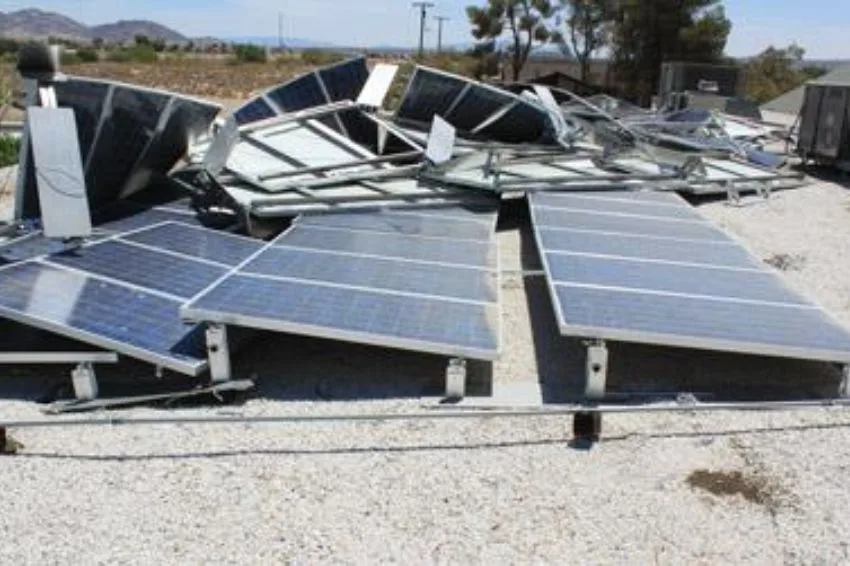
Wind loads on photovoltaic structures are the main cause of accidents and structural collapses. The structures represent approximately 10% to 15% of the total investment in photovoltaic plants, yet they are considered the skeleton of the project, as they support a large part of the investment; therefore, choosing a robust structure is of paramount importance.
The Brazilian wind isopleth, on which the ABNT NBR 6123 standard is based, was created in 1988 and has not yet been updated, even though the standard was updated in 2023.
The reality of winds in Brazil is not the same, as with winds recorded at 170 km/h in Paraná in December 2024. When we apply the factors of the regulation (S1, S2 and S3), we find winds above 180 km/h.
To calculate the characteristic wind speed, the speed considered in the structural calculation, we take into account 3 factors. The first factor is the topographic factor (S1), where depending on the topography of the location, the characteristic wind speed can be lower or higher, for example, flat terrain has a multiplication factor equal to 1.
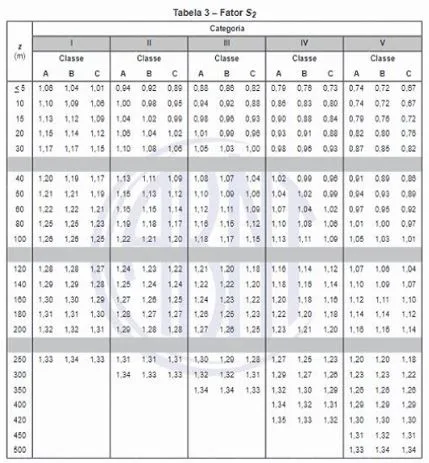
The second factor is the terrain roughness, structure dimensions, and height relative to the ground (S2), with roughness classified into categories I to V, and structural dimensions classified as A, B, and C. Based on this information, we find the multiplication factor for each height relative to the ground.
For the third factor (S3), we have the statistical factor which ranges from 1 to 5, with factor 1 representing structures whose total or partial collapse could affect the safety or possibility of rescuing people after a destructive storm; for this situation, the multiplication factor is 1,11. For information on all factors, see ABNT NBR 6123.
Metal Light Solar Estruturas adheres to very strict safety protocols to ensure there is no risk of structural collapse, even with the changing wind conditions in the country, thus guaranteeing the robustness of the end customer's investment.
The opinions and information expressed are the sole responsibility of the author and do not necessarily represent the official position of the author. Canal Solar.


Comments
Comments are moderated before publication.Comments should be respectful and contribute to a healthy debate. Offensive comments may be removed. The opinions expressed here are those of the authors and do not necessarily reflect the views of the author. Canal Solar.