
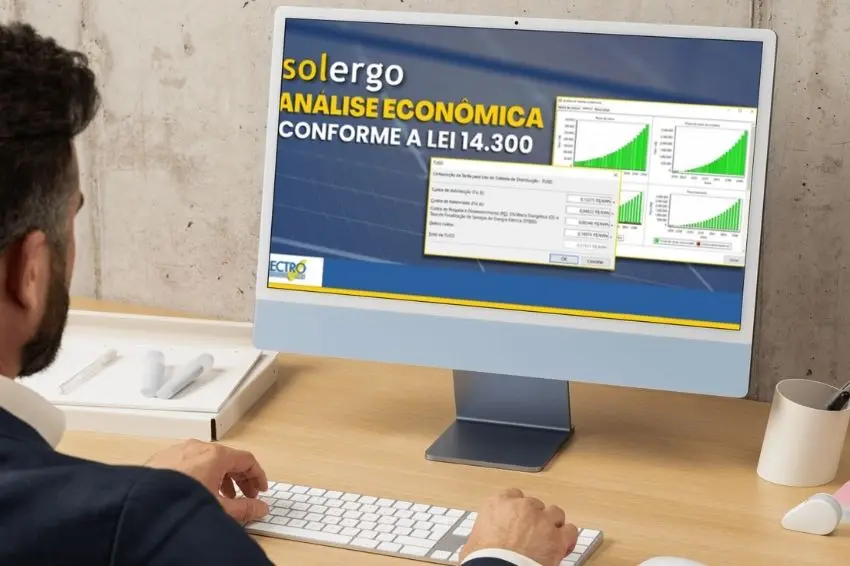
Energy analysis and accurate payback calculation are crucial for the viability of a photovoltaic project. With the consolidation of Law No. 14.300/2022, the compensation scenario has changed, making it essential that proposals include the progressive collection of the Fio B (TUSD) fee on injected energy.
Electro Graphics' SOLergo software offers advanced tools for sizing systems and predicting economic return in full compliance with regulations. ANEEL.
- The Transition Rule and Wire B
Since version 2023, SOLergo automates the calculation of the "Compensation Cost". For generators up to 500 kW, the software applies the gradual transition of Wire B:
- 2025: 45% | 2026: 60% | 2027: 75% | 2028: 90%.
Projects above 500 kW in remote modalities (or shared with a majority holder of 25%+) do not follow the gradual transition. The software calculates, from the beginning, the incidence of 100% of Wire B and charges, plus 40% of Wire A.
- Accuracy in Consumption Profile and Simultaneity
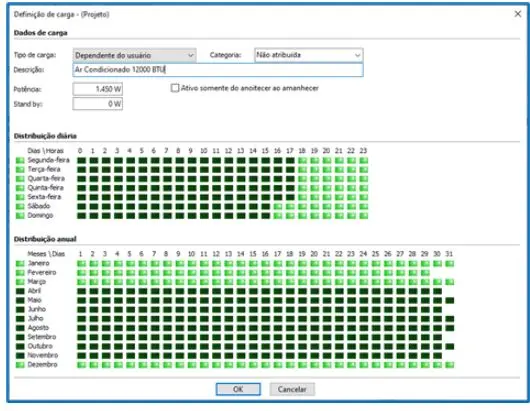
The simultaneity factor (self-consumption) is key to reducing the impact of Law 14.300. The more energy consumed at the time of generation, the lower the injection and, consequently, the lower the compensation cost. SOLergo It allows you to define the consumption profile by importing .csv files (intervals of 15 min or 1 hour) or by creating load profiles as in the example in Figure 1.
- Energy Tariff Details
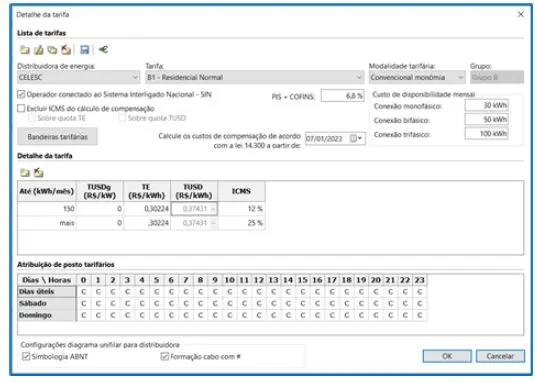
For an accurate financial analysis, the designer can detail all the components of the TUSD (Wire A, Wire B, R&D, Charges and Taxes). In SOLergo, simply access the tariff registration to inform the initial billing date, ensuring that the progression of the law is correctly applied throughout the system's lifespan.
- System Typology and Financial Impact
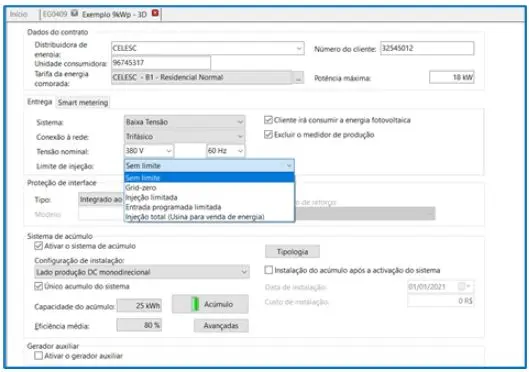
The choice of technology directly influences costs. SOLergo allows you to simulate different modalities:
- Without limitation (On-grid and Hybrid modes);
- Grid-Zero;
- Limited injection;
- Scheduled entry limits;
The choice of project typology can optimize compensation through the use of batteries for the hybrid system. Furthermore, it is possible to design systems without energy injection (GridZero) or with limited programmed input, which are systems that minimize the injection of energy from the electrical grid.
- Economic Analysis Reports
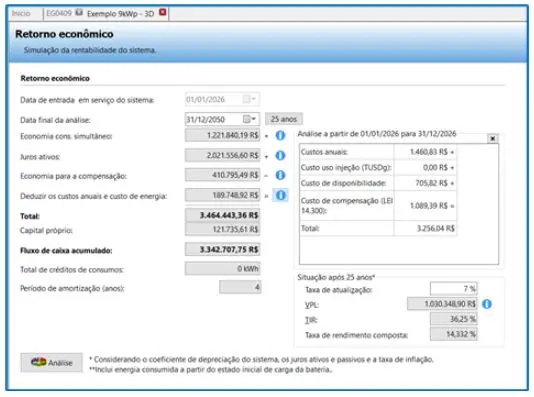
The final result is consolidated in the Economic Return Analysis table. In the "Expenses" section, the Compensation Cost line (Law 14.300) details the financial impact year by year, allowing for a clear visualization through input and output graphs.
all the content of Canal Solar is protected by copyright law, and partial or total reproduction of this site in any medium is expressly prohibited. If you are interested in collaborating or reusing part of our material, please contact us by email: redacao@canalsolar.com.br.


Comments
Comments are moderated before publication.Comments should be respectful and contribute to a healthy debate. Offensive comments may be removed. The opinions expressed here are those of the authors and do not necessarily reflect the views of the author. Canal Solar.