

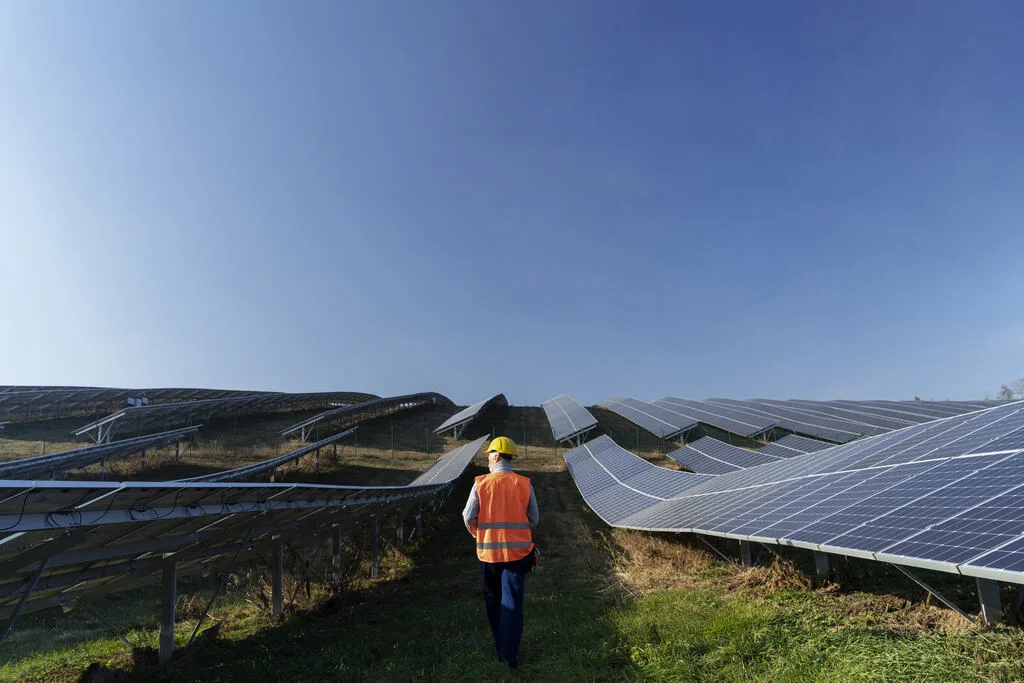
Solar energy has seen significant growth in Brazil in recent years. In total, the source has already surpassed 48 GW of installed power and, as a result, prevented the emission of 58 million tons of CO2 in electricity generation, according to a mapping by ABSOLAR (Brazilian Photovoltaic Solar Energy Association).
According to the entity, the photovoltaic sector, including self-generation of small systems and large-scale plants, has already attracted more than R$222,4 billion in new investments and generated more than 1,4 million green jobs in the country since 2012.
Additionally, business in the segment generated more than R$68,6 billion in revenue for the public coffers. This source is currently equivalent to 20,2% of the Brazilian electricity matrix.
The “Global Market Outlook For Solar Power 2024 – 2028” report by Solar Power Europe pointed out that the Brazil is the world's third largest solar energy market, behind only China and the United States.
This solar energy advance is no coincidence. The advantages of solar energy are numerous, making it an attractive choice for consumers and businesses.
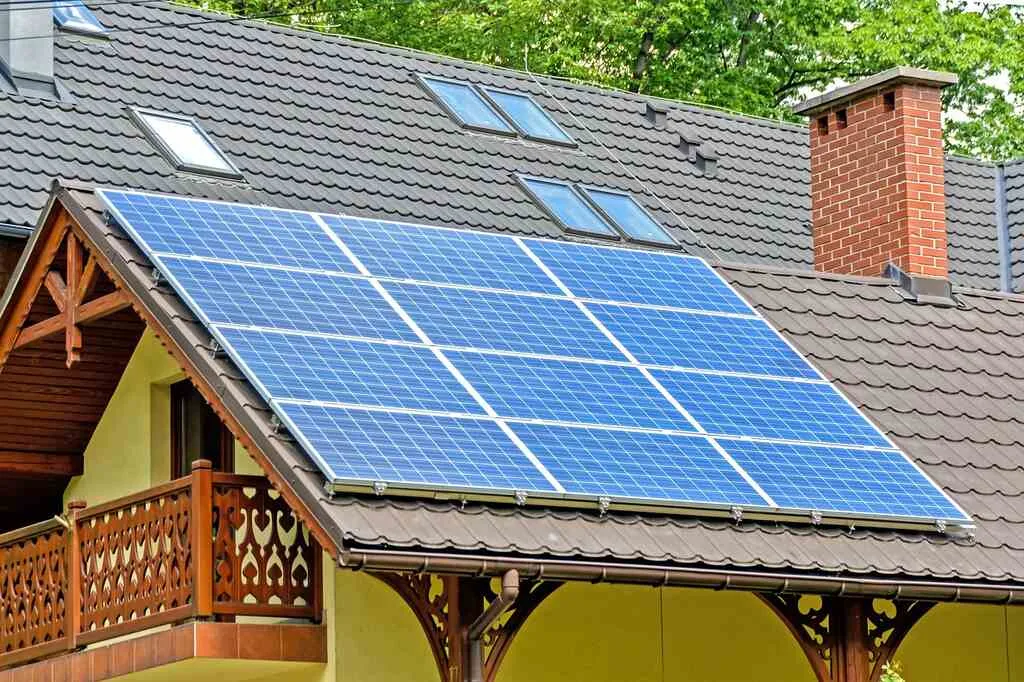
In addition to being a clean and renewable source, which helps reduce carbon emissions, photovoltaic technology provides significant savings on the electricity bill, with a quick return on investment.
Energy independence and the appreciation of properties that adopt this system are other factors that stimulate the growth of the sector, making solar energy an increasingly viable and accessible solution in Brazil.
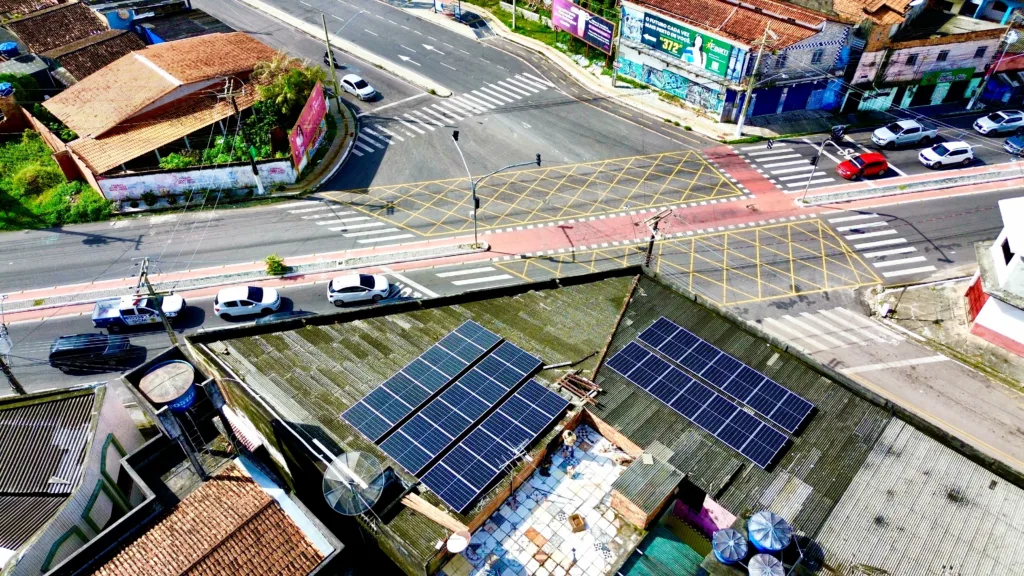
Below are the main advantages of solar energy:
Advantages of solar energy
Clean and renewable energy
Unlike fossil fuels such as coal, oil and natural gas, which release large amounts of greenhouse gases into the atmosphere, solar energy does not generate polluting emissions during its production.
This makes it an essential solution to combat climate change and reduce the carbon footprint on a global scale.
The advantages of solar energy are numerous. In addition to being a clean source, solar energy is renewable and inexhaustible. The sun is a natural source of energy that is available daily, and its radiation can be converted into electricity in a sustainable way.
Unlike fossil fuels, which have limited reserves and are subject to price fluctuations and supply issues, solar can be generated anywhere there is sunlight, ensuring a continuous and affordable source of energy.
Discount on electricity bill
One of the main advantages of solar energy is the reduction in electricity bills. By installing solar panels, consumers can reduce their monthly electricity bill by up to 95%.
For companies and industries, these savings are even more significant, especially in regions where electricity tariffs are high.
The possibility of reducing operating costs makes solar a strategic alternative, which directly impacts the competitiveness and profitability of the business.
Great return on investment
Among the many advantages of solar energy is the return on investment time, which is usually fast. With regard to residential installations, for example, the average is three years. According to Greener study, there was a scenario of improvement in payback in the 1st half of 2024, with a 10% reduction compared to January 2024 and a 22,5% reduction when compared to June 2023, considering the simulated conditions and assumptions, with the drop in CAPEX being the main factor for this improvement.
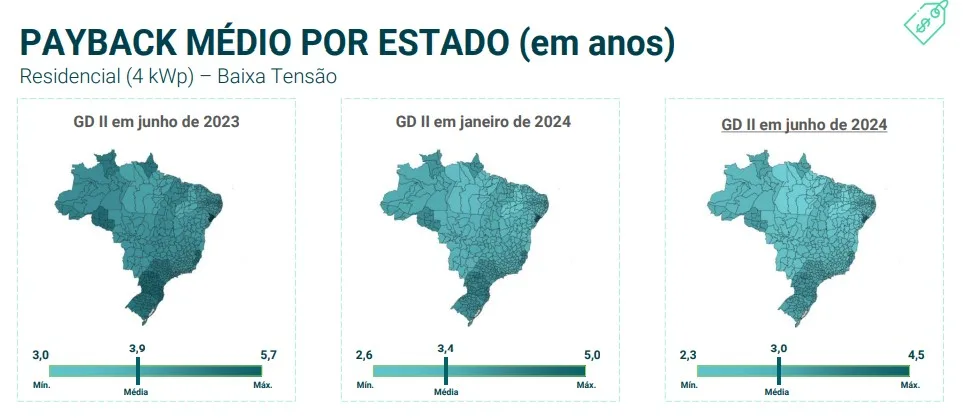
In practice, with more expensive energy, those who have solar energy start to save even more on their electricity bill, which accelerates the time when the savings generated compensate for the amount invested in the system, reducing the time to recover the amount spent, which varies according to the home's energy consumption and the rates charged in the state.
Easy maintenance and durability
The equipment used in a photovoltaic system, such as solar panels, inverters and batteries, are easy to install and maintain. The useful life of a solar energy project is usually around 25 years.
Therefore, there are several advantages of solar energy. The source provides consumers with an economical, practical and reliable energy solution for many years. This makes such systems an excellent choice for those looking to reduce costs and contribute to a more sustainable future.
Prices are more affordable
In recent years, solar has become increasingly affordable for residential, commercial and industrial consumers.
Rondônia, Roraima and Amapá, for example, are positioned as the cheapest states in Brazil to have solar energy in the second quarter of 2024, according to research by Radar, an indicator that evaluates the price of photovoltaic energy quarterly, carried out by Soleasy.
Rondônia leads the ranking with the lowest average price of R$2,30 per Wp, representing a 9% drop compared to the previous quarter. Roraima remains the second most economical state, with an average price of R$2,34 per Wp, and a 15% reduction in costs. Amapá appears in third place with a value of R$2,36 per Wp, a decrease of 3%.
Solar energy increases property value
The advantages of solar energy go beyond that: installing a photovoltaic system is an effective way to increase the market value of a property. Developments equipped with solar panels are seen as modern, efficient and sustainable, which makes them more attractive to buyers looking for economical and ecological solutions.
According to ABSOLAR, properties with photovoltaic installations can increase in value by up to 10%. The association highlights that this appreciation is due to the economic and environmental benefits that the source provides.
Low impact of tariff adjustments
One of the great advantages of solar energy is protection against tariff adjustments on electricity bills.
In recent years, consumers in Brazil have faced frequent and unpredictable increases in electricity tariffs, often caused by water crises, for example, and other economic factors that influence the sector.
By generating their own electricity, users become less vulnerable to tariff variations imposed by concessionaires, ensuring greater predictability in energy costs. Even in periods of more expensive tariff flags, such as red flags and water shortages, those who have a photovoltaic system continue to save money.
Disadvantages of solar energy
Initial investment
There is no doubt that solar energy has many advantages, but there is an initial cost to installing a solar photovoltaic system, which includes the cost of equipment, design and technicians' labor. However, once installed, the system generates a huge discount on the energy bill, so the investment made goes back into the consumer's pocket.
The average return on the initial investment is three years for residential systems, as mentioned above, but the time may be shorter. In addition, several banks now offer financing for the installation of photovoltaic solar energy, presenting themselves as an option for those who do not have initial capital.
Does not generate energy all the time
Since it depends on sunlight, photovoltaic energy is not generated at night. However, the consumer unit has the option of remaining connected to the public electricity grid, which supplies it with energy during these times. If, during the day, the generation from the solar source is greater than the consumption, the excess energy is injected into the electricity grid.
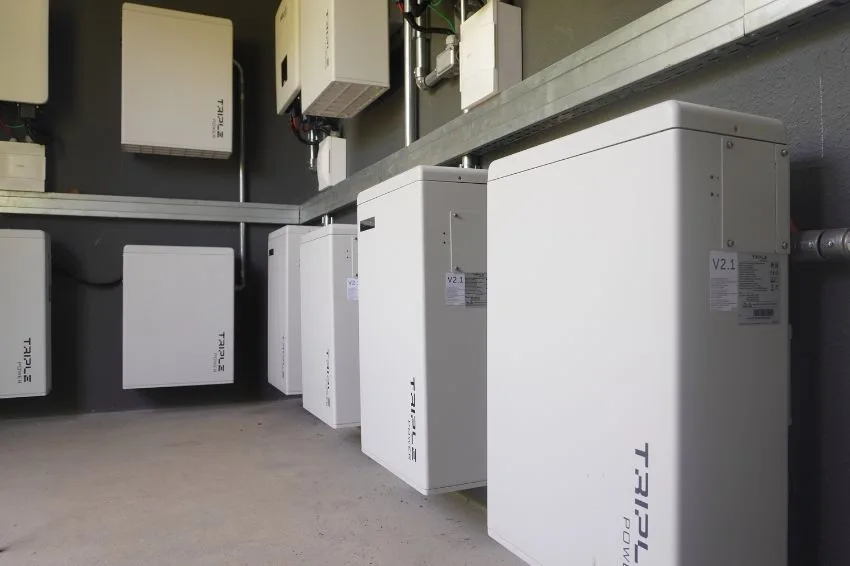
The injected energy is recorded by a bidirectional meter and the owner receives electricity credits. There is also the option of an off-grid system, which is responsible for storing excess energy and can be used where there is no connection to the electricity grid.
This system is called autonomous or isolated, as it consists of self-generating energy and is supplied by batteries. Therefore, on cloudy days or at night, the batteries come into action and supply the site with stored solar energy.
Lack of government incentive
Although solar energy has many advantages, the expansion of the sector increasingly depends on government incentives to reach its full potential.
Subsidy programs, tax exemptions and specific credit lines are essential to make systems more accessible and attractive to residential, commercial and industrial consumers.
These incentives help reduce the initial installation cost, which can still be a significant barrier for many Brazilians who want to adopt this technology.
count on the Canal Solar to stay up to date with everything about solar energy. Check it out here!
After all, is it worth investing in solar energy?
The advantages of solar energy are numerous. The source benefits not only consumers, but also the environment and the economy as a whole.
With advantages ranging from significant cost reductions on electricity bills to increased property values, solar energy presents itself as an affordable, clean and renewable solution for different consumer profiles.
Furthermore, it provides energy independence, protecting against the constant tariff adjustments that affect the electricity market.
The expansion of solar energy also generates positive impacts on the generation of green jobs and the development of new technologies, strengthening the economy and promoting a more diversified and safe energy matrix.
However, for this sector to continue growing sustainably, continued support from public policies and government incentives is essential, making this technology increasingly accessible to everyone.
Investing in solar energy is investing in a more sustainable, economical and independent future, contributing to the construction of a cleaner and more efficient world for future generations.


Comments
Comments are moderated before publication.Comments should be respectful and contribute to a healthy debate. Offensive comments may be removed. The opinions expressed here are those of the authors and do not necessarily reflect the views of the author. Canal Solar.