
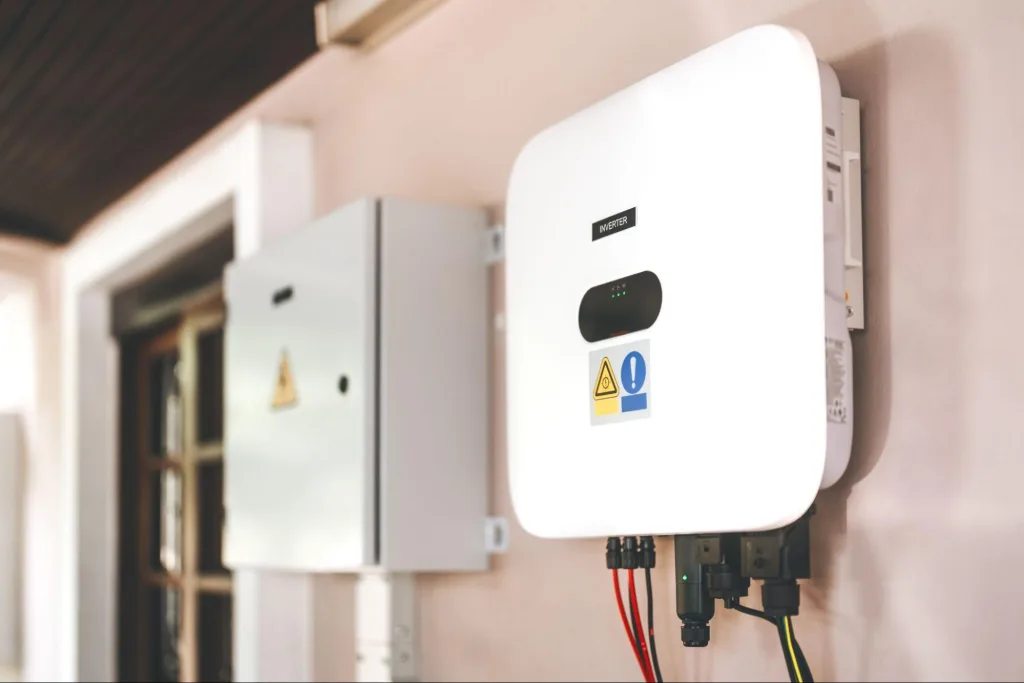
The solar inverter, technically also called a photovoltaic inverter, is the equipment responsible for transforming the sun's energy, received from the photovoltaic modules (irradiance), into useful electricity for your daily life.
Without the inverter, the energy generated by the photovoltaic modules could not be used to power lamps, appliances or any device connected to the electrical grid.
In this article, you will clearly and objectively understand what a solar inverter is, how it works, what types exist, where it should be installed, how much it costs, and how to choose the ideal model for your system.
Whether you're a consumer, installer, or industry professional, this content is designed to answer all your questions using accessible language and a technical foundation.
What is a solar inverter?
The solar inverter is one of the most important components of a photovoltaic system. It converts the energy generated by the modules into grid-compatible (AC) power.
Photovoltaic modules capture sunlight and convert it into direct current (DC) through the photovoltaic effect. When sunlight reaches the cells, it excites electrons in semiconductor materials such as silicon. This electron excitation creates a direct electric current within the cell.
After this process, the inverter converts this direct current into alternating current, making solar energy truly useful for residential, commercial or industrial use.
Furthermore, it functions as the "brain" of the system, considered an active component of the circuit, responsible for managing the production, safety, and performance of solar generation, as well as controlling current flow. What is the function of a solar inverter?
Basically, the main function of a solar inverter is to convert direct current (DC) from the panels into alternating current (AC), compatible with the electrical grid standards and the electrical equipment we use on a daily basis.
However, his work goes far beyond this conversion. He also:
- Monitors system performance in real time: some models have Wi-Fi or wired connectivity, allowing the user to monitor energy generation through apps;
- Ensures the safety of the installation: the inverter detects faults such as surges, overvoltages or disconnections, automatically shutting down the system in case of risk;
- Synchronization with the power grid (in on-grid models): it adjusts the frequency to 60Hz (frequency used in Brazil or 50Hz in other countries) and the voltage of the energy generated by the photovoltaic system to comply with the utility grid (127Vac and/or 220Vac depending on the region) and for large plants there are other output voltages, which can reach more than 800Vac;
- Controls the input and output of energy: in hybrid or off-grid systems, the inverter also manages the charging and use of the batteries.
In short, the inverter is the component that ensures everything works stably, safely and efficiently.
How does a solar inverter work?
The operation of a solar inverter can be divided into three main stages:
- Receiving direct current (DC): solar panels convert solar radiation into direct current. This energy is sent to the inverter, which is connected between the photovoltaic modules and the building's electrical panel;
- Alternating current (AC) conversion: internally, the inverter uses advanced electronic circuits, such as transistors and PWM (pulse width modulation) controllers, to transform DC current into AC with the appropriate frequency (60Hz) and voltage (usually 127V or 220V, depending on the local network);
- Synchronization and sending of energy: In on-grid systems, the inverter synchronizes its output with the utility grid, allowing the generated energy to be used immediately at the property or injected into the grid to serve as credits for one or more properties/businesses. In off-grid systems, the energy is directed to batteries or directly to the load.
More modern models also feature remote monitoring systems, which allow you to monitor generation, failures, and performance statistics via your cell phone or computer.
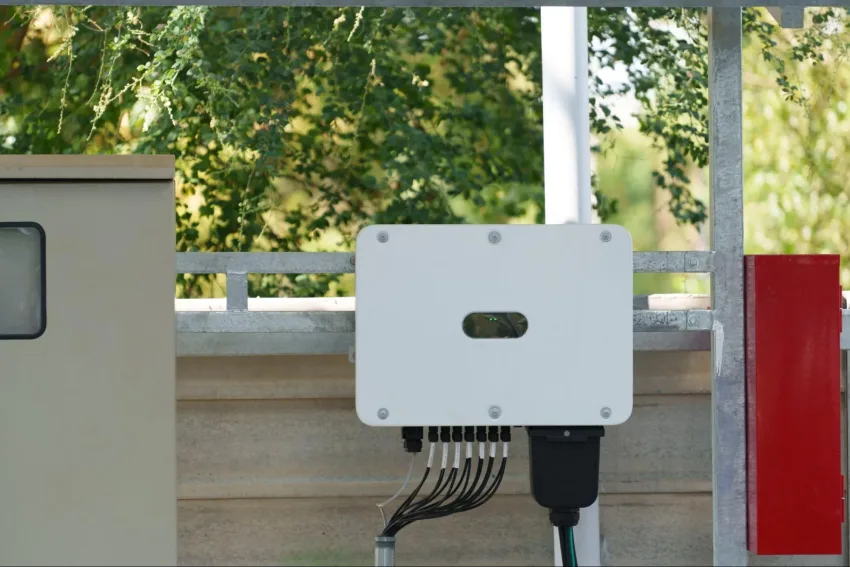
How long does a solar inverter last?
The lifespan of a solar inverter is typically 10 the 15 years, although some more robust models can exceed this time with proper care. The durability of the equipment depends on several factors, such as:
- Quality of equipment and brand: inverters from recognized brands tend to have a longer service life and reliability;
- Environmental conditions: Excessive heat, humidity, dust, or direct sunlight can shorten the lifespan of the equipment. Therefore, installation in a protected, ventilated location is essential;
- Preventive maintenance: even though they are relatively autonomous electronic equipment, it is recommended to carry out periodic inspections to ensure proper functioning and clean components when necessary;
- Correct sizing: The inverter must be suitable for the power generated by the panels. An improperly sized device may operate in an overloaded state, compromising its performance and longevity.
What are the types of solar inverters?
The market offers different types of solar inverters, each with specific technical characteristics and applications.
The right choice depends on the type of installation (residential, commercial, rural or industrial), the presence or absence of batteries, the connection to the electrical grid and the desired level of control over the system.
Learn about the main models available and what each one is for in the following topics:
On-grid solar inverter
Also known as an interactive or grid-connected inverter, it is the most widely used in Brazil, especially in residential and commercial systems.
This type of inverter works in sync with the power grid: it injects the energy generated by the photovoltaic system directly into the building's internal grid and sends the surplus to the utility company.
The user then begins to accumulate energy credits, in accordance with the compensation rules provided for by ANEELThe advantages are:
- Cheaper and more efficient than other models;
- Allows savings of up to 95% on your electricity bill;
- It requires fewer components, as it does not need batteries.
But be careful: it does not work in the event of a power outage, for safety reasons with the concessionaire's technicians.
Off-grid solar inverter
This type of inverter is used in isolated systems, meaning those without a connection to the public power grid. All the energy generated is stored in batteries for later consumption.
It is more common in remote areas, such as farms, rural areas, riverside communities, and properties that do not have access to the conventional grid.
The advantages are total independence from the concessionaire, which makes it ideal for places where the network does not reach or is unstable.
Among the disadvantages, we can highlight a higher implementation cost (due to the batteries) and the fact that this type of inverter requires periodic maintenance of the batteries and more careful control of the load.
Hybrid solar inverter
The hybrid inverter combines the best of both worlds: it works connected to the electrical grid and, at the same time, allows the use of batteries to store energy.
This configuration ensures continuous power supply even in the event of blackouts.
It offers flexibility, as it can operate both with the public grid and independently, using batteries.
It is ideal for consumers who want greater energy security, such as hospitals, commercial establishments and homes in areas with unstable supply.
The initial cost is higher than that of conventional on-grid models. Furthermore, installation and configuration require greater technical expertise and adequate planning.
Central solar inverter
Used in large projects, such as solar farms and industrial facilities, the central inverter is capable of processing the energy generated by dozens or hundreds of solar panels connected in series, with high conversion capacity.
It's a cost-effective solution for large systems, offering excellent value per installed watt. It's also highly energy-efficient and robust enough to operate in harsh conditions.
Because it is a centralized unit, it has less installation flexibility, and any failure in the inverter can affect a large part of the total generation.
Additionally, it is not suitable for smaller projects or roofs with different orientations.
Solar Micro Inverter
The microinverter is installed individually on each photovoltaic module (or in small groups), allowing each panel to operate independently, which improves the overall performance of the system, especially in locations with partial shade.
The great advantage is that it allows detailed monitoring of each panel, improves efficiency in systems with different inclinations or orientations and offers greater electrical safety, as it operates with lower voltages.
This makes the microinverter an excellent choice for partially shaded urban rooftops.
The major disadvantage is that the initial investment tends to be higher compared to conventional string inverters, especially in larger systems.
Additionally, it may require more installation time and a greater number of connections and components.
Where should the solar inverter be installed?
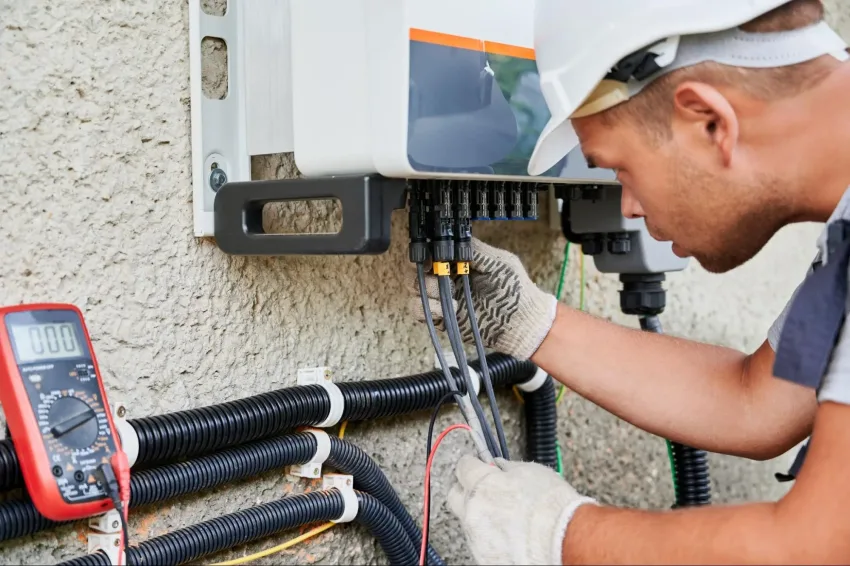
Correct installation of the solar inverter is essential to ensure the safety, efficiency and durability of the system.
The ideal location must meet some important technical criteria, such as:
- Ventilation: The inverter generates heat during operation. Therefore, it must be installed in a well-ventilated environment to prevent overheating and loss of performance;
- Weather Protection: Even models with a protection rating (such as IP65) must be protected from direct rain, intense sunlight, and excessive humidity. Indoor installations, such as garages, warehouses, or technical rooms, are recommended;
- Easy access: the equipment must be installed in a location accessible for monitoring, visual inspection and maintenance, avoiding hard-to-reach points;
- Distance between modules and electrical panel: Ideally, the inverter should be located close to the solar modules and the distribution panel, to minimize energy losses and facilitate cabling;
- Proper fixation: The wall where it will be installed must support the weight and size of the inverter, in addition to allowing adequate thermal dissipation.
In some projects, especially commercial or industrial ones, specific structures or metal technical panels with forced ventilation may be chosen.
Always follow the manufacturer's specifications and rely on a qualified professional to determine the best location.
How to choose an ideal solar inverter?
Choosing the ideal solar inverter requires attention to several technical and practical factors that directly influence the system's performance and safety.
Check out the main points to consider below:
Compatibility with the power of the photovoltaic system
The inverter must be able to handle the power generated by the solar panels.
It is common to use a ratio of up to 1,3 between the generator power and the inverter power (for example, a 6,5 kWp system with a 5 kW inverter), respecting the limits recommended by the manufacturer and technical standards.
Solar system type
Another factor to consider is the type of system. For homes and businesses connected to the grid, an on-grid inverter is the best option. For remote areas or those with frequent power outages, an off-grid or hybrid inverter is more appropriate.
Microinverters are excellent for roofs with partial shade or multiple orientations.
Equipment efficiency
Efficiency shows how much of the captured solar energy is actually converted into usable energy.
Good quality inverters operate with efficiency above 97%, minimizing losses.
Number of MPPTs (maximum power point trackers)
Inverters with multiple MPPTs offer greater design flexibility and better performance in installations with different panel orientations or tilts.
Smart features and connectivity
Many modern inverters offer remote monitoring via an app or online platform, allowing you to monitor generation, performance, and potential failures in real time.
Certification and technical compliance
Check whether the inverter has the certifications required in Brazil, such as INMETRO and compliance with standard NBR 16149. These characteristics ensure that the product meets safety and quality standards.
Technical support and warranty
Prioritize recognized brands with a minimum 5-year warranty and technical support in Brazil. This reduces risks and facilitates future maintenance.
If in doubt, seek the support of a qualified photovoltaic designer or integrator. A mistake in choosing the right inverter can compromise performance and even put the system at risk.
Want to learn more from Canal Solar?
If you are looking to learn more about solar energy or want to work professionally in the sector, Canal Solar offers comprehensive, free, and reliable content. On our portal, you'll find:
- Didactic guides on all components of a photovoltaic system;
- Updated news on the national and international solar market;
- Technical articles written by engineers and experts;
- Podcasts, videos and interviews with renowned professionals;
- In-person and online courses aimed at beginners, installers, salespeople, and engineers.
We also maintain an active community of readers, professionals, and businesses, connecting you with key industry innovations and trends.
Conclusion
Understanding the different types of solar inverters is essential to correctly dimension a photovoltaic system and ensure its performance over the years.
Whether for homes, businesses, or large power plants, each type of inverter meets a specific need, from saving on your electricity bill to total energy independence.
When choosing your inverter, it is important to consider not only the price, but also the application, the type of system, the level of shading, the possibility of expansion and the technical support offered by the manufacturer.
If you want to delve even deeper into this topic, Canal Solar offers technical content, comparisons, videos, and courses on each of these solutions, all to help you make safer, smarter decisions in the world of solar energy.

Comments (1)
Comments are moderated before publication.Comments should be respectful and contribute to a healthy debate. Offensive comments may be removed. The opinions expressed here are those of the authors and do not necessarily reflect the views of the author. Canal Solar.
GOOD MORNING, I'M THINKING ABOUT INSTALLING THE PHOTOVOTAIC SYSTEM IN MY HOME, SO AS I THINK ABOUT INSTALLING THE OFF GRIDE SYSTEM, I ASK: IF I CONNECTED THE OFF SYSTEM TO TWO 245 VOLT AMPER BATTERIES, WOULD THE RESULTS BE SATISFACTORY, THAT IS, EVEN I USING ONLY 40% OF THE BATTERY'S EFFICIENCY, COULD I CONNECT THE ENTIRE INTERNAL NETWORK OF MY HOME, INCLUDING THREE 12.000 BTU AIR CONDITIONING DEVICES?