
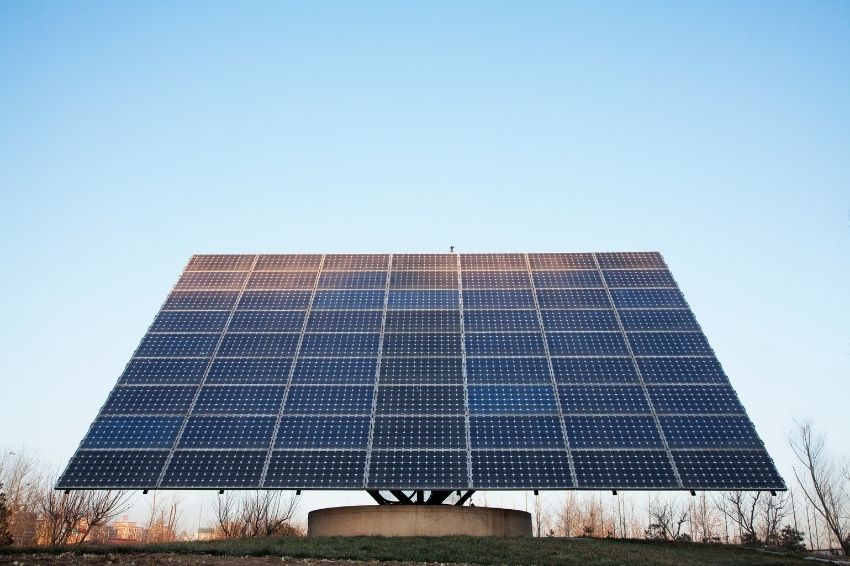
Over the next three decades, around 550 tons of solar panels are expected to be discarded in Brazil, according to an estimate from IRENA (International Agency for Renewable Energy).
Currently, photovoltaic modules are designed to last between 25 and 30 years, but contrary to what many people believe, disposal does not occur exclusively at the end of the device's useful life.
According to Leonardo Gasparini Duarte, co-owner of the company SunR, there are other factors that cause the product to be discarded.
“Even after reaching the useful life mark, this material can still be sustainable, if disposed of correctly. Nowadays it is possible to use more than 90% of the materials that make up photovoltaic technology, as they are as recyclable as an aluminum can,” he explained.
One of the biggest doubts about recycling modules is the cost of this process. Some websites highlight that the more modules, the higher the recycling cost for this system.
According to Rodrigo Sauaia, CEO of ABSOLAR (Brazilian Association of Photovoltaic Solar Energy), the statement has no technical support.
“For this disposal to occur, only logistical costs will be generated until the final destination,” he said. Another issue that also raises doubts among many consumers is the existence of legislation that is responsible for regulating and monitoring the recycling of modules.
According to Sauaia, since 2010 there has been a law that establishes guidelines for proper disposal.
“Law 12.305, which instituted the National Solid Waste Policy, establishes the objectives, goals, instruments and actions that must be followed to comply with the appropriate disposal and management for the preservation of the environment. The solar sector has also worked on this issue responsibly, maintaining a dialogue with the Ministry of the Environment, for example, to articulate responsibility for the life cycle of photovoltaic systems,” he said.
The CEO of ABSOLAR He also highlighted that photovoltaic modules can be used to generate energy even at the end of their useful life.
“It is possible to repower, that is, install more photovoltaic modules in the system to recover the original installed power and restore the energy from the first years of operation. Recycling can also be an option, since it reuses the equipment, making it more recyclable than a washing machine, for example, which has a recycling rate of around 70%.”
Check below ten false statements about recycling solar panels answered by the technical team at Canal Solar.
1) Solar panels generate mountains of waste, warm the planet, cover wildlife habitats and cause other ecological damage
Is not true. Solar panels are mostly made from recyclable materials such as plastic, copper, glass and aluminum. It is important to remember that the solar panel, in the first years of its life, generates all the electrical energy consumed in its manufacture.
After that, the solar panel will produce energy for another 20 or 30 years, typically, avoiding the use of other polluting energy sources. Therefore, the energy obtained from solar panels is very environmentally friendly. Regarding the coverage of wildlife areas, this is a big mistake.
Typically, solar plants are installed in unproductive areas, in desert regions and not suitable for agriculture or other forms of exploitation.
2) Harnessing sunlight to serve humanity is not free, nor is it clean, green, renewable and sustainable. It has a cost and will be high at the end of the useful life of this equipment
There is no human activity that does not use the planet's resources. Does manufacturing solar panels require raw materials? Yes. Do these materials need to be obtained through mining? Yes.
Will solar panels need to be recycled? Yes, this is all true. But one thing is important: the energy source is clean, as all electricity is generated from the Sun.
And, as previously mentioned, when we generate solar energy we stop using other polluting sources. Did you know that more than 50% of the electricity used in the world currently comes from burning oil and coal? So it is. It seems like a good idea to exchange this polluting energy for energy from solar panels.
3) Solar energy companies have been rewarded with massive subsidies and absolutely no requirements are made about waste disposal
In many European countries there were actually incentives. But in Brazil solar energy does not receive any incentives. The solar source is growing and developing because it is economically profitable and because society has already begun to discover the environmental advantages of generating electricity from sunlight.
Regarding waste disposal, this is a concern that already exists in all parts of the world. Solar plants have a lifespan of more than 20 years. The plants found in Brazil are only a few years old. In the future, recycling photovoltaic plants will be an excellent business and there will be no shortage of professionals and companies to carry out this activity.
4) No government rules require solar companies to set aside money to dispose of, store, or recycle waste generated during manufacturing or after they have stopped operating
Solar plants have a low environmental impact and therefore there is no such concern about waste and disposal. The materials used in solar panels, as well as the materials from which inverters and other components are made, are common and easily recyclable materials. A solar plant is no different from any other type of engineering work.
We don't need to worry as much about its disposal, just as we don't worry about the disposal of equipment from thermoelectric plants and oil exploration platforms, for example. Existing recycling practices will be used to decommission solar plants when they reach the end of their life.
5) Solar energy is not cheaper than natural gas as pollution and disposal costs are omitted, as well as habitat losses, solar heat islands, and the need for backup power generation or batteries
Solar energy is becoming so cheap, with the reduction in the cost of equipment, that it can now compete with many other sources, including natural gas. From an environmental point of view, it is an unfair competition: solar energy wins hands down. Generating energy from sunlight does not require the drilling and exploration of wells, transportation in gas pipelines and, most importantly, it does not require the burning of hydrocarbons.
Solar energy is clean, does not emit waste, does not expel toxic gases into the atmosphere and, on top of that, it uses a free and inexhaustible source, which is the Sun. Heat islands? This gets to be funny.
In fact, solar plants are heat shields. Solar panels do not concentrate heat or energy from the Sun. On the contrary, the panels convert into electrical energy part of the energy from solar radiation that would be naturally received by any other surface exposed to sunlight.
6) Solar panels cannot be recycled and in Brazil there is still no law to control and recover solar panel waste
Solar panels are as recyclable as an aluminum can. Today it is possible to use more than 90% of the materials that make up PV technology. In Brazil, this technology must, by law, be disposed of correctly in compliance with the National Solid Waste Policy (PNRS) which defines the guidelines related to integrated management and waste management, paying attention to the obligation of companies to return waste disposed of in an appropriate manner. to avoid incorrect disposal and environmental pollution.
7) Each panel is composed of gallium arsenide, tellurium, silver, crystalline silicon, lead, cadmium and other heavy metals. As these substances penetrate the water table, they interfere with water supplies, the environment and human health.
There are, in fact, solar panels that are produced with these elements (gallium, tellurium and cadmium), but they are very rare. Almost all panels used around the world are made of silicon. Silicon is one of the most abundant materials on the planet and is found naturally in sand and quartz crystals, for example.
Silicon is non-toxic and does not cause any harm to the environment. Lead can be present in very small amounts in solar panels. But lead is present in practically everything in our lives, including the computer or cell phone you are using to read this article.
8) Panels use heavy metals and add 3 to 4 °C to the average temperature of the room in which they are located
The main panel technologies on the market – mono and polycrystalline – do not contain any amount of heavy and bioaccumulative metals, such as mercury, for example. The panels convert much of the energy they receive into electricity and another part becomes heat in the module itself, as well as in any material left in the Sun.
As the module is intentionally built not to reflect light, as our goal is to capture as much light as possible, there is also no great reflection of this heat from the sun back into the environment. Therefore, saying that the panels significantly heat the surrounding environment in which they are located is a misinterpretation of the phenomena that are occurring.
9) In Brazil there is still no law on the control and recovery of solar panel waste
There is no law about this in Brazil and even in other countries this is still an open topic. In Europe there is already concern about recycling, as many European countries already have photovoltaic systems approaching the end of their useful life.
Due to the low environmental impact of solar plants and the ease of recycling their materials, it is likely that the market itself will take care of recycling, without the need for a law. Recycling photovoltaic plants will be a good business in a few years. Who wouldn't want to reuse all the aluminum, steel, glass and copper in solar plants?
10) Financing for photovoltaic waste treatment cannot be applied to older solar panels
This is a statement that has no basis for making it. Why would there be this limitation? What makes disposing of older solar panels different from any other solar panel disposal or any other product?


Comments (2)
Comments are moderated before publication.Comments should be respectful and contribute to a healthy debate. Offensive comments may be removed. The opinions expressed here are those of the authors and do not necessarily reflect the views of the author. Canal Solar.
As for the environment…okay…that’s clear!
As for the 62% tax… How much would it actually represent for a person who paid… around R$ 500 for energy on average/month… and after installation… or future installation… and who pays around R$ 100 today real?
I have it in my house and not only am I saving on my electricity bills but I am also helping the environment with clean, cheap energy. An investment that pays for itself.