
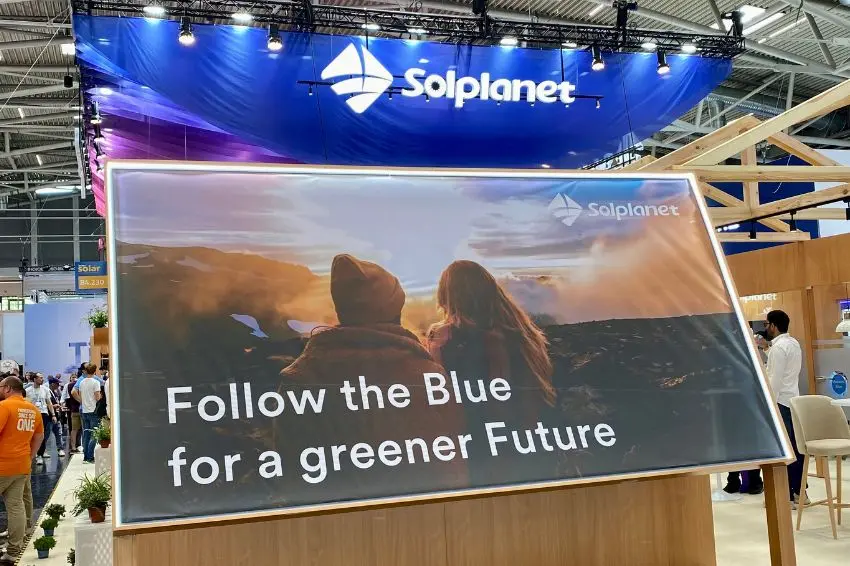
Solplanet presented three new solutions for the solar energy market during Intersolar Europe 2026, which takes place between June 23 and 25 in Munich, Germany.
The releases include an AI (artificial intelligence)-based management hub for C&I (commercial and industrial) applications, a new battery energy storage system, and a cloud API platform focused on integrating energy assets.
Among the highlights is the AI-Hub for C&I systems, which will be launched in conjunction with the company's new commercial storage system, where the platform integrates photovoltaic inverters, hybrid inverters, and batteries into a unified architecture, allowing for centralized management of energy assets.
According to Solplanet, the solution combines photovoltaic systems and storage in different power classes, in addition to centralizing the commissioning and operation stages.
The platform also simplifies the management of installations with multiple devices and features a scalable architecture, designed to support the expansion of commercial and industrial applications.
"The system supports intelligent energy optimization use cases, such as maximizing self-consumption, reducing peak demand, load shifting, and optimized interaction with the electrical grid. It was also designed to ensure energy resilience through scalable backup functionalities and optional generator integration," the company stated.
Cloud platform
In addition to the new hardware, the company will also present a new cloud-based API platform aimed at the European and international markets.
The manufacturer points out that the next-generation cloud technology was developed to enable the secure and scalable integration of distributed energy systems.
According to the company, the platform was designed to support integrators, installers, dealerships, aggregators, and software partners in deploying advanced applications, reducing the complexity of integration processes.
The platform utilizes an "API-first" architecture, geared towards the flexible integration of energy systems. Announced features include OAuth 2.0-based authentication, real-time communication via webhooks, integration tools and documentation for developers, and a scalable cloud infrastructure for large distributed energy fleets.
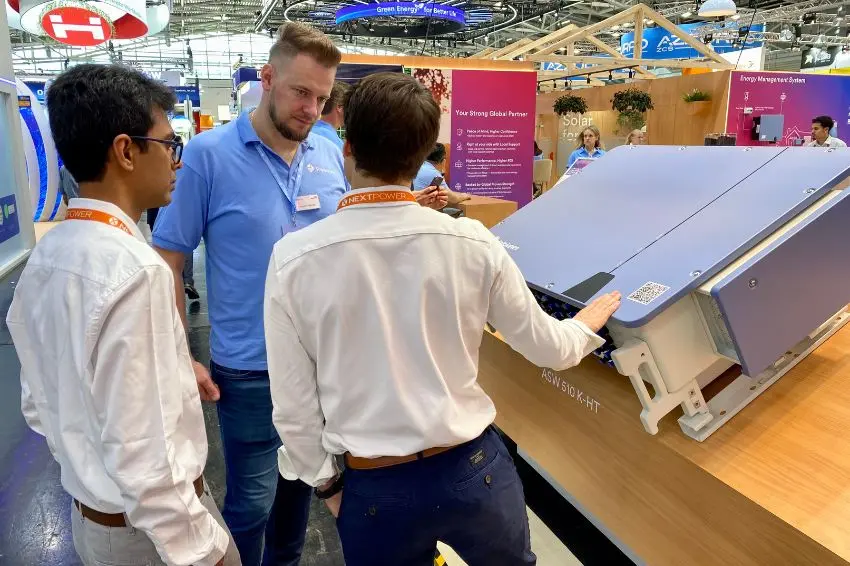
“The platform was designed to support advanced use cases, such as energy management in support of the grid, battery orchestration, dynamic pricing, and flexibility services, including electricity consumption models for tenants. A dedicated simulation and testing environment with real hardware integration allows for faster validation cycles and more reliable partner integration,” the manufacturer pointed out.
In this context, the company also assesses that the launches are occurring at a time of change in the European energy sector, marked by volatile energy prices and rising grid tariffs, as well as an evolution in the role of battery storage systems.
According to the company, the technology is moving beyond simply acting as a backup solution and is taking on strategic roles in energy management. These include reducing peak demand, shifting load, and supporting the flexibility of the electrical system.
"At the same time, battery storage is evolving from a passive backup solution to an active asset, enabling peak leveling, load shifting, and participation in emerging markets for flexibility," the company emphasized.
Finally, Solplanet highlights that this change is accelerating the demand for interoperable, cloud-based systems "capable of orchestrating photovoltaic energy, storage, electric vehicle charging, and real-time charging."
all the content of Canal Solar is protected by copyright law, and partial or total reproduction of this site in any medium is expressly prohibited. If you are interested in collaborating or reusing part of our material, please contact us by email: redacao@canalsolar.com.br.



Comments
Comments are moderated before publication.Comments should be respectful and contribute to a healthy debate. Offensive comments may be removed. The opinions expressed here are those of the authors and do not necessarily reflect the views of the author. Canal Solar.