
Residential electricity rates are projected to rise by an average of 5,4% in 2026, according to projections by TR Soluções, a company specializing in technology applied to the electricity sector.
The survey considered the 51 distribution concessionaires in the country and indicates that, individually, the adjustments vary from reductions of up to 22% to increases exceeding 30%, depending on the concession area.
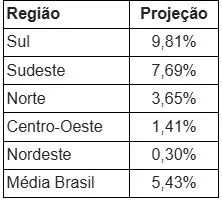
According to projections by TR Soluções, on average by region of Brazil, consumers in the South will see the largest average increase, of almost 10%, followed by those in the Southeast (8%), as shown in the table below:
According to Helder Sousa, Director of Regulation at TR SolutionsThe average 12% increase in transmission rates is expected to primarily affect consumers served by distributors, whose rates will be adjusted in the first half of 2026.
“This forecast reflects the transmission rates already defined for the 2025/2026 cycle, with an average increase of 12% already certain for consumers served by concessionaires undergoing tariff adjustments in the first half of the year, but with a smaller increase projected for companies with adjustments in the second half of the year,” explains the director.
Relief in energy and distribution costs.
Despite pressure from transmission, the two main components of tariffs, energy purchases and distribution services, are expected to show variation below inflation in 2026.
One of the factors contributing to this relief is the new rule imposed by Law No. 15.269 / 2025This expands the collection of the CDE-GD (Energy Development Account – Distributed Generation) subsidy to consumers in the free market, diluting the cost among a larger number of agents.
Furthermore, the termination of the contracts from the 2021 emergency auction, held to address the water crisis, will have a positive impact. The reduction of almost R$ 2 billion in fixed reserve energy revenue should alleviate costs related to the Reserve Energy Charge (EER).
Free consumers will feel the impact of nuclear energy.
For consumers in the free market, however, a significant increase is expected. Law No. 15.235/2025, which converted Provisional Measure 1.300/2025, stipulated that these consumers will now share the costs of energy generated by the Angra 1 and Angra 2 nuclear power plants. The estimated impact is R$ 10/MWh on the cost of energy for this group.
all the content of Canal Solar is protected by copyright law, and partial or total reproduction of this site in any medium is expressly prohibited. If you are interested in collaborating or reusing part of our material, please contact us by email: redacao@canalsolar.com.br.




Comments
Comments are moderated before publication.Comments should be respectful and contribute to a healthy debate. Offensive comments may be removed. The opinions expressed here are those of the authors and do not necessarily reflect the views of the author. Canal Solar.