
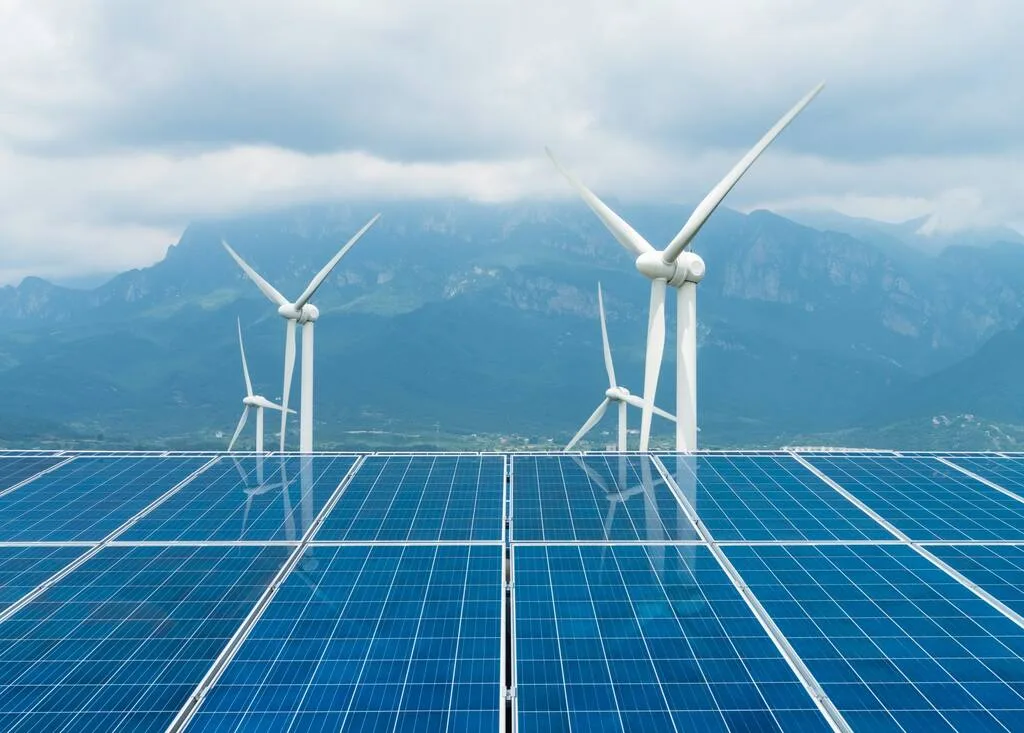
Renewable and non-renewable energy sources are at the center of discussions about... future of the planetThe way we produce and consume energy defines not only the cost of electricity, but also the environmental impact of our choices.
In 2024, for example, global carbon emissions reached a historical record...and scientists warn that global warming could exceed... 1,5°C over the next six years if the current pace continues.
But what differentiates renewable energy from non-renewable energy? And why is this distinction so important for the environment and for the consumer's wallet?
To answer these questions, in this article you will discover:
- What are renewable and non-renewable energy sources?
- Examples of each type;
- Which of them dominate the Brazilian and global electricity grid?
- Why solar energy has gained prominence among renewable and sustainable energy sources.
Take this opportunity to better understand the advantages and processes involved in transition to cleaner energy sources with solar energy courses and training from Canal Solar.
Summary of what you'll see here:
- Renewable energies come from natural resources that regenerate quickly, such as the sun, wind, and water.
- Non-renewable energy sources utilize finite resources, such as oil, coal, and natural gas, which take millions of years to form.
- The main difference between them lies in the availability of resources and the environmental impact caused by energy generation.
- Non-renewable sources are the biggest contributors to greenhouse gas emissions, which reached a historic record in 2024. This increase raises the risk of the planet exceeding 1,5°C of global warming in the next six years.
- Clean energy sources, especially solar energyThey help reduce pollution and are the path to a more sustainable energy matrix.
What are renewable energies?
Renewable energies are sources obtained from natural resources that regenerate continuously., without risk of depletion over time.
This type of energy uses elements present in the environment, such as sunlight, wind, and organic matter, to produce electricity, heat, or fuels.
These sources differ from non-renewable ones because they regenerate rapidly. The water cycle, constant wind, and daily solar radiation, for example, guarantee a natural supply of energy, available in virtually all regions of the planet.
In Brazil, clean energy sources have a significant presence in the electricity grid.
In 2024, about 88% of the country's electricity It came from resources such as hydroelectric, wind and solar power, according to data from the Ministry of Mines and Energy (MME) and the Energy Research Company (EPE).
In fact, this number is significantly higher than the world average and that of the countries in the Organisation for Economic Co-operation and Development (OECD). This result keeps Brazil's electricity matrix among the cleanest in the world.
Examples of renewable energy sources
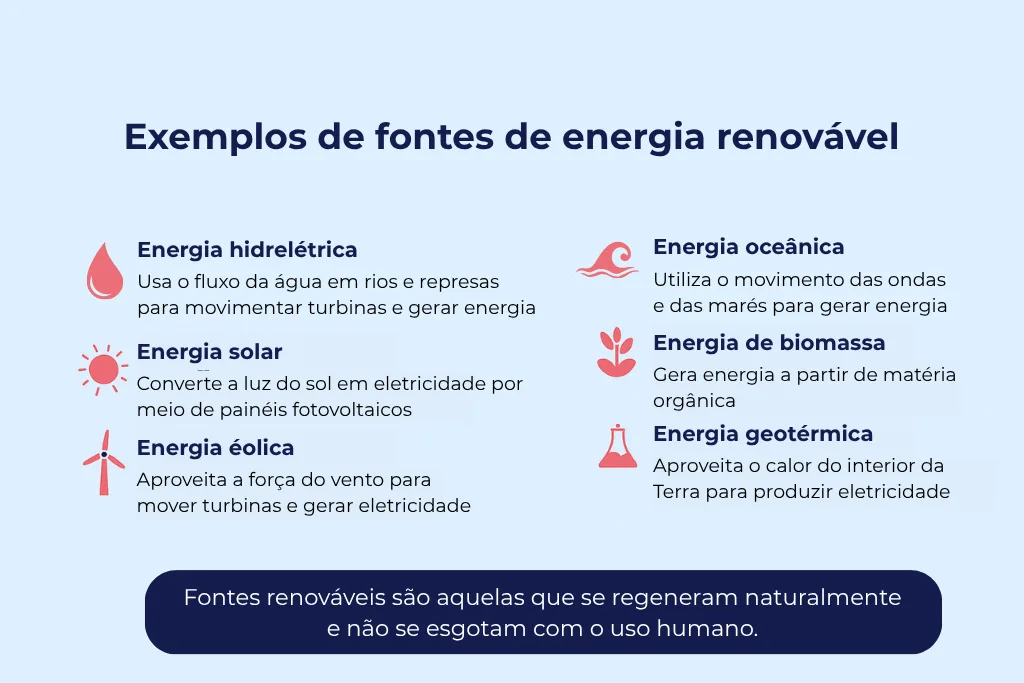
The main sources of renewable energy can be divided according to the natural resource used to generate electricity, heat, or fuel. Below are the main examples:
- Hydro-electric energy
- Solar energy
- wind energy
- Geothermal energy
- Biomass energy
- Ocean energy
- Hydrogen energy
Hydro-electric energy
Hydropower is generated by the movement of water in rivers and reservoirs. The water flow passes through turbines, which drive generators and transform kinetic energy into electricity.
According to Energy Research Company (EPE)In 2024, hydroelectric power plants represented 58,9% of the Brazilian electrical matrix, with a slight decrease compared to the previous year.
This reduction coincides with the growth of other renewable sources, especially solar and wind energy.
Even with this decrease, hydroelectric power remains the foundation of the national electricity system due to its large-scale generation capacity and stable energy supply.
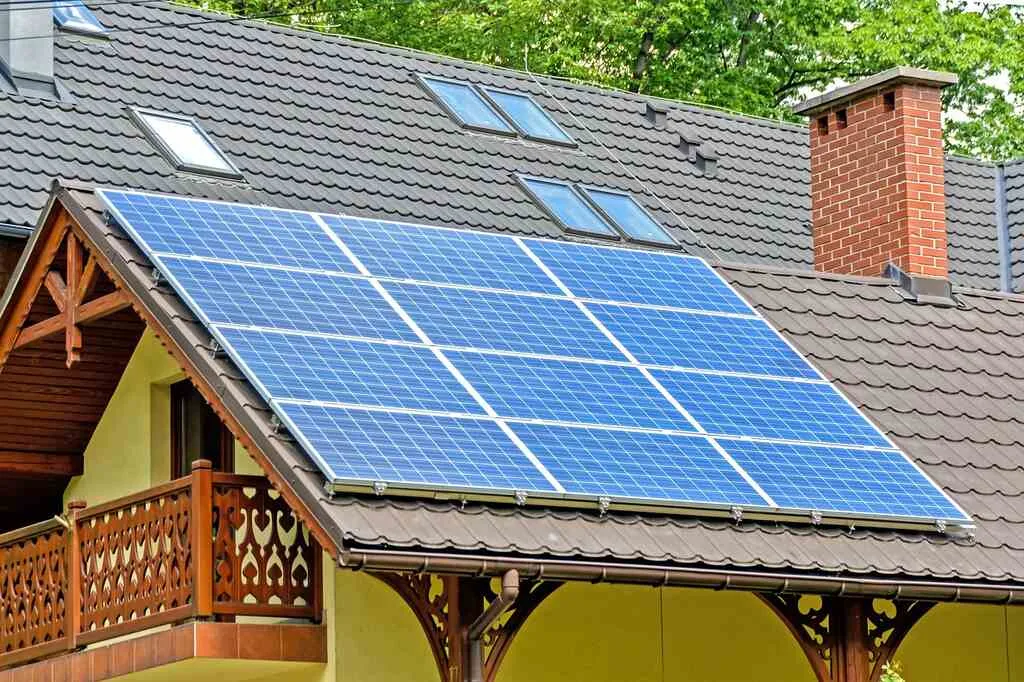
Solar energy
Solar energy is generated from sunlight, primarily through... photovoltaic panels that convert solar radiation into electricity.
This source is the fastest growing segment in the Brazilian electricity matrix.
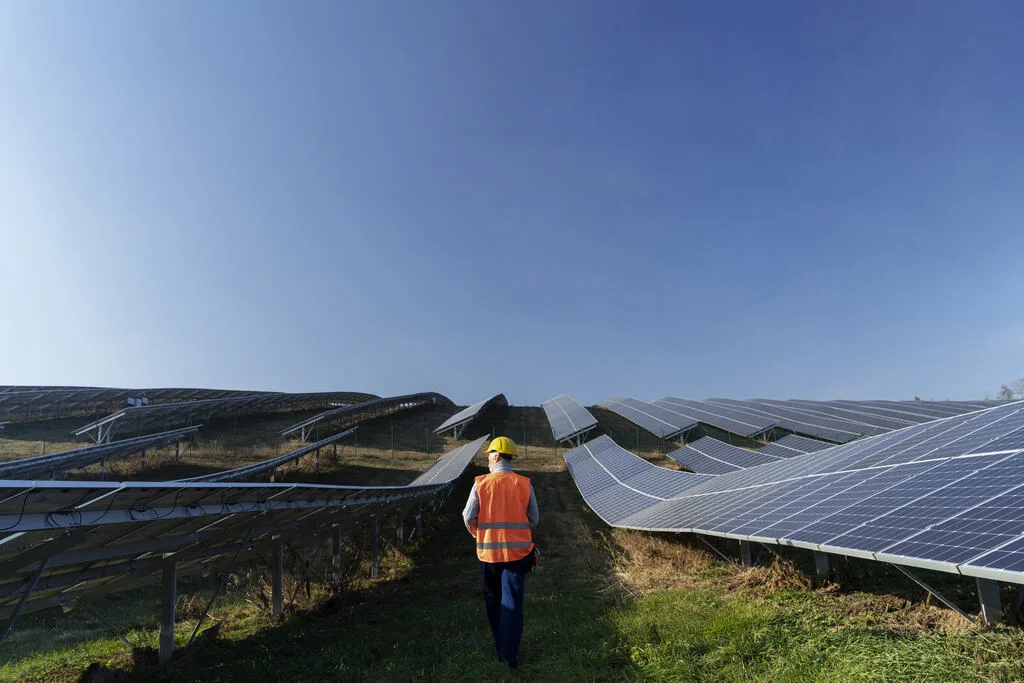
Second data updated by ANEEL (National Electric Energy Agency)The country surpassed the 60 gigawatt (GW) mark of installed capacity in August 2025.
Of this total, 37,6 GW comes from self-generation (installed on rooftops, facades, and in rural areas) and 17,6 GW from large power plants connected to the National Interconnected System.
Solar energy already It accounts for 22,2% of Brazil's installed capacity., occupying second place among the sources of generation.
More than 5 million homes produce their own electricity, reinforcing the role of distributed generation in the democratization of access to clean energy.
In addition to reducing dependence on fossil fuels, the expansion of solar energy has prevented the emission of 66,6 million tons of CO2 in electricity generation, contributing to an increasingly sustainable energy matrix.
Read more: Advantages of solar energy: see what they are and whether it is worth investing
wind energy
Wind energy is generated from the movement of the wind. Turbines convert the kinetic energy of the air into electrical energy, usually in regions with constant and intense winds.
Currently, the installed capacity of wind farms in Brazil is approximately 33 megawatts (MW), which is equivalent to 13,5% of the national electricity matrix, according to data from Gov.br portal.
The Northeast is the main producing region, with particular emphasis on the parks located in Ceará and Rio Grande do Norte.
Despite its advantages and relatively low operating cost, this resource faces socio-environmental challenges that require attention.
The installation of wind turbines can generate land use conflicts, alter the natural landscape and, above all, affect communities near the projects.
Possible solutions to these challenges include investing in proper territorial planning, dialogue with local communities, and constant environmental monitoring, among other measures.
Geothermal energy
Geothermal energy harnesses the heat from the Earth's interior to generate electricity or heating. The natural heat from the subsoil heats fluids that move turbines or are used directly in heating systems.
This technology is viable in regions with intense geological activity, such as Iceland, the United States, and the Philippines, for example.
In Brazil, geothermal potential is limitedBecause it is located in the center of a tectonic plate and lacks areas with high geothermal temperatures near the surface, our territory is less susceptible to earthquakes and volcanic activity.
In any case, this source is considered a stable alternative, since it is independent of weather conditions.
Biomass energy
Biomass is produced from organic matter, such as agricultural, forestry, and urban waste, as well as liquid and gaseous biofuels.
From this, energy is generated through combustion, gasification, or fermentation processes, which release heat or produce biogas.
According to Ministry of Mines and Energy, biomass represents about 8,55% of the Brazilian electrical matrix, with 630 plants in operation and 16,7 GW of installed capacity.
O sugarcane bagasse It is the main input used in the country, followed by agricultural waste such as rice husks, peanuts, and coconuts.
In addition to electricity generation, biomass also supplies the transportation sector through biofuels such as ethanol and biodiesel, which account for approximately 22% of the energy used in transportation, according to [source needed]. IEA Bioenergy.
Ocean energy
Ocean energies harness the movement of tides and wavesIn addition to the temperature difference between layers of water, electricity can also be generated.
Despite its great potential, the technology is still in the research and development phase.
Brazil, with its extensive coastline, is seen as a promising country for harnessing this type of resource, especially in experimental projects conducted by universities and energy institutes.
Hydrogen energy
Hydrogen energy is obtained by splitting water molecules into hydrogen and oxygen, in a process called electrolysisWhen the electricity used in this step comes from renewable sources, the resulting fuel is called... green hydrogen.
This gas can be stored and used in vehicles, industries, or for electricity generation.
Green hydrogen is considered one of the most promising alternatives for decarbonizing sectors that are difficult to electrify, such as heavy transport and steelmaking.
Brazil has been making progress in studies and pilot projects for large-scale production, with the potential to become an exporter of this new energy source.
So what are non-renewable energies?
Non-renewable energies come from natural resources that exist in limited quantities on Earth.
This means that, as they are used up, it takes a very long time for them to form again, in some cases millions of years.
Therefore, when consumption exceeds the replenishment capacity, the resource tends to run out.
These sources played a central role in industrial development and are still responsible for most of the energy consumed in the world.
However, its extraction and use generate significant environmental impacts, such as the emission of greenhouse gases and air pollution, which has accelerated the search for more sustainable alternatives.
Examples of non-renewable energy sources
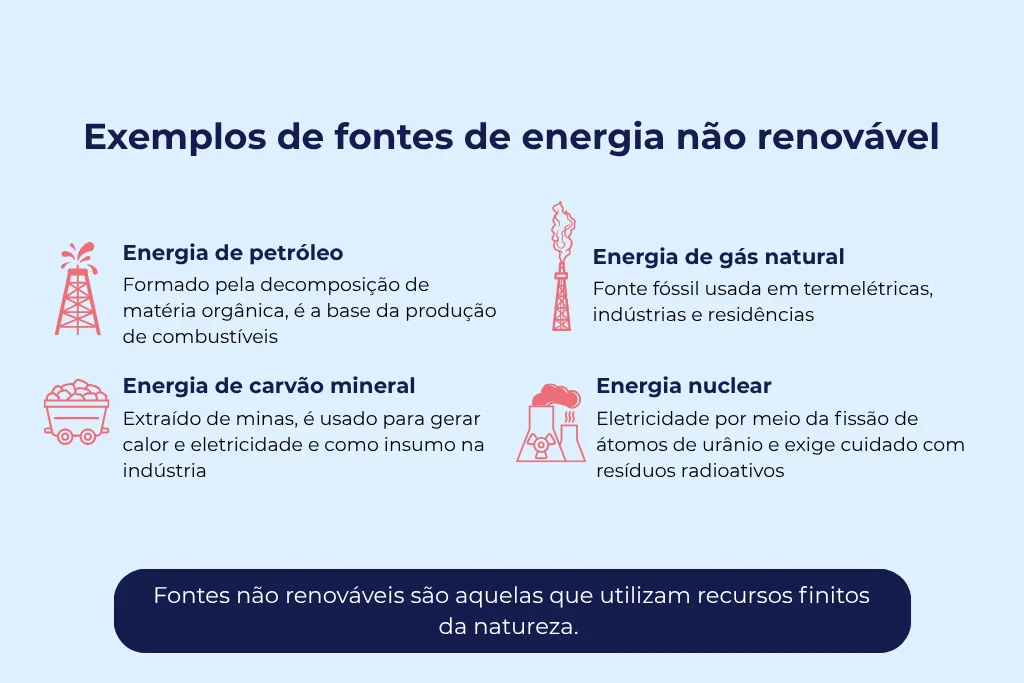
The best-known non-renewable sources are fossil fuels (oil, coal and natural gas) and nuclear energywhich relies on minerals such as uranium to generate electricity.
Next, see how each of these sources works and what role they play in the global and Brazilian energy matrix.
Fossil fuels
Fossil fuels are formed from the decomposition of organic matter that has accumulated underground over millions of years.
Oil, coal, and natural gas are extracted through drilling or mining and are mainly used in electricity generation, transportation, and industrial processes.
Currently, these sources still dominate the global landscape. In 2024, the Fossil fuels accounted for approximately 82% of the world's energy mix.:
- O oil accounts for approximately 30 %;
- O mineral coal by 27 %;
- O natural gas by 24 %.
The problem, however, is that burning these fuels releases large amounts of carbon dioxide (CO2).
Nuclear energy
Nuclear energy is generated through nuclear fissionUranium splitting is a process that involves splitting the nucleus of uranium atoms in reactors, releasing a large amount of heat. This heat warms water, produces steam, and drives turbines that generate electricity.
Compared to other non-renewable sources, nuclear power emits low levels of greenhouse gases during operation. It also has high energy density, meaning that small amounts of fuel produce large volumes of energy.
However, the management of radioactive waste, the high cost of deploying and decommissioning plants, and the risk of nuclear accidents are challenges that limit their expansion in several countries.
In Brazil, data They indicate that the nuclear source accounted for approximately 2% to 2,5% of electricity generation in 2024, originating from the Angra 1 and Angra 2 nuclear power plants, located on the coast of Rio de Janeiro.
These power plants operate continuously and contribute to the security of the electrical system, especially during periods of drought, when the level of hydroelectric reservoirs decreases.
Explaining the difference between renewable and non-renewable energy.
The main difference between renewable and non-renewable energy lies in time for natural resources to be replenished.
Non-renewable resources, such as oil, coal, and natural gas, are formed over millions of years and exist in limited quantities. When these resources run out, there is no short-term replenishment.
Clean and renewable sources, such as solar, wind, and hydroelectric power, are... continuously replenished by nature and they can be used sustainably.
Simply put, oil takes geological eras to form, while solar energy is produced every day from sunlight. The same is true for wind, water, and biomass, which are constantly being renewed.
Besides the regeneration time, there is another important difference: the environmental impactNon-renewable energy sources are among the main contributors to greenhouse gas emissions and air pollution.
Renewable energy sources, on the other hand, are considered clean because they have low emissions and help to reduce the effects of climate change.
In short:
- Renewable energies use resources that are rapidly replenished, such as the sun, wind, and water.
- Non-renewable energy sources depend on finite resources, such as oil, coal, and natural gas.
The search for clean alternatives is growing worldwide. In Brazil, for example, the expansion of solar energy It shows how consumers are contributing to a more sustainable electricity grid that is less dependent on fossil fuels.

Read more: Solar energy to lead global renewables expansion in 2024, says IRENA
What is the impact of energy sources on the environment?
Energy sources directly influence the environment, both through the way they are produced and the waste and emissions they generate.
Non-renewable energy sources, especially fossil fuels, are among the biggest contributors to climate change.
According to an international survey cited by The Guardian, Global emissions of fossil fuels reached a new record in 2024..
Although the rate of growth of these emissions has slowed in the last decade, partly due to the expansion of renewable energy and electric vehicles, scientists warn that there is still a significant risk. "There is no sign that the world has reached peak CO2 emissions from fossil fuels.".
The study, also released by G1, indicates that there is a 50% chance of the global warming exceed 1,5°C relative to pre-industrial levels, steadily increasing over the next six years.
Renewable sources, on the other hand, have much smaller environmental impacts. As we have seen, they do not produce significant emissions during operation and help to reduce dependence on fossil fuels.
However, they also require environmental planning to ensure that the expansion of clean energy occurs in a sustainable way.
Want to better understand how solar energy works in practice? Check out the... video Read below to learn about the most common myths and truths regarding this technology.
Conclusion
Renewable and non-renewable energy sources represent opposing paths in how the world produces and consumes electricity.
While non-renewable resources, such as oil, coal, and natural gas, remain the foundation of the global energy mix, they are also the biggest contributors to greenhouse gas emissions and the advancement of climate change.
Renewable sources, such as solar, wind, and hydroelectric power, demonstrate that it is possible to generate energy in a clean, safe way with less environmental impact.
The growth of these technologies has driven the transition to a more sustainable economy and reduced dependence on fossil fuels.
The lesson, therefore, is clear: the future of energy lies in diversifying sources and valuing alternatives that preserve the environment without compromising the demand for electricity.
Now that you know about renewable and non-renewable energy sources, consider investing in solar energy! Check out our list of... best solar energy installers in Brazil and become part of the community that is transforming this sector in Brazil.


Comments
Comments are moderated before publication.Comments should be respectful and contribute to a healthy debate. Offensive comments may be removed. The opinions expressed here are those of the authors and do not necessarily reflect the views of the author. Canal Solar.