

The advancement of renewable energies has ceased to impact only the electricity sector and has also gained traction in the Stock Exchange. With the promotion of clean energy sources in Brazil, investors have, over the years, had access to alternatives focused exclusively on renewable generation and the energy transition.
Although there are still few options available, it is already possible to find stocks, REITs (real estate investment trusts) and ETFs with direct exposure to the renewable energy sector on the B3 (Brazilian stock exchange).
One of the companies listed on the Brazilian Stock Exchange is... Auren Energia (AURE3), which stands out for having a 100% renewable energy matrix. Its portfolio includes hydroelectric, wind, and solar power plants distributed across different regions of the country, consolidating the company among the largest generators of clean energy in the Brazilian market.
Unlike real estate investment funds, Auren combines dividend distribution with the potential for stock appreciation. Investor returns depend on both the company's operational results and the price evolution of its shares traded on the stock exchange.
For those seeking passive income, REITs (real estate investment trusts) can be an interesting alternative. One of the main highlights of the segment is... SNEL11, the first Brazilian real estate fund dedicated exclusively to the renewable energy sector.
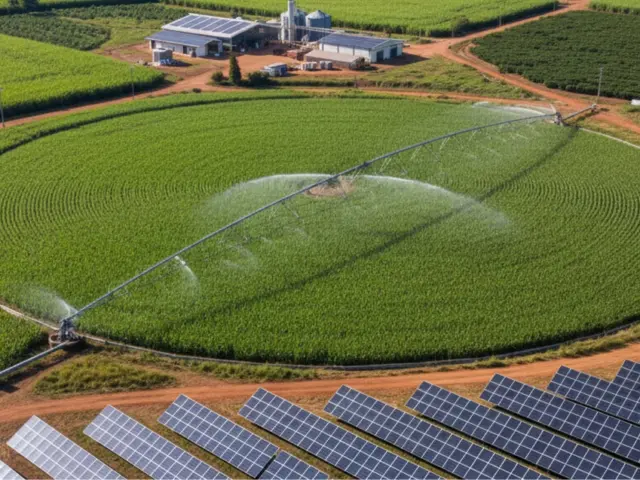
The fund invests in the acquisition and operation of solar power plants focused on distributed generation (DG), allowing investors to gain exposure to the photovoltaic market without needing to install or manage their own assets. Like other REITs, it distributes a portion of the profits generated by its operations to shareholders, focusing on the recurring generation of income.
Another alternative is the RENV11This is a real estate fund focused on photovoltaic projects. The asset invests directly in solar generation infrastructure and seeks to generate revenue through the operation of these projects. Similar to SNEL11, the goal is to offer exposure to the renewable energy sector with a focus on the periodic distribution of income to investors.
Options with international exposure
For investors seeking geographic diversification, there are also alternatives linked to the global energy transition. One of them is... BICL39 – a Brazilian Depositary Receipt (BDR) of an ETF that replicates the performance of the iShares Global Clean Energy ETF, considered one of the leading international benchmarks in the sector.
Through this asset, Brazilian investors gain indirect exposure to dozens of clean energy companies spread across different countries, reducing their dependence on the performance of a single company or market. In this case, the focus is primarily on portfolio appreciation over time, and not on the recurring generation of dividends.
Another alternative is the BQCL39 – a Brazilian Depositary Receipt (BDR) of the First Trust NASDAQ Clean Edge Green Energy Index Fund ETF. In addition to companies linked to renewable energy generation, the fund invests in segments associated with the energy transition, such as energy storage, electrical infrastructure, battery manufacturers, and electric mobility.
Because of this characteristic, the asset is often seen as a way to invest not only in renewable sources, but in the entire global chain of electrification and decarbonization of the economy.
Why are companies like Engie, Eletrobras, and Taesa left off the list?
Although they are often associated with the energy transition, several well-known companies in the electricity sector were not included in this list because they do not meet the criterion of exclusively renewable energy exposure.
This is the case with companies such as Engie Brasil, Eletrobras, Copel, and Neoenergia. Despite having a strong presence in hydroelectric power plants, wind farms, and solar power plants, these companies also maintain operations or assets that are not entirely linked to renewable energy sources.
The same applies to transmission companies like Taesa, ISA Energia Brasil, and Alupar. Although they are fundamental to the expansion of renewable energies by connecting solar parks While wind turbines are often used to transport electricity to consumption centers, they do not directly generate energy.
For this reason, the survey only considered assets whose main activity is directly related to renewable energy generation or exclusive exposure to the clean energy segment.
all the content of Canal Solar is protected by copyright law, and partial or total reproduction of this site in any medium is expressly prohibited. If you are interested in collaborating or reusing part of our material, please contact us by email: redacao@canalsolar.com.br.



Comments
Comments are moderated before publication.Comments should be respectful and contribute to a healthy debate. Offensive comments may be removed. The opinions expressed here are those of the authors and do not necessarily reflect the views of the author. Canal Solar.