

• Tuesday, April 28, 2026
Facebook X-twitter Instagram Youtube LinkedIn Spotify
  • GC Solar: 22,32 GW
  • GD Solar: 47,45 GW
  • advertise here
  • About us
  • Expedient
logo site solar channel
  • News
    • Market & Investments
    • International market
    • Politics & Regulation
    • Projects & Applications
    • Renewable
    • Sustainability & ESG
    • Technology & Innovation
    • Electric Vehicles
  • Articles
    • Opinion Article
    • Manufacturer's Article
    • Technical Article
  • Latam
  • Batteries
  • Blog
  • Solar Energy Companies
    • Integrators
  • Magazine
    • Magazine Canal Solar
    • Conecta Magazine
  • Consultancy
  • Courses
  • News
    • Market & Investments
    • International market
    • Politics & Regulation
    • Projects & Applications
    • Renewable
    • Sustainability & ESG
    • Technology & Innovation
    • Electric Vehicles
  • Articles
    • Opinion Article
    • Manufacturer's Article
    • Technical Article
  • Latam
  • Batteries
  • Blog
  • Solar Energy Companies
    • Integrators
  • Magazine
    • Magazine Canal Solar
    • Conecta Magazine
  • Consultancy
  • Courses
  • News
    • Market & Investments
    • International market
    • Politics & Regulation
    • Projects & Applications
    • Renewable
    • Sustainability & ESG
    • Technology & Innovation
    • Electric vehicles
  • Articles
    • Opinion
    • technicians
    • Manufacturer Items
  • Latam
  • Blog
  • Solar Energy Companies
  • Integrators
  • Magazine
    • Conecta Magazine
  • About Us
  • Advertise Here
  • CS Consulting
  • Courses
  • International market
  • News
    • Market & Investments
    • International market
    • Politics & Regulation
    • Projects & Applications
    • Renewable
    • Sustainability & ESG
    • Technology & Innovation
    • Electric vehicles
  • Articles
    • Opinion
    • technicians
    • Manufacturer Items
  • Latam
  • Blog
  • Solar Energy Companies
  • Integrators
  • Magazine
    • Conecta Magazine
  • About Us
  • Advertise Here
  • CS Consulting
  • Courses
  • International market
logo site solar channel
Home / News / Market & Investments / Eight out of 10 Brazilians have difficulty understanding their electricity bill

Eight out of 10 Brazilians have difficulty understanding their electricity bill

From tariff flags to energy tariffs: research shows the values ​​that most confuse Brazilians
Follow on Whatsapp
  • Photo by Henrique Hein Henrique Hein
  • March 17, 2025, at 14:48 AM
3 min 37 sec read
Eight out of 10 Brazilians have difficulty understanding their electricity bill
Photo: Freepik

The increase in electricity rates has been weighing on the budgets of Brazilian families. However, many consumers do not fully understand the amounts charged on their electricity bills. 

  • Join the Community Canal Solar on WhatsApp. 

This is what a study by Bulbe Energia reveals, which indicates that, even with the effort to interpret the information, eight out of ten consumers are unable to identify what really affects the final value of their energy bills. Check out the full study by clicking here. 

The survey, carried out with Brazilians from all regions of the country, aimed to identify how the population reads and understands their own electricity bill, the taxes behind the biggest doubts and the different ways of monitoring such expenses. 

The results show that, despite reading being common for the majority of the population, 34% of respondents do not know how to explain the reasons for when they receive a higher amount than expected – a clear reflection of the difficulty in understanding the taxes and fees that affect the charge. 

Doubts about the electricity bill

The research identified that consumers' biggest difficulty lies in the difference between energy consumption and the amount charged, according to 48% of respondents. 

This calculation involves the TE (Energy Tariff), which measures consumption in kWh, and the TUSD (Distribution System Usage Tariff), which covers the transportation of electricity to consumers.

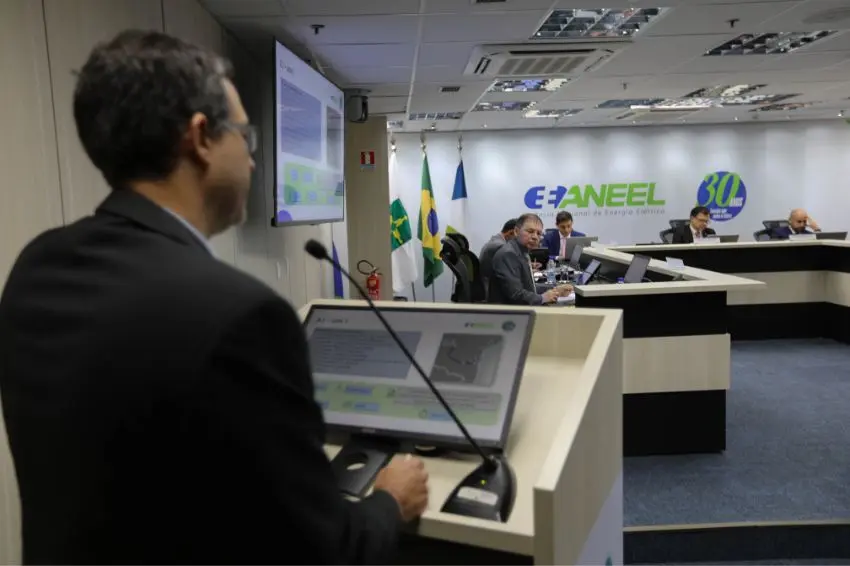
Another point of doubt for 41% of those interviewed is the tariff flag, which is activated by ANEEL (National Electric Energy Agency) when there are additional costs in the generation of electricity, either due to lack of rain or in periods of high energy demand by the population.

Additional taxes and fees such as ICMS (Tax on the Circulation of Goods and Services) also generate confusion: 40% of consumers reported, for example, difficulty in understanding these charges, which directly impact the final value of the invoice.
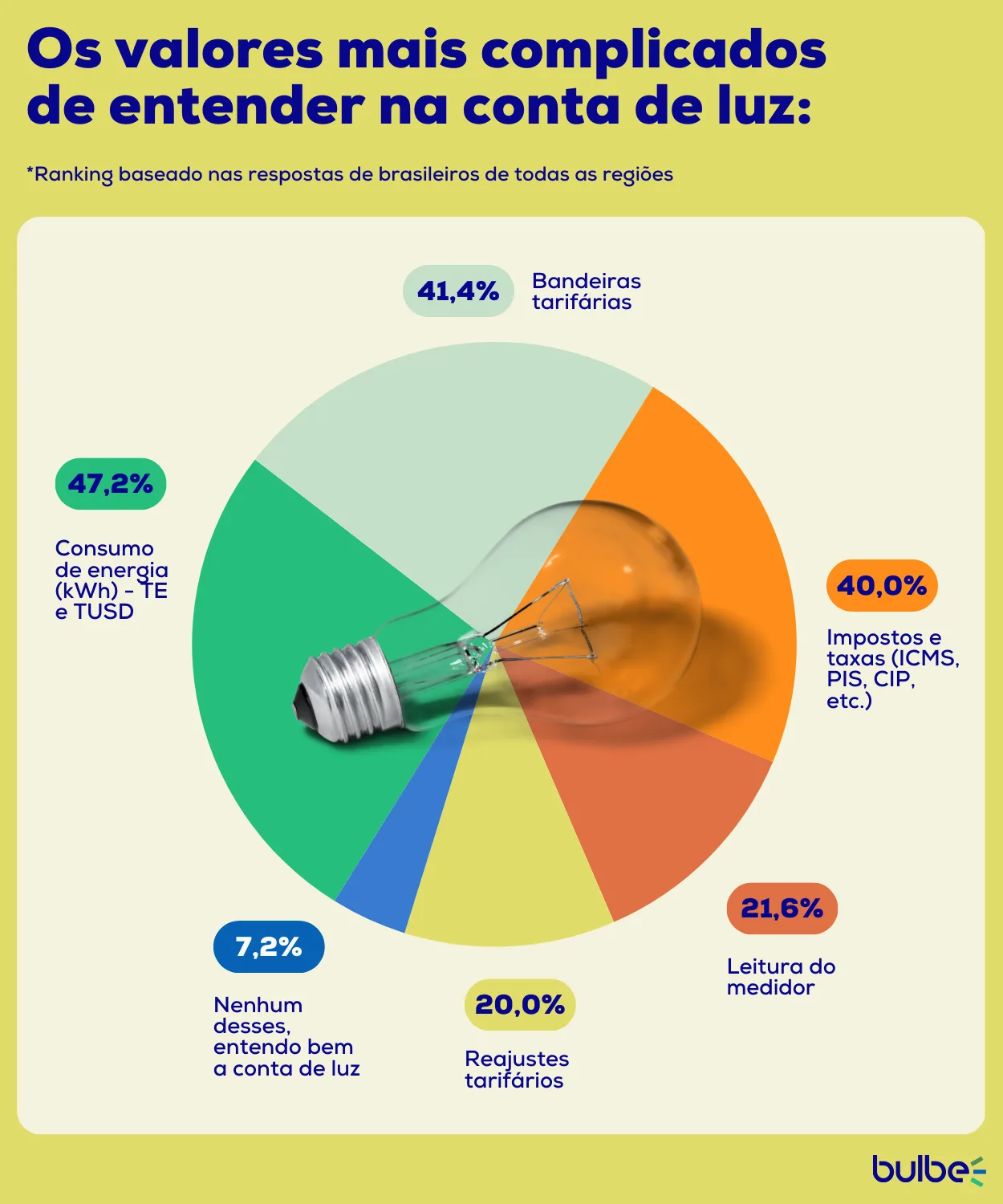
André Mendonça, operations director at Bulbe Energia, highlights that although certain doubts about electricity bills are general, it is important to highlight that electricity rates in Brazil vary between states, with particular generation, distribution and local tax costs.

“Recently, Pará stood out with the highest tariff in the country, while states like Santa Catarina presented lower values, according to ANEEL. These disparities reflect the complexity of the sector, where internal factors directly impact the amount paid by consumers, as well as the way in which the electricity bill is analyzed”, explains Mendonça.

How do Brazilians track their spending?

The research also found that, despite the complexity of the information on the bill, the vast majority of consumers stated that they monitor their electricity bill expenses by comparing previous bills with the current one, even if they are only paying attention to the final amount paid each month.

Although there are tools available for more precise monitoring, adoption is still incipient: only 24% of Brazilians interviewed seek explanations about the amounts, fees and taxes that appear on their monthly bill. 

According to the study, 6% of respondents follow news and explanations on TV, radio or social media about their electricity bills. Another 10% consult graphs on the energy provider's website, while only 5,6% use apps that monitor consumption in real time.. 

In turn, direct interaction with energy providers is even less common: only 1,6% seek to resolve queries directly, either online or in person.
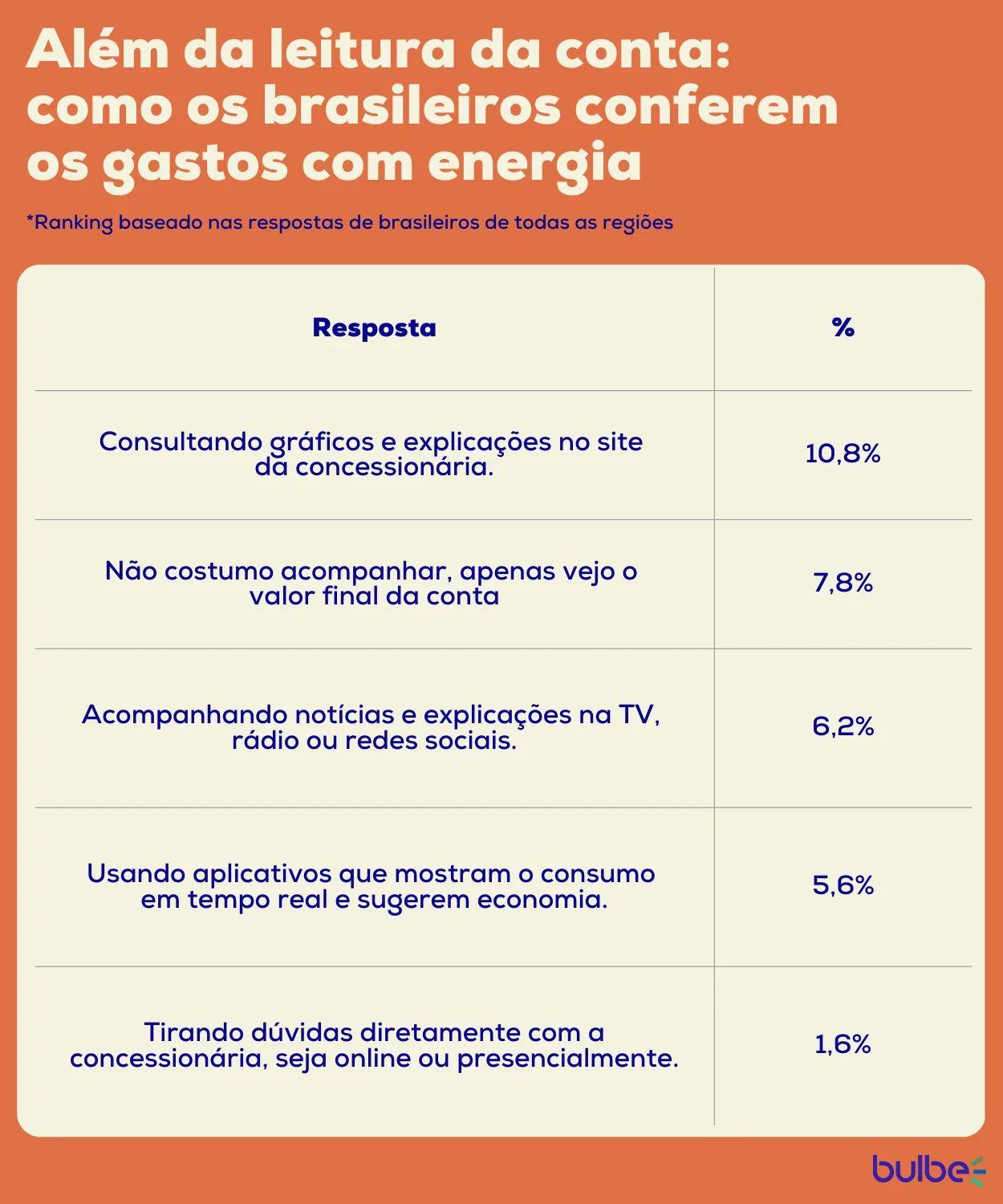
For Mendonça, it is increasingly essential to expand access to information and promote awareness about energy consumption, strengthening consumers' understanding and engagement with the electricity sector.

“The survey data clearly shows that there is a large gap between the technical information on the energy bill and the consumer’s ability to interpret it appropriately,” he commented.

According to the professional, making certain details and values ​​contained in bills more accessible is a crucial step to “ensure more efficient use of energy, reduce costs over time and even identify possible errors or undue charges”, he concluded.

all the content of Canal Solar is protected by copyright law, and partial or total reproduction of this site in any medium is expressly prohibited. If you are interested in collaborating or reusing part of our material, please contact us by email: redacao@canalsolar.com.br.

electricity bill study electric sector
Photo by Henrique Hein
Henrique Hein
He worked at Correio Popular and Rádio Trianon. He has experience in podcast production, radio programs, interviews and reporting. Has been following the solar sector since 2020.
PreviousPrevious
NextNext

An answer

  1. Raimundo Santos de Araujo said:
    24 March 2026 to 12: 11

    Good morning, I've had solar energy at my residence for 3 years. A friend has a similar project, but I've been paying R$ 56,00 for months, while his bill is always high. In March 2026, he paid R$ 144,00. It's worth noting that the appliances are similar. What could be the problem?

    Reply

Leave a comment Cancel reply

Your email address will not be published. Required fields are marked with *

Comments should be respectful and contribute to a healthy debate. Offensive comments may be removed. The opinions expressed here are those of the authors and do not necessarily reflect the views of the author. Canal Solar.

News from Canal Solar in your Email

Posts

Associations release manifesto on crisis in the Free Energy Market.

Canal Solar - ANEEL proposes using unused distributed generation (DG) credits to lower electricity bills.

ANEEL proposes using unused distributed generation (DG) credits to lower electricity bills.

More news

Read More
ANEEL Approves electricity bill adjustments in nine more states.

ANEEL Approves electricity bill adjustments in nine more states.

New environmental paradigm in Brazil: climate statute and changes in environmental licensing.

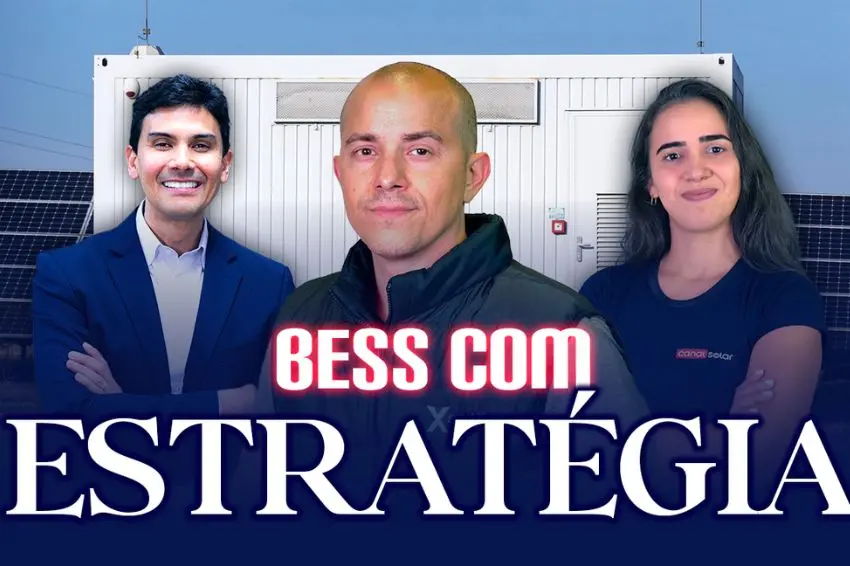
Papo Solar analyzes BESS's progress in the Brazilian market.

Papo Solar analyzes BESS's progress in the Brazilian market.

It is a news and information channel about the photovoltaic solar energy sector. Channel content is protected by copyright law. Partial or total reproduction of this website in any medium is prohibited.

Facebook X-twitter Instagram Youtube LinkedIn Spotify

Site Map

Categories

  • News
  • Articles
  • Interviews
  • Consumer Guide
  • Authors
  • Videos
  • Projects
  • Magazine
  • Electric Vehicles

Channels

  • About Us
  • Contact
  • Privacy
  • Quality Policy
  • Work with us
  • Expedient
  • advertise here

Membership and certifications

Copyright © 2026 Canal Solar, all rights reserved. CNPJ: 29.768.006/0001-95 Address: José Maurício Building – Mackenzie Avenue, 1835 – Floor 3, – Vila Brandina, Campinas – SP, 13092-523
Receive the latest news

Subscribe to our weekly newsletter

Fill in the information above and receive your free copy of Canal Solar magazine.