
• Mon, May 11, 2026
Facebook X-twitter Instagram Youtube LinkedIn Spotify
  • GC Solar: 22,32 GW
  • GD Solar: 47,45 GW
  • advertise here
  • About us
  • Expedient
logo site solar channel
  • News
    • Market & Investments
    • International market
    • Politics & Regulation
    • Projects & Applications
    • Renewable
    • Sustainability & ESG
    • Technology & Innovation
    • Electric Vehicles
  • Articles
    • Opinion Article
    • Manufacturer's Article
    • Technical Article
  • Latam
  • Batteries
  • Blog
  • Solar Energy Companies
    • Integrators
  • Magazine
    • Magazine Canal Solar
    • Conecta Magazine
  • Consultancy
  • Courses
  • News
    • Market & Investments
    • International market
    • Politics & Regulation
    • Projects & Applications
    • Renewable
    • Sustainability & ESG
    • Technology & Innovation
    • Electric Vehicles
  • Articles
    • Opinion Article
    • Manufacturer's Article
    • Technical Article
  • Latam
  • Batteries
  • Blog
  • Solar Energy Companies
    • Integrators
  • Magazine
    • Magazine Canal Solar
    • Conecta Magazine
  • Consultancy
  • Courses
  • News
    • Market & Investments
    • International market
    • Politics & Regulation
    • Projects & Applications
    • Renewable
    • Sustainability & ESG
    • Technology & Innovation
    • Electric vehicles
  • Articles
    • Opinion
    • technicians
    • Manufacturer Items
  • Latam
  • Blog
  • Solar Energy Companies
  • Integrators
  • Magazine
    • Conecta Magazine
  • About Us
  • Advertise Here
  • CS Consulting
  • Courses
  • International market
  • News
    • Market & Investments
    • International market
    • Politics & Regulation
    • Projects & Applications
    • Renewable
    • Sustainability & ESG
    • Technology & Innovation
    • Electric vehicles
  • Articles
    • Opinion
    • technicians
    • Manufacturer Items
  • Latam
  • Blog
  • Solar Energy Companies
  • Integrators
  • Magazine
    • Conecta Magazine
  • About Us
  • Advertise Here
  • CS Consulting
  • Courses
  • International market
logo site solar channel
Home / News / Politics & Regulation / Business leaders are demanding a review of the criteria used to set electricity prices.

Business leaders are demanding a review of the criteria used to set electricity prices.

Pressure on the government mounts in a crucial week for the free market and trading companies.
Follow on Whatsapp
  • Photo by Wagner Freire Wagner Freire
  • May 11, 2026, at 16:43 PM
4 min 7 sec read
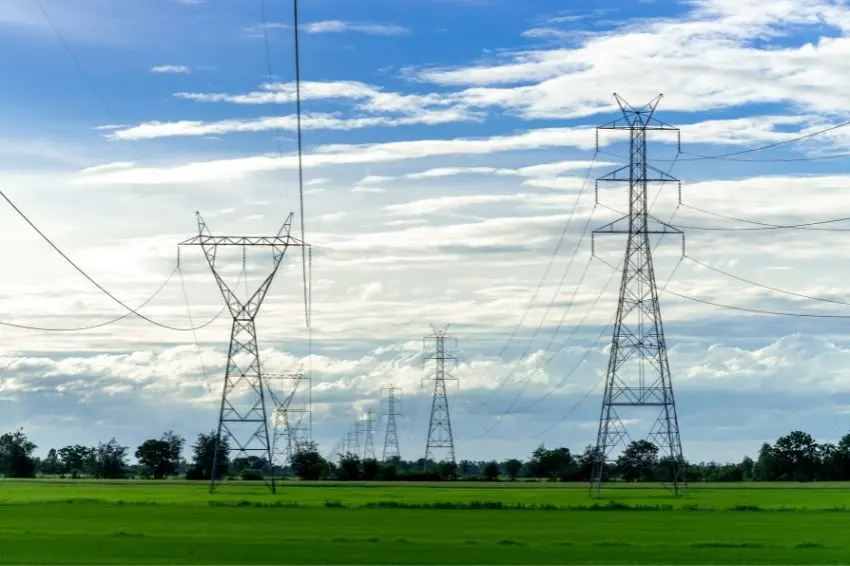
Business leaders are demanding a review of the criteria used to set electricity prices.
Photo: Magnificent

A group of business leaders submitted a document to the federal government entitled "Manifesto of Free Energy Consumers," in which they request changes to the criteria currently used to determine electricity prices in Brazil.

The letter, obtained by the news report of Canal SolarIt also bears the signature of Luiz Eduardo Barata, president of the National Front of Energy Consumers and former president of the Board of Directors of CCEE (Chamber of Electric Energy Commercialization).

In the manifesto, the signatories state that the current model is hindering energy procurement in the short and medium term (up to three years) and putting pressure on the competitiveness of Brazilian industry.

According to them, the parameters currently adopted in computer models artificially increase energy prices, favoring generation agents at the expense of productive sectors.

The discussion is set to take a new turn next Wednesday (13), when the CMSE (Electric Sector Monitoring Committee) will deliberate on maintaining or potentially changing the risk aversion parameters used in the formation of electricity prices.

The decision could have direct repercussions on electricity costs for consumers, industries, and free market players starting as early as 2027.

Currently, energy prices in the country are calculated based on the Newave, Decomp, and Dessem computational models, which take into account variables such as reservoir storage levels, hydrological forecasts, and the load and dispatch of thermal and hydroelectric power plants.

Within this framework, mechanisms such as VMinOp and CVaR define the level of conservatism adopted in the operation of the electrical system. VMinOp establishes minimum storage levels in reservoirs, seeking to reduce the risk of energy deficit at the end of the dry season.

CVaR, on the other hand, functions as a statistical parameter that assigns greater weight to the most critical hydrological scenarios, directly influencing thermoelectric dispatch and water preservation in reservoirs.

In the 2025 and 2026 operating cycles, the so-called CVaR 15/40 pair came into effect, in which the 15% worst hydrological scenarios receive a weight of 40% in the pricing models. This made the model more risk-averse, raising energy prices.

In the document, the business leaders argue that adopting the CVaR 15/30 parameter would be sufficient to guarantee compliance with the reference curves defined by CMSE, without compromising the energy security of the SIN (National Interconnected System). They believe that maintaining the current CVaR 15/40 model will likely exacerbate the distortions already observed in the market.

According to the group, excessive conservatism in pricing models artificially raises the cost of energy, stimulating greater thermal dispatch and putting pressure on mechanisms such as tariff flags. They claim the impact affects both regulated and free market consumers.

"In a context where the system does not exhibit stress compatible with such price signals, this distortion becomes even more evident and worrying," they argue.

Business leaders also argue that maintaining the current parameters promotes an unbalanced redistribution of revenue within the electricity sector.

For them, maintaining excessively conservative parameters implies, in practice, a transfer of wealth that favors uncontracted generating agents, to the detriment of consumers and broader economic development.

Crisis in the sector

Current energy prices and reduced liquidity in the free market are putting pressure on consumers and energy traders, while simultaneously increasing profits for uncontracted generation agents.

In this scenario, some generators have prioritized settling energy sales in the short-term market instead of entering into long-term contracts. This strategy increases profit margins in a high-price environment while simultaneously reducing exposure to the risk of counterparty default.

On the other hand, energy trading companies, especially smaller ones, are facing difficulties in acquiring energy under competitive conditions and maintaining the balance of their portfolios. The deterioration of market conditions has already led some companies to seek judicial reorganization as a way to preserve their operations.

Consumers are also directly impacted by this more volatile environment. With a lower supply of long-term contracts and higher short-term prices, exposure to the spot market increases, compromising one of the main pillars of the free market: cost predictability through the advance contracting of energy at competitive prices.

all the content of Canal Solar is protected by copyright law, and partial or total reproduction of this site in any medium is expressly prohibited. If you are interested in collaborating or reusing part of our material, please contact us by email: redacao@canalsolar.com.br.

CCEE CMSE (Electricity Sector Monitoring Committee) energy consumers storage course
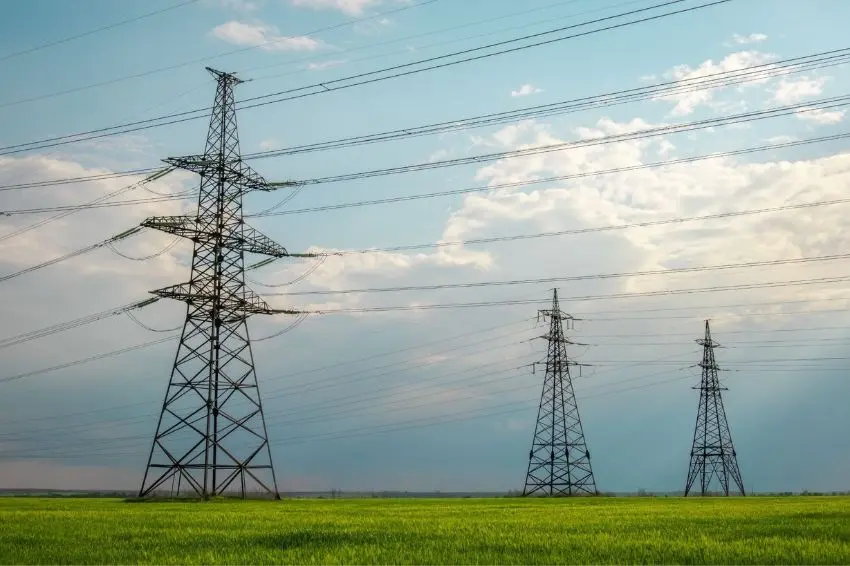
Photo by Wagner Freire
Wagner Freire
Wagner Freire is a journalist graduated from FMU. He worked as a reporter for Jornal da Energia, Canal Energy and Agência Estado. Covering the electricity sector since 2011. Has experience in covering events such as energy auctions, conventions, lectures, fairs, congresses and seminars.
PreviousPrevious

Leave a comment Cancel reply

Your email address will not be published. Required fields are marked with *

Comments should be respectful and contribute to a healthy debate. Offensive comments may be removed. The opinions expressed here are those of the authors and do not necessarily reflect the views of the author. Canal Solar.

News from Canal Solar in your Email

Posts

Government renews concessions and promises modernization of the electricity grid in 13 states.

Government renews concessions and promises modernization of the electricity grid in 13 states.

CCEE lifts quarantine and Alexandre Ramos is expected to assume the presidency of Cemig.

CCEE lifts quarantine and Alexandre Ramos is expected to assume the presidency of Cemig.

More news

Read More
Migrations to the free energy market fall 36,5% in the first quarter.

Migrations to the free energy market fall 36,5% in the first quarter.

Debate on risk aversion in the electricity sector gains political pressure.

Debate on risk aversion in the electricity sector gains political pressure.

The energy advantage of Brazilian industry is beginning to reshape its competitiveness.

It is a news and information channel about the photovoltaic solar energy sector. Channel content is protected by copyright law. Partial or total reproduction of this website in any medium is prohibited.

Facebook X-twitter Instagram Youtube LinkedIn Spotify

Site Map

Categories

  • News
  • Articles
  • Interviews
  • Consumer Guide
  • Authors
  • Videos
  • Projects
  • Magazine
  • Electric Vehicles

Channels

  • About Us
  • Contact
  • Privacy
  • Quality Policy
  • Work with us
  • Expedient
  • advertise here

Membership and certifications

Copyright © 2026 Canal Solar, all rights reserved. CNPJ: 29.768.006/0001-95 Address: José Maurício Building – Mackenzie Avenue, 1835 – Floor 3, – Vila Brandina, Campinas – SP, 13092-523
Receive the latest news

Subscribe to our weekly newsletter

Fill in the information above and receive your free copy of Canal Solar magazine.