
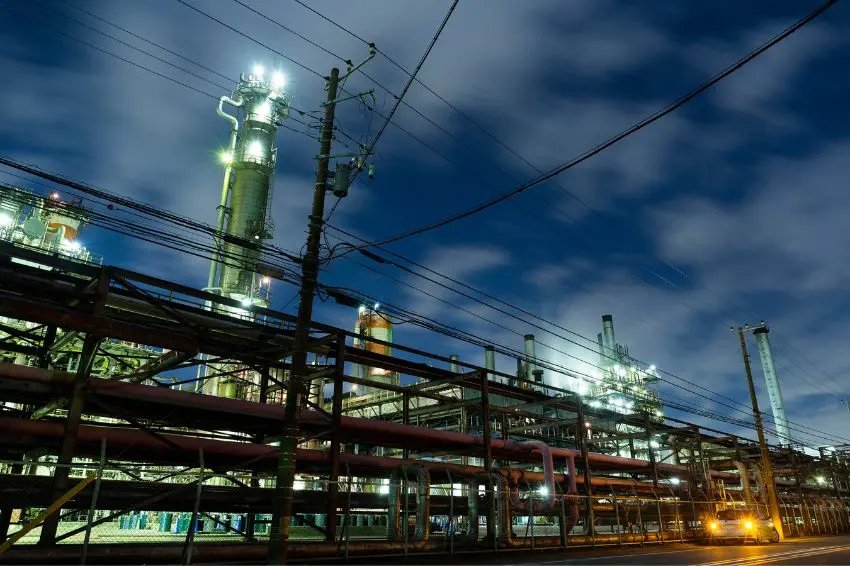
May is Industry Month. In 2026, the date coincides with a more structural shift: industry has returned to the center of Brazil's economic strategy—not through rhetoric, but through function.
According to the National Confederation of Industry, the sector generated... R$ 2,56 trillion in 2025, equivalent to 23,4% of GDP, in addition to concentrating 66,8% of business investment in research and development and 66% of exports of goods and services..
In a global scenario of productive reorganization and the pursuit of industrial resilience, this weight is once again guiding decisions. Energy accompanies this repositioning—not as an isolated cost, but as part of the productive structure.
Data from EPE (Energy Research Company) indicates that industry accounted for 32% of the country's final energy consumption in 2024, with 91,4 million tons of oil equivalent (Mtoe)Composition is the central point: 64,4% of this energy is already renewable.According to the MME (Ministry of Mines and Energy), this number describes a structural characteristic.
A significant portion of Brazilian industry operates with energy integrated into its production process. Sugarcane bagasse, in the sugar-energy sector, and black liquor, in the pulp and paper industry, return to the system as energy inputs. The energy matrix is not only cleaner, it's more functional.
Suzano illustrates this model. The Imperatriz (MA) unit operates with an installed capacity exceeding 250 MW, sufficient to sustain production and export surpluses to the system. Energy, in this case, contributes to operational stability and cost predictability — and, at certain times, to additional revenue.
In the sugar and ethanol sector, Raízen has consolidated one of the largest cogeneration systems in the country, with a capacity close to... 1 GW and annual production exceeding 2,5 million MWhThe model highlights the degree of integration between production and energy.
At the same time, the company's current situation — marked by financial restructuring and a high level of leverage — reinforces a recurring theme in the industry: operational efficiency and energy integration enhance competitiveness, but they operate in conjunction with capital decisions.
In heavy industry, the logic is different. Gerdau operates in an environment where electrical and thermal energy are key determinants of the final cost. The strategy involves structured contracts in the free market, diversification of sources, and continuous efficiency gains. In energy-intensive sectors, energy sustains operations and defines competitiveness.
These paths are not equivalent. But they point in the same direction. Energy is no longer contracted passively. It has become structured.
The growth of the free market makes this change more evident. The CCEE (Chamber of Electric Energy Commercialization) indicates that this environment already accounts for approximately... 42% of national consumption, after growth of 7,3% in 2025, with more than 21 new consumer units. During this period, the movement reflects a change in behavior: companies began to decide on the timeframe, indexation, exposure, and composition of their energy portfolio.
Energy has entered the realm of strategy. This process coexists with structural elements that remain relevant to the industry. Natural gas is one of them.
The industry accounts for approximately 60% of national consumptionAccording to the National Confederation of Industry, in 2024 the cost in Brazil was around... US$18,96 per million BTU — standard unit of thermal energy — compared to approximately US$3,75 in the United StatesThis difference influences heat-intensive supply chains, such as ceramics, glass, chemicals, and food, and remains a relevant variable for industrial decisions. At the same time, there is room for direct and recurring profit.
Energy Efficiency
The programs coordinated by the National Program for Energy Conservation recorded savings close to 24 billion kWh in the last available consolidated cycle.In an industrial setting, this translates to process modernization, reduced specific consumption, and consistent productivity gains.
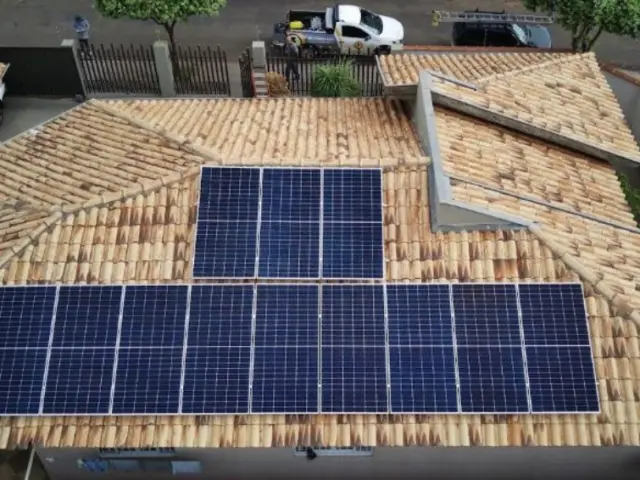
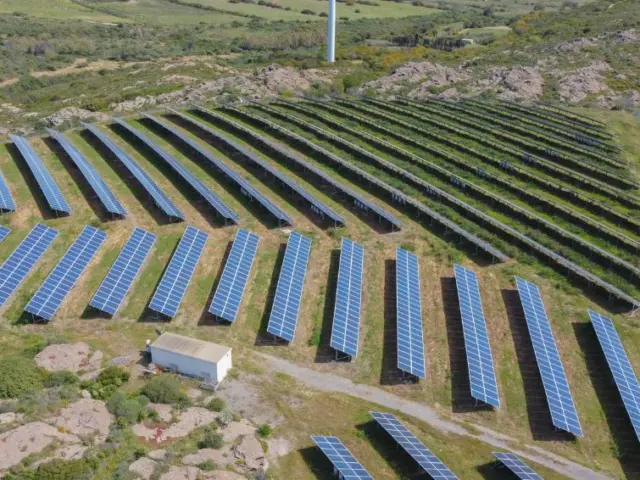
Meanwhile, the expansion of distributed generation reinforces the reorganization of the electricity sector. Data from the National Electric Energy Agency indicate that the segment added between 7 and 9 GW in 2025, ending the year with approximately 43,5 GW installed, exceeding 44 GW by early 2026.Distributed generation is no longer a one-off alternative but is becoming an integral part of companies' energy strategy, especially as a tool for predictability and diversification.
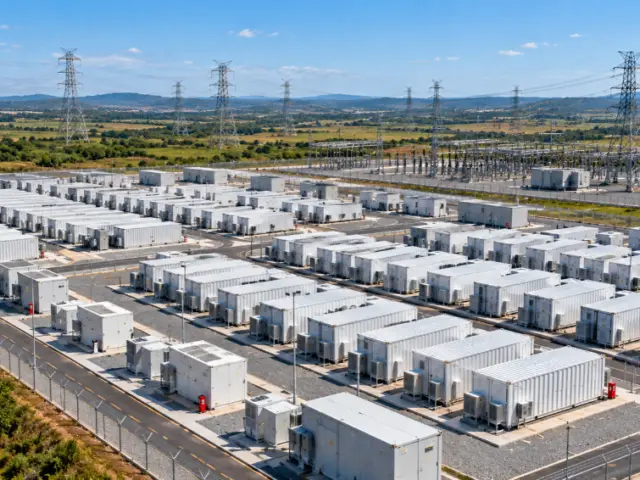
Other paths are advancing in parallel. The Ministry of Mines and Energy (MME) has begun to position biomethane as a relevant alternative to replace fossil fuels in specific industrial segments. Storage is starting to gain regulatory traction, although still in its initial phase. This set of movements does not point to a single solution. It points to a change in logic.
The energy competitiveness of Brazilian industry is built upon a combination of renewable energy sources, autonomy in contracting, and the capacity to manage consumption.
Ultimately, the difference isn't in the type of energy. It's in how it's incorporated into the business model with enough consistency to sustain competitiveness over time.
The opinions and information expressed are the sole responsibility of the author and do not necessarily represent the official position of the author. Canal Solar.

Comments (1)
Comments are moderated before publication.Comments should be respectful and contribute to a healthy debate. Offensive comments may be removed. The opinions expressed here are those of the authors and do not necessarily reflect the views of the author. Canal Solar.
Brazil has woken up and turned on the light so the world can see better!!!
Brazil, a promising continent called "the country of the moment and forever!!!"