
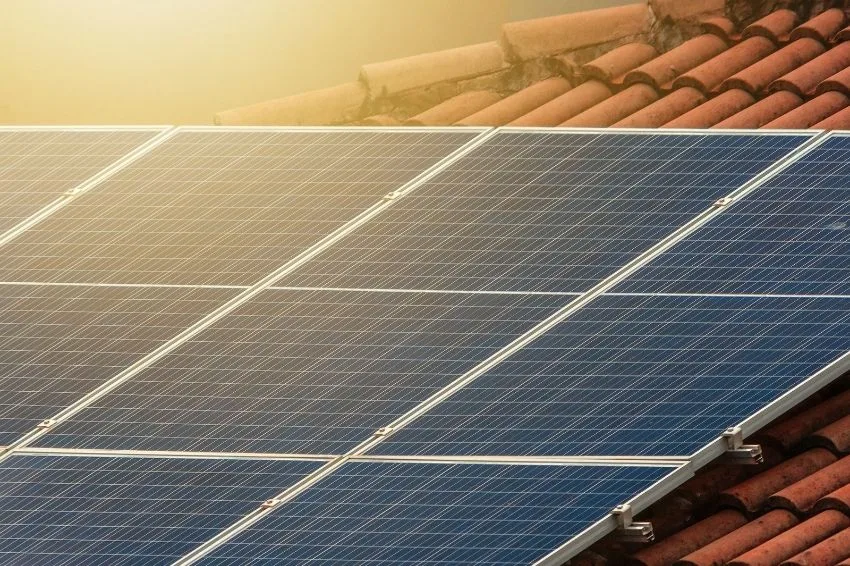
Residents of Rio Grande do Norte who invested in solar energy to reduce their electricity bills were surprised this month with bills far exceeding the usual amount. In many cases, the cost doubled or even tripled.
The reason is the inclusion of new tariff items by Neoenergia Cosern, which began charging part of the TUSD (Tariff for Use of the Distribution System) and the ICMS (Tax on the Circulation of Goods and Services) from consumers who connected photovoltaic systems to the grid after the entry into force of Law 14.300/2022, on January 7, 2023.
The concessionaire justified the measure by stating that the changes are aligned with the legislation, which established the Legal Framework for Distributed Generation (DG) and determined that new entrants will gradually start paying the TUSD Fio B — a tariff that remunerates the use of the electricity grid.
The distributor also cited State Law No. 6.968/1996, which regulates ICMS (a Brazilian state tax) in Rio Grande do Norte, emphasizing that the law does not provide for exemption for photovoltaic systems in the portion corresponding to distribution charges.
Procon opens investigation, and APER is monitoring the situation.
Despite the explanations, Procon-RN (the consumer protection agency of Rio Grande do Norte) reported that it has initiated preliminary procedures to analyze possible abuses. The agency is monitoring the case and will notify Neoenergia Cosern to provide clarifications.
Aper (Associação Potiguar de Energias Renováveis) reported that it is monitoring the situation with the aim of ensuring that legal certainty and predictability are maintained for consumers and small generators.
Other states have faced similar impasses.
The situation observed in Rio Grande do Norte is not isolated. States like Goiás and Paraíba have already experienced similar disputes involving the collection of ICMS (a state sales tax) on solar energy.
In these regions, pressure from consumers and industry entities led to the suspension of tariffs, after court decisions recognized that there is no triggering event in the compensated energy that justifies the imposition of the tax on photovoltaic systems.
all the content of Canal Solar is protected by copyright law, and partial or total reproduction of this site in any medium is expressly prohibited. If you are interested in collaborating or reusing part of our material, please contact us by email: redacao@canalsolar.com.br.

Comments (1)
Comments are moderated before publication.Comments should be respectful and contribute to a healthy debate. Offensive comments may be removed. The opinions expressed here are those of the authors and do not necessarily reflect the views of the author. Canal Solar.
It's incredible how they try to block growth, job creation, income generation, and especially the benefits of distributed generation for families; it's unbelievable.