
The return of The Devil Wears Prada to the cinema, almost two decades after the release of the first film, is not just a cultural event. It is also a powerful metaphor about traditional markets that, at a certain point, need to face an uncomfortable truth: the authority built in the past does not guarantee relevance in the future.
The sequel, The Devil Wears Prada 2, reunites key names from the original cast, such as Meryl Streep, Anne Hathaway, Emily Blunt and Stanley Tucci, around the universe of the fictional Runway magazine, now set in a context of transformation of media, fashion and traditional structures of influence. The production is directed by David Frankel, with a screenplay by Aline Brosh McKenna, and is scheduled for release by 20th Century Studios in May 2026 [1].
At first glance, it may seem unlikely to draw lessons for the electricity sector from a narrative set in the world of fashion. But it is precisely in this shift that the richness of the analysis lies. Fashion, like energy, does not operate solely through products. It operates through signals, trends, infrastructure, reputation, scarcity, desire, economic power, and the ability to anticipate.
What Miranda Priestly represents in the collective imagination is not just the figure of a stern editor or a demanding leader. She symbolizes something greater: the understanding that markets are shaped by those who can read before others what has not yet become obvious. In the electricity sector, this capacity for strategic reading has perhaps never been more necessary.
Electrical energy is no longer perceived merely as an input, an operational cost, or invisible infrastructure. It has become central to business, industrial, technological, environmental, and regulatory decisions. Just as the publishing industry had to deal with digitization, the fragmentation of attention, and the loss of its monopoly on narrative, the electricity sector faces the decentralization of generation, the digitization of consumption, the expansion of data centers, artificial intelligence, storage, market liberalization, tariff pressure, and the need for more resilient networks.
The question, therefore, is not what fashion has to do with energy. The correct question is: what happens to any traditional sector when the center of power begins to shift?
1. Every traditional sector thinks it controls the game — until the game changes.
The first major lesson lies in the false sense of control.
In the first film, Runway magazine represented an ecosystem of almost absolute influence. What was published there had the power to shape behavior, consumption, reputation, and career. But the return of the narrative in a new phase suggests precisely the inflection point of any traditional industry: when the structure that once concentrated power begins to compete with new channels, new actors, and new forms of influence.
The Brazilian electricity sector is experiencing a similar shift. For decades, the dominant logic was anchored in a vertically integrated, centralized, and highly regulated model, in which the consumer played an essentially passive role. Energy was generated, transmitted, distributed, and billed. The consumer, to a large extent, simply paid the bill.
This model still exists, of course. But it no longer explains the present on its own—much less the future.
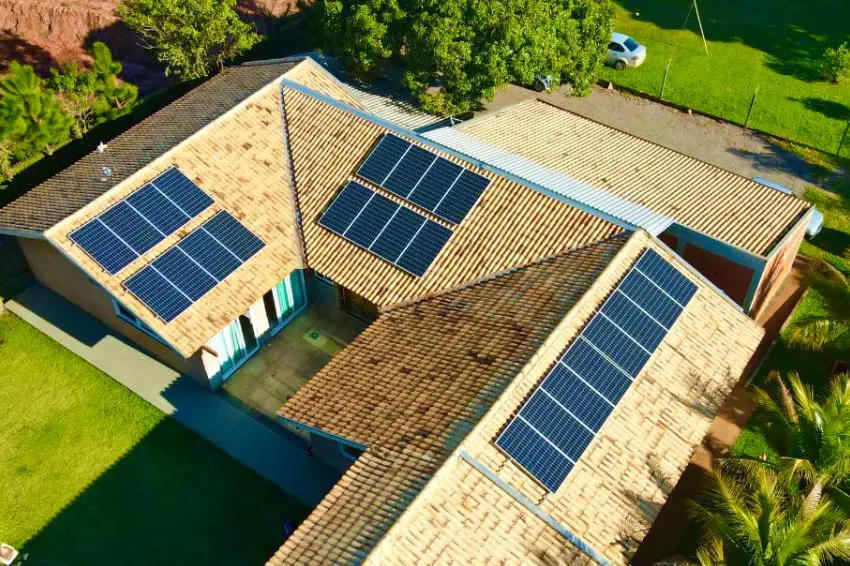
Today, consumers can generate energy, participate in the Electric Energy Compensation System, join shared generation models, migrate to the free market in certain cases, contract efficiency solutions, evaluate self-production, consider storage, discuss cost predictability, and legally challenge charges, connection refusals, and regulatory compliance failures.
The National Electric Energy Agency itself monitors, through public databases, requests for connection of micro and mini distributed generation after Law No. 14.300/2022, which demonstrates how the expansion of distributed generation has come to require specific institutional monitoring [2].
The center of gravity has shifted. Energy is no longer just a matter of supply; it has become a legal relationship, an economic strategy, a competitive asset, and increasingly, a given.
2. Narrative is also power.
One of the most sophisticated elements of The Devil Wears Prada is the understanding that influence doesn't stem solely from the objective quality of a product, but from the ability to build meaning around it.
Fashion doesn't just sell fabric. It sells identity, belonging, differentiation, and worldviews. Similarly, the electricity sector doesn't just sell kilowatt-hours. It sells security, predictability, continuity, sustainability, efficiency, freedom of choice, and risk reduction.
This understanding is crucial because a significant portion of the current conflicts in the electricity sector stems precisely from the dispute over narratives.
Is distributed generation a problem for the grid or an instrument for energy decentralization? Is storage an additional cost or a tool for systemic flexibility? Does the free market represent a risk or contractual autonomy? Is market opening a threat to distributors or a natural evolution of consumer freedom? Does tariff digitalization increase efficiency or increase the informational complexity for the consumer?
The answer to these questions doesn't depend solely on norms. It also depends on who can best explain the phenomenon.
In the electricity sector, technical communication is no longer an accessory. It has become a competitive advantage. Companies that cannot clearly explain their business models generate insecurity and fail to attract investors. Associations/Consortia/Cooperatives that do not adequately structure their contracts increase risk. Trading companies that sell energy as a simple discount may conceal significant complexities. Consulting firms that fail to translate regulations lose authority. Distributors that poorly communicate their requirements increase litigation.
In a transforming market, those who control the narrative not only inform but also influence decisions, reduce asymmetry, build trust, and manage expectations.
3. Tradition does not save those who ignore transition.
The fashion industry is well aware of the weight of tradition. Brands, magazines, publishers, and luxury houses maintain reputations for decades. But in dynamic markets, tradition without adaptation can turn into operational nostalgia.
The electricity sector faces the same dilemma. Historical experience is indispensable, but not sufficient. Planning, regulation, and contracts need to engage with new forms of consumption, new load profiles, and new technologies.
The International Energy Agency projects that global electricity demand will grow by an average of 3,6% per year between 2026 and 2030, driven by industry, electric vehicles, air conditioning and data centers. The report also points out that the world is experiencing a stage marked by the increasing centrality of electricity in the economy [3].
This data is relevant because it alters the planning logic. It's not just about generating more energy. It's about knowing where the load will arise, at what times, with what profile, with what reliability requirements, what impact it will have on the grid, and what economic signals will be used to guide investments.
In Brazil, the Energy Research Company has already been treating new energy-intensive loads, such as data centers and hydrogen, as relevant elements for transmission expansion studies. The Energy Transmission Notebook of the PDE 2034 points to the need for planning in the face of uncertainties related to new technologies and the supply of these loads [4].
The central point is simple: the energy transition is not merely an environmental issue. It's an economic, regulatory, and infrastructural reorganization.
4. Data is the new editorial
In the fashion world, those who understand behavior anticipate trends. In the electricity sector, those who understand data anticipate risk, cost, and opportunity.
The load curve, the demand factor, the hourly consumption profile, seasonality, simultaneity, credit compensation, billing history, contracted demand, tariff incidence, generation predictability, and default behavior have become part of the sector's strategic intelligence.
The expansion of data centers and artificial intelligence makes this reality even more evident. According to the IEA, global electricity consumption by data centers is expected to more than double, reaching approximately 945 TWh in 2030, with artificial intelligence as one of the main drivers of this growth [5].
In another survey, the IEA recorded that the electricity demand of data centers grew by 17% in 2025, while global electricity demand grew by 3% in the same period [6].
These figures help explain why energy and data can no longer be analyzed separately. The digital economy depends on abundant, reliable, contracted, traceable, and economically viable electricity. Data is intangible, but its infrastructure is profoundly physical: network, substation, generation, redundancy, cooling, connection, and energy security.
In this context, the electricity sector begins to operate in a zone of convergence between infrastructure and intelligence. Energy enables data. Data reorganizes energy consumption. And both begin to influence investments, regulation, and business strategies.
5. Yesterday's supporting actor can be tomorrow's protagonist.
One of the most interesting lessons from narratives like The Devil Wears Prada lies in the shifting roles of the characters. Those who seemed peripheral can become essential when the environment changes.
In the electricity sector, this trend is evident.
The consumer, previously seen as the end recipient of the service, becomes an active agent. The consuming unit ceases to be merely a point of load and can become a point of generation, management, compensation, storage, or flexibility. Distributed generation transforms rooftops, land, and remote areas into economic assets. Storage repositions time as a variable of value. Data centers, which could be seen only as intensive clients, become elements of systemic planning. Artificial intelligence creates new demands and also new tools for operation, forecasting, and management.
This shift requires a review of contracts, business models, and regulatory instruments. Simply selling energy is not enough. It is necessary to legally structure the relationship, define responsibilities, allocate risks, anticipate unavailability scenarios, address default, regulate cost sharing, establish readjustment criteria, observe connection rules, organize consumption data, and ensure compliance with applicable regulations.
In other words, leadership in the electricity sector will not belong to those who merely own assets, but to those who can integrate them into a coherent legal, regulatory, technical, and commercial strategy.
6. Brand, strategy, and regulation go hand in hand.
Miranda Priestly's authority doesn't stem solely from her position. It stems from a combination of reputation, vision, technical expertise, and ability to influence. In the electricity sector, the construction of authority follows a similar logic.
Companies operating in the energy sector need to understand that a brand is not just a visual identity. A brand is regulatory trust. It's a perception of safety. It's contractual clarity. It's the ability to explain risks. It's a track record of delivery. It's the stance taken in the face of conflict. It's consistency between words and actions.
This point is especially sensitive in models involving shared generation, energy subscription, the free market, self-production, storage, asset leasing, credit management, consortia, and associations. The commercial sophistication of these models demands equivalent legal sophistication.
This is not about bureaucratizing innovation. It's about protecting its continuity.
A poorly explained business model can be perceived as risky even when it is regulatoryly viable. A weak contract can jeopardize an economically promising operation. An overly aggressive business strategy can generate reputational liabilities. A superficial regulatory analysis can turn opportunity into litigation.
In the electricity sector, reputation and regulation are mutually reinforcing. Those who communicate well reduce noise. Those who structure well reduce risk. Those who anticipate change gain market share before the competition.
7. The network is the new catwalk.
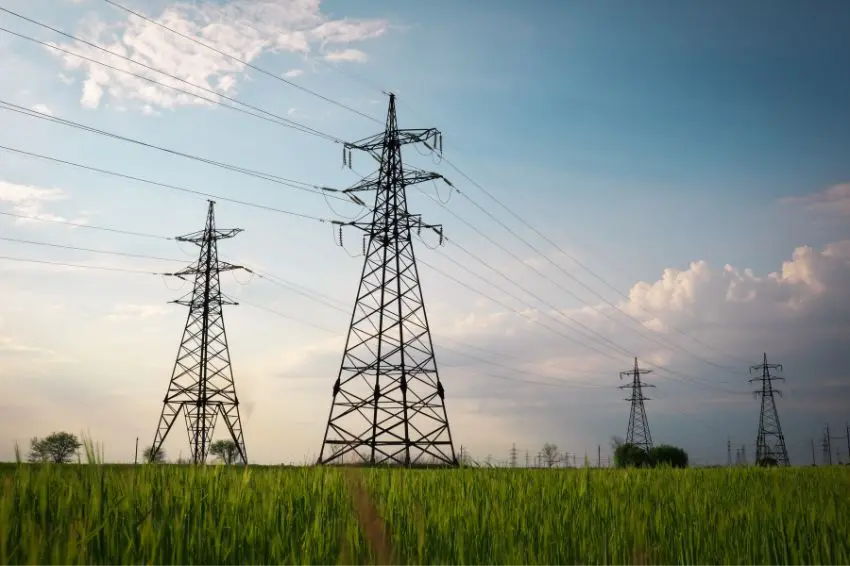
The metaphor may seem bold, but it's accurate: if in fashion the catwalk reveals trends, in the electricity sector the grid reveals limitations.
The network shows where expansion is possible, where there are bottlenecks, where connectivity is controversial, where the cost of reinforcement is high, where simultaneity matters, where the locational signal needs to be discussed, and where future demand may put pressure on the system.
The IEA highlights that, in order to meet the growth in electricity demand until 2030, it will be necessary to increase annual investments in networks by approximately 50% compared to the current level of US$ 400 billion, in addition to expanding supply chains and addressing workforce challenges [7].
This point is crucial for Brazil. The energy transition will not be achieved solely through expanding generation. It will be achieved through a strong grid, planning, predictability, energy storage, demand management, an adequate economic signal, and legal certainty.
Solar energy, distributed generation, and new consumption models need to engage with the existing electrical grid. A mature discussion should not ignore the challenges of the grid, but it also cannot transform any technical challenge into a generic barrier to innovation.
Between uncontrolled expansion and excessive restriction lies a sophisticated regulatory space: the space of rational cost allocation, technical transparency, contractual predictability, and the modernization of economic signals.
8. The market changes before regulation finishes understanding it.
Innovation rarely needs permission to happen at the ideal pace of regulation. This was the case with digital media, e-commerce, platforms, subscription services, and it has also been the case with energy.
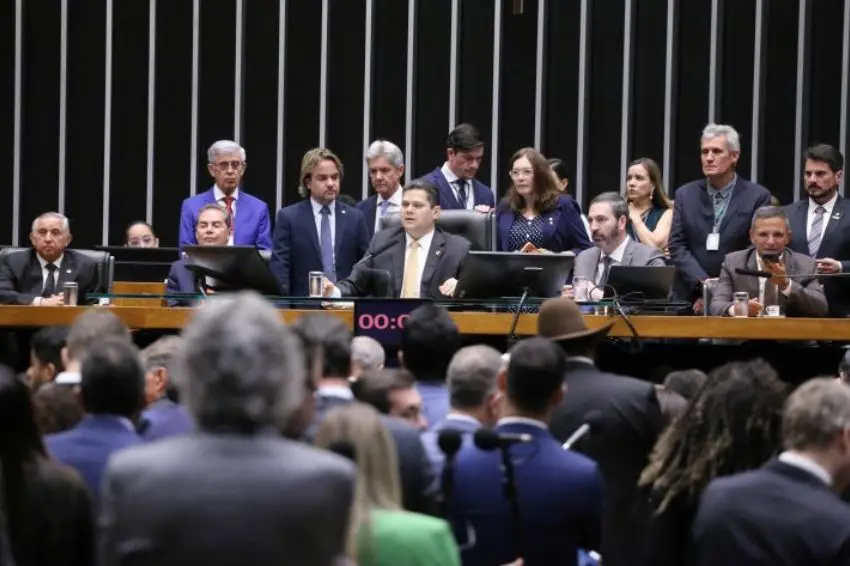
Regulation is indispensable, but it often comes after the initial economic impact. Law No. 14.300/2022 represented an important milestone for micro and mini-distributed generation in Brazil, establishing the legal framework for distributed generation and regulating the Electricity Compensation System. Even so, the practical application of the rules continues to generate interpretative conflicts, especially on issues such as connection, works, deadlines, billing, compensation, classification, and transition between regimes.
The existence of public databases of ANEEL Regarding requests for MMGD connection after Law No. 14.300/2022, it highlights the need for ongoing monitoring of the topic and demonstrates that regulation does not end with the publication of the law. It is realized in the practice of distributors, in connection procedures, in access opinions, in invoices, in administrative complaints and, often, in the Judiciary [8].
It is at this point that our work as specialized legal advisors ceases to be merely reactive. It begins to fulfill a strategic function: anticipating risks, structuring models, interpreting regulatory signals, building legal arguments, preventing litigation, and providing security for innovation.
9. Consumers don't just want energy, they want predictability.
Luxury in fashion is not just a product. It's an experience, confidence, exclusivity, and a promise fulfilled.
In the energy sector, something similar occurs. Consumers don't just want electricity supply. They want cost predictability, security of supply, contractual stability, risk reduction, and a clear understanding of what they are contracting for.
This change is profound.
When a company adopts a subscription-based energy solution, migrates to the free market, invests in its own generation, structures self-production, contracts storage, or participates in shared generation, it is not simply buying energy. It is making an economic and legal statement about its energy future.
Therefore, the sector needs to abandon simplistic approaches. "Savings on the electricity bill" is an insufficient promise when unaccompanied by governance, transparency, and regulatory analysis. Business consumers, in particular, need to understand deadlines, risks, responsibilities, readjustment criteria, termination scenarios, tax impacts, measurement rules, connection, and compensation.
The energy of the future will be contracted by those who understand that predictability is as valuable as the discount.
10. The greatest risk is not change itself; it's going through it without a strategy.
The main lesson the electricity sector can learn from The Devil Wears Prada 2 is that no market remains relevant simply because it was important in the past.
Fashion has changed. The media has changed. Technology has changed. Energy is changing.
And in all these sectors, the pattern repeats itself: first, change seems peripheral; then, it seems inconvenient; next, it becomes inevitable; finally, it redefines who leads and who merely reacts.
The Brazilian electricity sector is facing precisely this point. The expansion of demand, digitalization, decentralization, the energy transition, data centers, artificial intelligence, market liberalization, and the increasing judicialization of energy relations indicate that the future will not be decided solely by those who own physical assets, but by those who know how to integrate technology, regulation, contracts, data, and communication.
Energy is no longer just backstage. It's become the stage.
And perhaps that's the great challenge: in a world where electricity underpins artificial intelligence, digital infrastructure, industrial production, thermal comfort, mobility, data security, and economic competitiveness, the electricity sector can no longer communicate as if it were just a bill at the end of the month.
Information is also power.
And in the electricity sector, power will increasingly belong to those who can transform information into strategy.
Conclusion
The association between The Devil Wears Prada 2 and the electricity sector may seem, at first glance, merely a creative exercise. But it reveals a deeper meaning: traditional markets don't necessarily collapse due to a lack of relevance; often, they lose ground because they fail to recognize in time that their relevance has shifted.
The electricity sector will continue to be essential. But the way we generate, consume, contract, offset, store, regulate, and communicate energy is undergoing a complete transformation.
The new leadership in the sector will not be built solely on installed capacity, standardized contracts, or isolated technical expertise. It will be built on a systemic vision.
A technique for understanding infrastructure.
Regulation to provide security.
Data to anticipate movements.
Contracts for allocating risk.
Communication to educate the market.
A strategy to transform change into opportunity.
In the end, perhaps the biggest lesson is this: it's not enough to be in the electricity sector. You need to know how to read the electricity sector.
Because those who understand the transition before others do not simply keep up with the future.
It helps to write it.
[1] 20TH CENTURY STUDIOS. The Devil Wears Prada 2. 20th Century Studios, 2026. Available at: https://www.20thcenturystudios.com/movies/the-devil-wears-prada-2. Accessed on: 3 May 2026.
[2] NATIONAL ELECTRIC ENERGY AGENCY (ANEEL). Handling requests for MMGD connections — Mini and Micro Distributed Generation — post Law 14300. Open Data ANEEL, 2023. Available at: https://dadosabertos.aneel.gov.br/dataset/atendimento-mmgd-mini-e-micro-geracao-distribuida. Accessed on: 3 May 2026.
[3] INTERNATIONAL ENERGY AGENCY (IEA). Electricity 2026: Executive summary. Paris: IEA, 2026. Available at: https://www.iea.org/reports/electricity-2026/executive-summary. Accessed on: 3 May 2026.
[4] ENERGY RESEARCH COMPANY (EPE). Energy Transmission Study brings planning for hydrogen and Data Center loads. EPE, [n.d.]. Available at: https://www.epe.gov.br/pt/imprensa/noticias/estudo-de-transmissao-de-energia-traz-planejamento-para-cargas-de-hidrogenio-e-de-data-centers. Accessed on: 3 May 2026.
[5] INTERNATIONAL ENERGY AGENCY (IEA). Energy and AI: Executive summary. Paris: IEA, 2025. Available at: https://www.iea.org/reports/energy-and-ai/executive-summary. Accessed on: 3 May 2026.
[6] INTERNATIONAL ENERGY AGENCY (IEA). Data center electricity use surged in 2025, even with tightening bottlenecks driving a scramble for solutions. Paris: IEA, 16 April. 2026. Available at: https://www.iea.org/news/data-centre-electricity-use-surged-in-2025-even-with-tightening-bottlenecks-driving-a-scramble-for-solutions. Accessed on: 3 May 2026.
[7] INTERNATIONAL ENERGY AGENCY (IEA). Electricity 2026: Grids. Paris: IEA, 2026. Available at: https://www.iea.org/reports/electricity-2026/grids. Accessed on: 3 May 2026.
[8] NATIONAL ELECTRIC ENERGY AGENCY (ANEEL). Handling requests for MMGD connections — Mini and Micro Distributed Generation — post Law 14300. Open Data Portal of ANEEL. Available in: https://dadosabertos.aneel.gov.br/dataset/atendimento-mmgd-mini-e-micro-geracao-distribuida. Accessed on: 3 May 2026.
The opinions and information expressed are the sole responsibility of the author and do not necessarily represent the official position of the author. Canal Solar.