
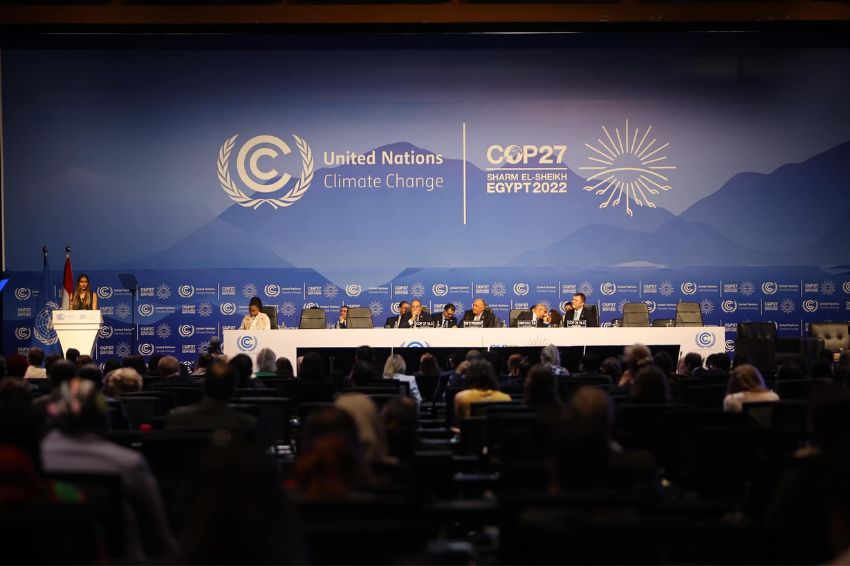
Os first 100 days of the new government by Luiz Inácio Lula da Silva (PT) should prioritize zero deforestation and low-carbon agriculture so that Brazil can meet the target of reduce emissions of greenhouse gases by 2030, evaluate researchers at the Brazil Climate Action Hub, civil society space at COP-27, which this year takes place in Sharm El-Sheikh, Egypt.
In a commitment made in the Paris Agreement, signed in 2015 and signed by 196 nations, Brazil set the target of reducing net emissions by 37% by 2025 and by 50% by the beginning of the next decade – values that have as a starting point the country's emissions in 2005.
During the event, researchers presented data on Brazil's emissions and solutions for the country's actions in mitigating global overheating in the panel “The lost decade of Brazilian emissions: what 10 years of annual estimates made by civil society reveal”, held at this Tuesday (09).
Tasso Azevedo, technical coordinator of the Climate Observatory and general coordinator of SEEG (Greenhouse Gas Emissions and Removals Estimation System); Ane Alencar, director of Science at IPAM (Amazon Environmental Research Institute) and coordinator of MapBiomas Fogo; Marina Piatto, executive director of Imaflora; and David Tsai, project manager at IEMA (Institute of Energy and Environment).
Larger emission sources and more “at hand” outputs
The land use change and agricultural sectors account for almost 75% of Brazilian emissions. This is shown by data from SEEG, released at the beginning of November, which recorded in 2021 the biggest increase in emissions in Brazil in 19 years.
Emissions from changes in land use are mainly linked to deforestation and fire associated with this activity, while in agriculture, greenhouse gases appear, for the most part, due to cattle belching, management and soil degradation.
The Brazilian context differs from other countries in that the largest source of emissions is the burning of fossil fuels. Therefore, researchers explain, the solution to reducing emissions in the country would be more “at hand” with the implementation and resumption of existing environmental measures to eliminate deforestation and investment in low-carbon agriculture.
“Looking at this reality is the cheapest and most efficient way to reduce emissions in Brazil. The Amazon represents 77% of Brazilian emissions due to changes in land use, 91% of which are directly associated with the conversion of the forest to agriculture, and the main expansion front is the occupation of public lands through land grabbing,” he said. Ane Alencar.
According to Marina Piatto, to reduce emissions in agriculture, financial investments would be necessary with a focus on expanding the ABC Plan (Low Carbon Emission Agriculture).
“71% of all methane emitted in Brazil comes from agriculture, so if we attack methane and deforestation, we solve a lot of our problem. Ending deforestation would reduce 50% of Brazilian emissions, and if you eliminate methane, that’s another 25% less,” he emphasized.
“Brazil has a much simpler chance to reduce emissions, which involves eliminating deforestation and improving livestock management, improving animal digestibility, for example, to reduce fermentation [which results in beef burping]. The challenge for agriculture is investment in this decarbonized technological transition”, explained the executive.
How Brazil is achieving its climate goals so far
Brazil is among the biggest polluters in the world: it is the 4th most emitted greenhouse gas since 1850. When it signed the Paris Agreement in 2015, the country was emitting 1,4 billion net tons of carbon equivalent per year . The carbon equivalent measurement represents the sum of the superheating effect of all types of greenhouse gases in the atmosphere.
The target for reducing Brazilian emissions for 2025 and 2030 refers to 2005, when Brazil released 2,4 billion net tons of pollutants. “Today, we are at 1,7 billion [net] tons emitted per year and the goal for 2025 is to reduce it to 1,6 billion. At this moment, Brazil is moving away from its objective”, assessed Tasso Azevedo.
“When the target for 2025 was set, we were already below it, that is, this target actually envisaged increasing emissions and not reducing them. We are even further away from achieving the 2030 commitment. This means that Brazil needs to make an important effort now,” she pointed out.
The goals of the Paris Agreement have the common objective of limiting the increase in the planet's average temperature to 1,5°C in relation to pre-industrial levels. Extreme weather events in recent history reflect global overheating which is at 1,1°C.
According to a United Nations report, with the lack of progress and the implementation of only current goals, the planet is on track to rise by up to 2,8°C. An increase of 2°C would have a global consequence of up to 14 times more heat waves and 70% more droughts, according to the IPCC (Intergovernmental Panel on Climate Change).
“Is it possible to get there? [To meet Brazilian climate goals] Yes. We can reach 1 billion tons in net emissions if we manage to meet the goals of reducing deforestation and low-carbon agriculture. Low-carbon agriculture in Brazil has to be treated as a rule and not as an exception”, highlighted Azevedo.
Another initiative to guide climate actions in Brazil is the National Policy on Climate Change. Since implementation in 2010, the country has increased greenhouse gas emissions by 43%, “especially due to deforestation”, recalled the coordinator.
Brazilian emissions in 2021 exceeded the target set at around 2 billion gross tons in 2020. That was when Brazil had the biggest increase in 19 years: with emission of 2,42 billion gross tons of carbon equivalent in 2021 — a increase of 12,2% compared to the previous year, in which 2,16 billion gross tons were emitted.
Emissions overview
The researchers identify three phases in the history of Brazilian emissions: first, an increasing period until 2005, when policies were put into practice that reduced deforestation in the Amazon by 77,5%; in the second period, as a consequence of these measures, there was a decline in emissions until 2010; and in the third period, to date, emissions not only grew again but also returned to the 2006 level.
Land use changes are responsible for 49% of the country's emissions, followed by agriculture (25%), energy and transport (18%), industrial processes (4%) and waste (4%). If Brazilian agriculture were a country, it would be the 16th largest emitter in the world, ahead of South Africa.
The Brazilian state that contributes most to emissions is Pará, followed by Mato Grosso and Minas Gerais. If the release of gases due to deforestation is disregarded, São Paulo becomes the state that emits the most, with energy, transport and thermoelectric plants as the main factors.
David Tsai concluded that the 46% growth in emissions from electricity generation in the last 10 years. “This can be explained by the increase in demand for electrical energy and the depletion of Brazilian water use which, combined with the water management crisis, resulted in a greater burning of fossil fuels”.