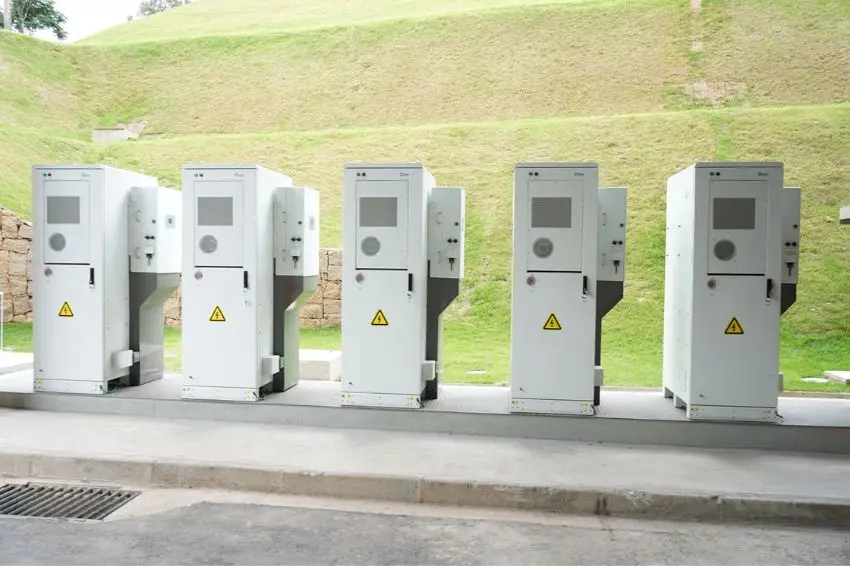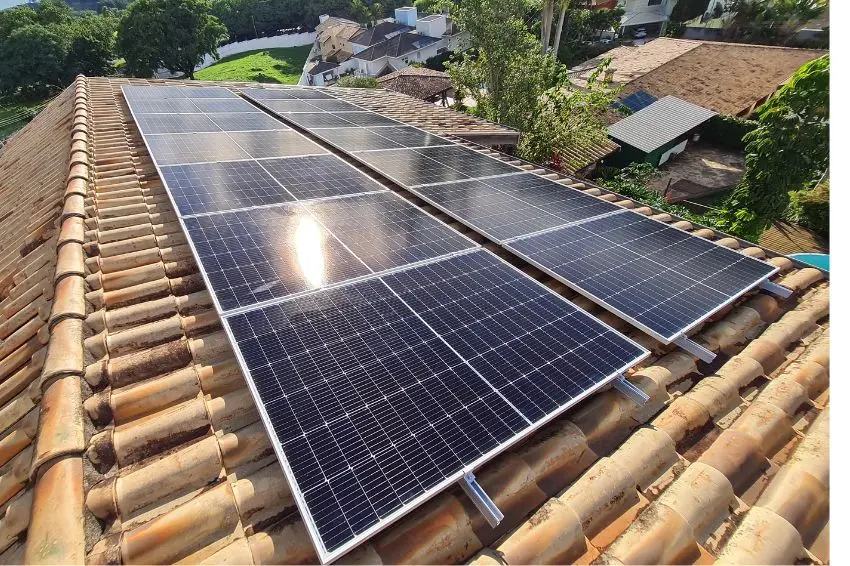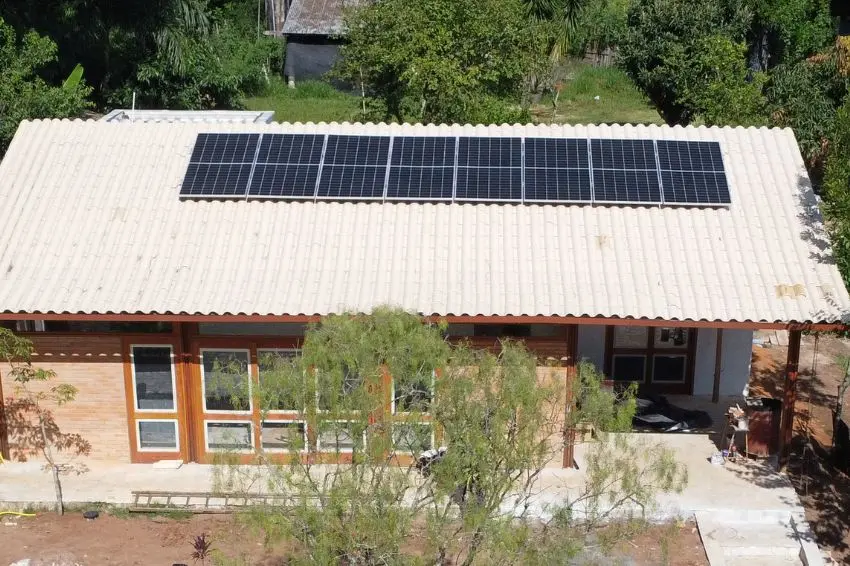

DG (distributed generation) of energy was established through REN 482 (Normative Resolution No. 482/2012), which was revised by REN 687 and REN 786 da ANEEL (National Electric Energy Agency). DG can be done through photovoltaic solar energy, wind energy, qualified cogeneration or energy from hydroelectric plants, which has been the industry's great strength in the last 3 years.
In recent years, due to distributed generation, solar energy has become an extremely competitive force and a generator of jobs and income throughout the country. In the distributed generation model, the surplus energy generated by the consumer unit with micro or mini generation is injected into the distributor's grid, which functions as a battery, and there is an exchange of the energy generated and the energy consumed, via the Energy Compensation System.
When the energy injected into the grid is greater than the energy consumed, the consumer will receive an energy credit (kWh) to be used to reduce consumption at another tariff point or on the bill in subsequent months. For those interested in reducing their energy bill through self-generation, it does not matter whether the generation comes from the sun, wind, water or biomass.
If a similar product is formatted with any of these sources, the consumer's decision will ultimately be made for the cheapest option. The way energy will be measured and managed by companies (from now on) is the major innovation debated by the electricity sector.
So, when talking about own energy generation – via distributed generation – the supply of electrical energy to consumer units participating in the energy compensation system can be provided in two ways:
- Supply of energy to accessors belonging to Group B;
- Supply for Group A accessors.
So, energy prosumers, when participating in the SCEE (Electric Energy Compensation System), formalize two contracts with the distributor (where they are in the Connection Process):
- CUSD (Distribution System Use Agreement);
- CCER (Regulated Energy Purchase Agreement), as established in REN 714/2016.
Group B contracts may be grouped by ownership, subject to prior agreement by the consumer. For Group B contracts, the availability cost is paid (according to the voltage of the distributor's network) for the use of the network (for energy compensation) to which the consumer unit is connected at low voltage (Group B).
Even if the energy injected into the grid is greater than consumption, the value in reais will be equivalent to 30 kWh (single-phase), 50 kWh (two-phase) or 100 kWh (three-phase). Therefore, consumers served at low voltage (Group B) will have to pay the availability cost in months when generation is equal to or greater than grid consumption, and commercial and industrial consumers with the highest load (Group A) will have to bear the cost of contracted demand.
Therefore, in most installations with power below 75kW, the modality will belong to Group B and above this value it will be Group A. For powers below 75kW, the concessionaire will connect the installation to low voltage. This customer, on his/her electricity bill, will only pay for the energy consumption in (kW/h) and will not pay for the demand.
If the installed power is greater than 75kW, the energy will be directed to medium voltage. In this example, the electricity bill will be different because, in addition to consumption, there will be a demand charge in R$/kW, which in distributed generation is called MUSD (Distribution System Usage Amount).
Billing in GD
The same procedures for billing consumer units with distributed micro or mini generation classified as low income must be adopted for other consumers in Group B who are entitled to some discount on the tariff, that is, the rules of billing provided for in art. 7th of REN 482 and then grant the discounts as established in REN 414/2010.
In the case of a consumer in Group A entitled to a discount, for example, an irrigator, the times of energy injected and consumed throughout the billing cycle must be observed, that is, the same procedure adopted for other consumers in the group. Group A that have distributed micro or mini generation, only to then apply the discounts on the TUSD (Tariff for Use of the Distribution System) and the TE (Energy Tariff).
When energy credits are used and they are made at a different tariff station from where they were generated – in the case of consumer units billed at hourly rates (blue, green or white tariffs) – the balance of energy generated must be multiplied by the ratio between the TE applicable to the consumer unit in which the credits will be used.
Furthermore, when the consumer unit where the excess generation occurred is billed in the conventional modality, without tariff stations, the credits generated must be considered as generation in an off-peak period for the purpose of use in another consumer unit with tariff stations.
A major discussion in the distributed generation sector is the issue of binomial pricing and charging for the use of Wire B in distributed generation as a separation between the energy tariff and grid usage. However, the next chapter of this discussion will only be seen in 2021, when the review of REN 482 is completed, due to the Covid-19 pandemic.
The era of distributed generation is certainly a trend that is here to stay. It is combined with the system of smart networks and measurements (smart grid and smart metering), together with the opening of the free market and the PLD (Price for Settlement of Differences) Time in Brazil, as it brings together the sector's technological advances, combined with best practices in economic and environmental terms.
In this way, we hope that there will be better use and expansion of network infrastructure to stimulate not only increased energy efficiency at the load level, but also in remote energy generation processes.
At the same time, electronic consumption management systems (smart grids) will enable the most efficient use of energy possible, meeting priorities defined by their own users.