
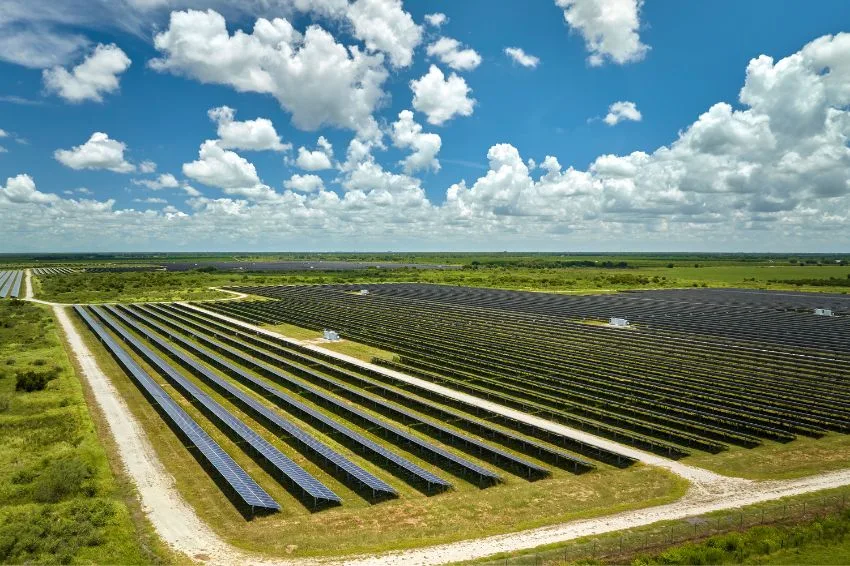
Solar energy is not just a trend, it's a reality that is transforming Brazil's energy matrix, largely due to the advent of solar farms.
With increased awareness of sustainability and the pursuit of savings on electricity bills, new forms of energy generation are emerging, with solar energy being the most accessible to the general public.
To do this, it's important not only to understand how solar farms work, but also the challenges and ways to build one to take advantage of all its benefits.
Learn all about photovoltaic power plants, including practical tips for efficient implementation.
What is a solar farm?
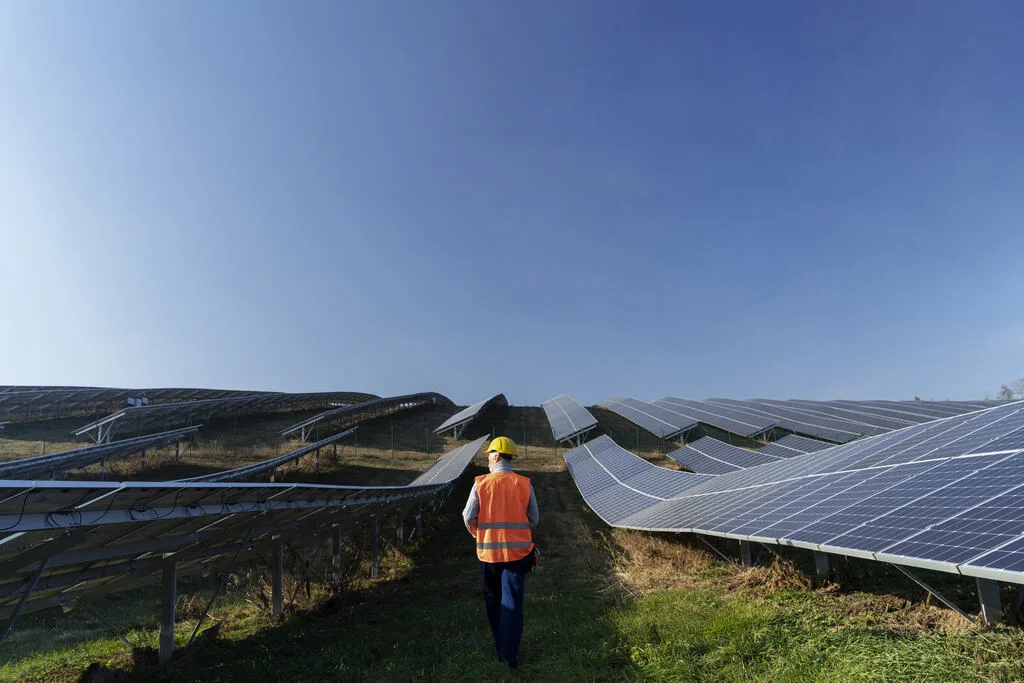
A solar farm, also known as a solar park or photovoltaic power plant, is a large-scale installation designed to generate electricity from sunlight.
Unlike residential systems (installed on a rooftop for personal consumption), a solar farm is designed to generate energy on a large scale, whether for direct sale to the market. free energy market or, more commonly, for the model of Distributed Generation (DG).
The difference between these models is simple:
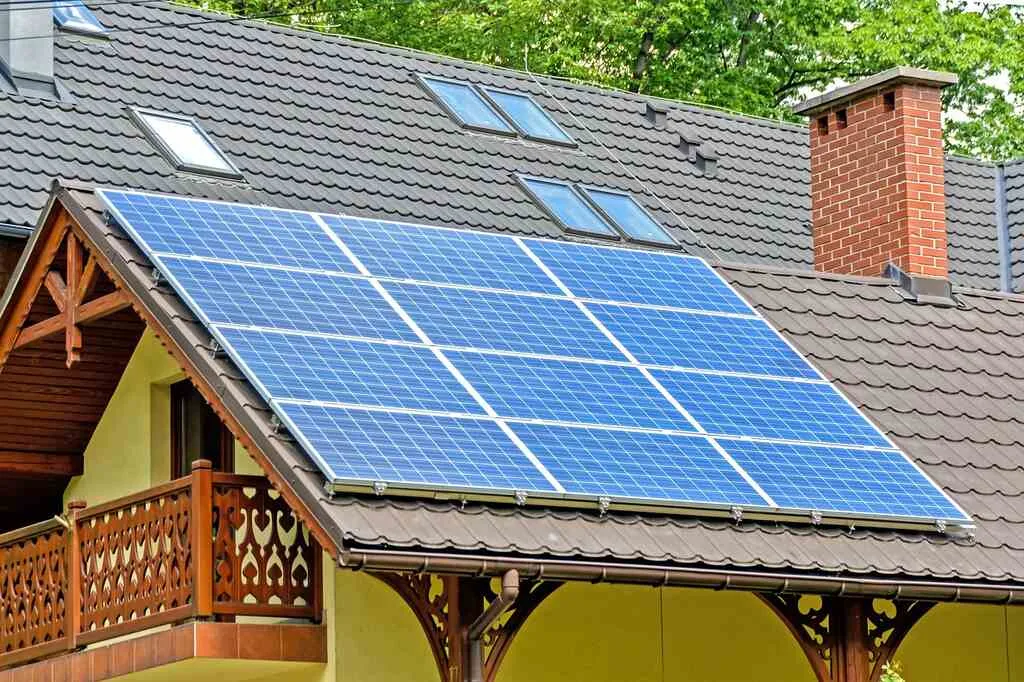
- Residential system: Small size, at the point of consumption (roof);
- Solar Farm (for Distributed Generation): Medium-sized, usually ground-based, plant optimized for "renting" energy quotas to multiple consumers (Shared Generation);
- Solar Power Plant (Centralized Generation): Large scale (hundreds of megawatts), connected to high voltage, competing with hydroelectric plants, selling energy in government auctions.
Is a solar farm worth it?
Solar farms are usually worth it for both the owner (investor) and consumers. This, obviously, depends on the negotiation.
The owner obtains a payback of approximately 5 years from a project that must operate for at least 25 years.
Consumers typically receive an immediate discount of 10 to 20% on their electricity bill.
What are the advantages of solar farm?
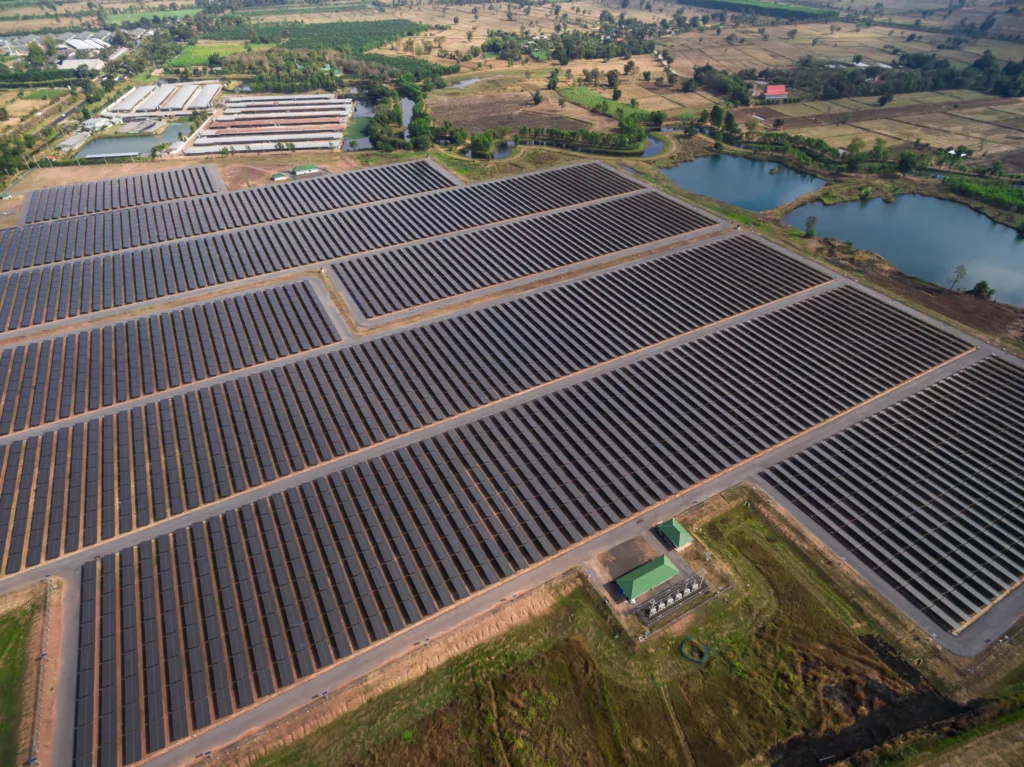
Whether you are an investor or a consumer who "rents" a share, the benefits are clear and impactful.
We can divide the main ones into:
Business
For the investor, it is an asset that generates predictable income for more than 25 years. For the consumer of shared generation, the savings are direct on the electricity bill, often without any initial cost, paying only for availability, which is significantly less than the savings generated.
In this case, you will be offsetting energy consumption, maintaining your obligations to the distributor according to the transition rules for each case, and bearing the costs, taxes, and availability fees.
Even so, the savings in practice are very worthwhile, especially when considering long-term consumption.
Sustainability
Solar farms are a 100% clean energy source that does not emit greenhouse gases during operation, helping to combat climate change and strengthen the image of companies. (ESG).
shared generation
This is the great advantage of solar farms. They democratize access to solar energy. Thousands of consumers who do not have a suitable roof (or do not want the initial investment) can consume solar energy and save money through a farm located in their region.
What are the sustainable benefits of solar farm?
Solar farms start from a non-polluting energy source, which is sunlight. Therefore, by using a photovoltaic energy generator, you are contributing to the environment and participating in the energy transition.
Many energy sources used around the world contribute to the increase in global emissions of gases that intensify the greenhouse effect, one of the main causes of the serious consequences of global warming.
According to a report by the IEA (International Energy Agency), the use of solar energy can reduce CO2 emissions in the world in 6 billion tons by 2050.
In absolute terms, this would be equivalent to taking all combustion cars on Earth out of circulation for a year.
How much does it cost to build a solar energy farm?
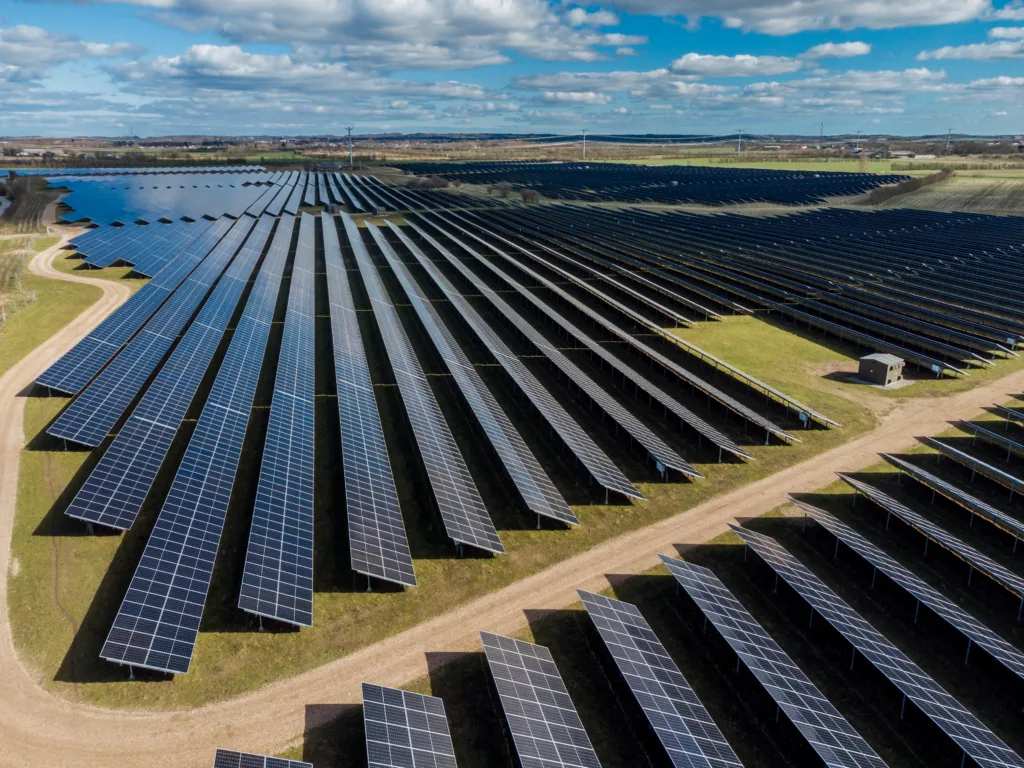
Costs are basically made up of two categories:
- Capex (capital expense);
- Opex (operational expense).
The first is the initial investment to cover equipment (solar panels, inverters, structures, cables, transformers, etc.), as well as engineering and assembly services and construction insurance.
Operating costs are those related to the operation and maintenance of the plant, such as cleaning the modules, security and property insurance, land rent, contracted demand, financial and accounting management of the enterprise, for example.
For a 1 MW solar farm, Capex is estimated at around R$4 million, and Opex in the order of R$150 thousand per year.
What are the possible modalities in current legislation?
The main regulation for consumer-facing solar farms is the Legal Framework for Distributed Generation (Law 14.300/2022), supplemented by Normative Resolution 1.000/2021 of ANEEL.
The modalities that allow solar farms (for distributed generation) are:
- Shared generation: The most common scenario: Consumers (individuals or businesses) join together through a consortium or cooperative (the "owner" of the farm) to share energy and credits;
- Remote self-consumption: A single CNPJ (such as a chain of stores or supermarkets) installs a farm in one location and distributes the credits among its various branches, as long as they are in the same concession area;
- EMUC (Multiple Consumer Unit Development): Used in condominiums, where generation is shared among the residents;
It is important to emphasize that Law 14.300 brought changes to pricing (such as the progressive charging of "Fio B" or TUSD) for new projects, impacting the calculation of return on investment, but does not make the model unfeasible.
How to set up a solar energy farm?
Setting up a solar farm is a complex undertaking. A simplified step-by-step guide includes:
- Feasibility study: Market analysis, costs, revenue projection and choice of business model (Shared Generation, Self-consumption, etc.);
- Choosing the land: It must have high solar irradiance, be close to the electricity grid (to reduce connection costs), and have a competitive land or lease value;
- Engineering project: Detailed technical design of the system;
- Licensing and regulation: This is the most critical phase. It includes the Access Opinion together with the energy concessionaire, environmental licensing (if applicable) and registration in ANEEL;
- Financing: Seeking capital (investors, banks) with specific credit lines for renewable energy;
- Acquisition and construction: Purchase of equipment (EPC – Engineering, Procurement, Construction);
- Operation and Maintenance (O&M): To ensure the farm operates at maximum efficiency, including cleaning and repairs.
Challenges of implementing a solar energy farm
Although lucrative, the path has obstacles, among which we highlight the main ones:
- Initial capital: Investment is the biggest challenge;
- Access granted: The bureaucracy and, mainly, the delays by the energy companies in approving the connection (giving the access opinion) is the biggest bottleneck in the sector;
- Regulation: Changes in legislation (such as Law 14.300) require rapid adaptation of business models;
- Operation: Managing maintenance and ensuring performance (O&M) is vital.
- Technology: The sector is evolving rapidly. What is considered "cutting-edge" today may be outdated in a few years, requiring careful planning when choosing equipment.
What is the best state to build a solar farm?
Currently, the best state to build a solar energy farm is Minas Gerais.
This is due to the tax benefits granted through State Law 22.549/2017 which exempts the ICMS tax on energy generated by the solar farm.
The aforementioned law also exempts ICMS from the generation of shared solar farms (cooperatives and consortia).
Not coincidentally, the vast majority of solar farms are located in the state of Minas Gerais.
However, due to the large number of solar farms installed in the state, it is currently quite common for the local energy concessionaire (Cemig) to point out technical restrictions, which in most cases makes the project unfeasible.
Therefore, other states have presented interesting viability, such as SP, RJ, MS, MT, among others – in the context of GD I, projects that already existed and/or were filed until January 07, 2022, following old compensation rules, until December 204.
Solar farm mergers and acquisitions
With the accelerated growth of the solar energy market, M&A operations (mergers and acquisitions) have become increasingly common. Such operations are strategic to consolidate the sector and optimize resources, allowing companies to become more competitive and efficient.
Reasons for M&A in the solar sector
Capacity expansion: companies seek to increase their generation capacity by acquiring already established solar farms, reducing the time and costs associated with developing new projects;
Portfolio diversification: acquiring photovoltaic systems allows companies to diversify their revenue streams and reduce risks associated with a single technology or geographic location;
Economies of scale: integrating multiple plants can generate significant economies of scale, reducing operating and maintenance costs;
Market consolidation: In a competitive sector, consolidation through M&A can increase market share and strengthen the company's strategic position.
Challenges of M&A operations
Asset valuation: Determining the fair value of a solar power plant can be complex, involving the analysis of technical, financial, and regulatory aspects;
Operational integration: integrating different operations, systems, and corporate cultures can present significant challenges;
Regulation: Compliance with local laws and regulations is crucial and can vary significantly between regions and countries;
Financing: Structuring the appropriate financing for the acquisition can be challenging, especially in a highly volatile market.
Future trends and innovation
The future of solar farms is technological and integrated, which includes:
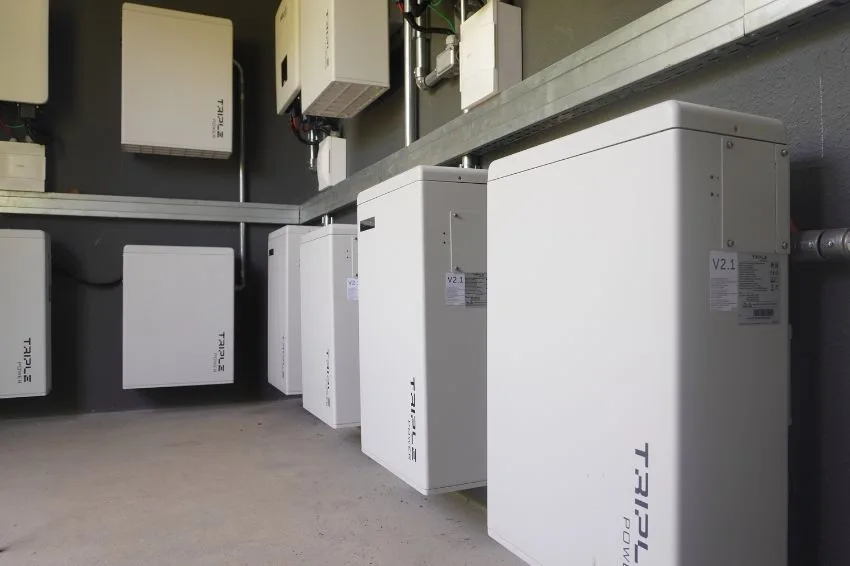
- Storage (BESS): The use of batteries to store energy and sell it when the sun is not shining (or when energy is more expensive);
- AI and Digital Twins: Using Artificial Intelligence to predict generation, optimize maintenance, and create "digital twins" (virtual replicas) of the farm to simulate improvements.
- Integration with Smart Grids: Solar farms are becoming an active part of the smart grid, helping to stabilize the power supply.
- Generation as a Service (EaaS): The expansion of the "energy subscription" model as a simplified service, similar to subscribing to a streaming service.
Whether as a major investment or a smart way to save on your apartment's electricity bill, a solar farm is a key piece in the energy transition. It proves that clean energy can be both sustainable and profitable.
Given the complexity of these challenges, it is ideal to hire specialized companies to conduct the solar farm M&A process.
A CS Consulting, company of Canal Solar, conducts detailed technical assessments to support due diligence processes, ensuring a successful transaction for the buyer.
Expertise in technical and regulatory analysis has been crucial in ensuring that acquisitions in the solar sector are advantageous and free from hidden risks.
Conclusion
The solar farm in Brazil plays an important role in the decentralization and democratization of energy.
The source is no longer an expanding renewable energy technology, but rather a 'kickstart' for the energy transition in the world, according to the report carried out by Wood Mackenzie.
In 2023, solar reached 1,5 TW installed worldwide and another 3 TW of capacity is planned for the next ten years.
In recent years, Brazil has stood out in the global photovoltaic energy scenario with significant growth, both due to its geography favorable to the installation of this type of technology, and due to social support and incentives.
In addition, solar energy news have shown important advances in the sector, with new facilities and technological innovations that promise to further expand the use of this clean and renewable source.

Comments (30)
Comments are moderated before publication.Comments should be respectful and contribute to a healthy debate. Offensive comments may be removed. The opinions expressed here are those of the authors and do not necessarily reflect the views of the author. Canal Solar.
Excellent explanation of how a solar farm works and the shared generation model. This type of photovoltaic plant helps to democratize access to solar energy, reduces electricity costs, and expands the share of renewable sources in the electricity grid.
We work with solar energy projects, photovoltaic power plants, sizing, installation, monitoring, and maintenance of systems. We also produce technical content for those who want to better understand distributed generation and energy savings.
For those who want to learn more about solar energy solutions and projects:
https://www.drdaengenharia.online/
Congratulations on the article — initiatives like this are fundamental for the growth of solar energy in Brazil!
I have a rural property in the north of Paraná with an area of 36000 square meters, I would like more information about solar energy.
Good afternoon Joel, how are you? My name is Marisa, I'm a consultant at Alva Energia Solar. I can help you with solar energy. Call me on WhatsApp (13)99777-7611.
What is the minimum area size in square meters to build a solar farm; What is the real net profit per month, and what is the investment for this?
How to attract an investor?
I have a 22h area in the north of the state of Rio de Janeiro.
Grato
Hello, fat man, do you know how to lease land to install the signs?
I am interested in setting up a solar energy farm in the municipality of Patos de Minas
Good afternoon Ana, how are you? My name is Marisa, I'm a consultant at Alva Energia Solar. I can help you with solar energy. Call me on WhatsApp (13)99777-7611.
Good afternoon,
I would like to know how many boards/panels are needed for a 20/60m2 plot.
Thank you
GOOD MORNING… VERY GOOD… EXCELLENT EXPLANATION…
CONGRATULATIONS…
I would like to know the current value to set up a 1MW solar energy farm today in Manaus Amazonas, but you can help
How to attract investors, for someone who, like me, has 22 hours of land, in an APA
Hello, I liked the article, I have an area of 70hct and I would like to invest in a solar farm, I would like to know what the procedures are like, license, competent bodies, there is a power line running next to the land and an electrical transmission plant 25km away . I would like to obtain more information and my thought would be to sell to the energy company. The land is in Maranhão, close to the sea. sun practically all year round. I'm waiting for help
Hello goodnight! We have rural land in Alta Floresta MT, I was interested in setting up a solar farm. How can I obtain more information on the subject?
Hello, Very well written and objective article, congratulations. I just had one doubt, whether the CAPEX of 4 million takes the land into account.
Good morning, I have an area in which I would like to invest in this segment, but I don't have anyone to distribute the energy production to. How do I 'sell' this energy produced?
Are there any companies that buy?
Hello, and today… July 2023, what is the situation like? Is it still a good deal?
Hello good evening, I have the land available, and I wanted to set up a solar farm, how can I set it up, I don't have the money, how do I finance it, and who do I sell this energy to, how much do I earn...?
Good morning, how do I contact you personally? grateful
Thanks for the guidance. Would you be able to recommend a list of consultancy and engineering companies? Thanks.
Good evening! Would it be possible to obtain this initial capital of 4.000.000 in loans from a bank and after 4 years be able to pay it off even with the interest?
Good evening, what is the profitability and how is the return on capital invested in a solar energy farm,
Hello, Francisco, how are you? As explained in the article, the payback would be approximately 5 years, according to the excerpt of the article “…The owner obtains a payback of approximately 5 years, from a project that must operate for at least 25 years…”
Thank you for the excellent summary of the legal arrangement of the business!
Hello, Alex, how are you? We are happy with your feedback, always count on us!
spectacular
Hello. My three brothers and I are interested in setting up a solar farm on our father's land. The farm (3° 21′ 03″ S and 44° 41′ 39″ W) is located in the city of São José do Calçado-ES, almost on the border with Rio de Janeiro. The location where we intend to install the photovoltaic panels is connected by a highway and an EDP/ESCELSA power line, about 34m away. The area (a plateau of approximately 250 hectares) is easily accessible and available. I would like to know more about the process of setting up the solar farm, the procedures, the licenses, the registrations with the appropriate agencies, and whether a contract with EDP/ESCELSA could facilitate the deal, since initially we thought of producing energy for EDP.
GOOD MORNING MR. GILBERTO, I ALSO NEED THIS INFORMATION, AS I WANT TO SET UP A SOLAR PLANT, I WAS HOPEFUL TO OBTAIN THIS INFORMATION FROM MR. EDUARADO.
I am a business agent in the renewable energy sector and we can enable sustainable business.
Eng° Velasquez
Tel: 21 989463718
I sent you a WhatsApp message.