
The solar energy market has been increasingly seeing the entry of high-power photovoltaic modules. These modules, which typically have powers starting at 500 W, are manufactured with 182 mm or 210 mm cells, which are becoming a standard in the mini-generation and centralized generation market.
Read about high power modules
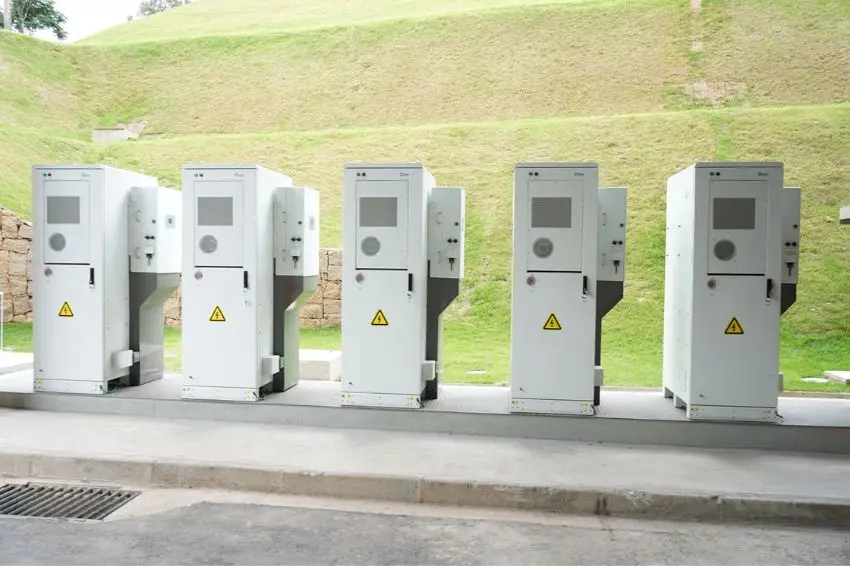
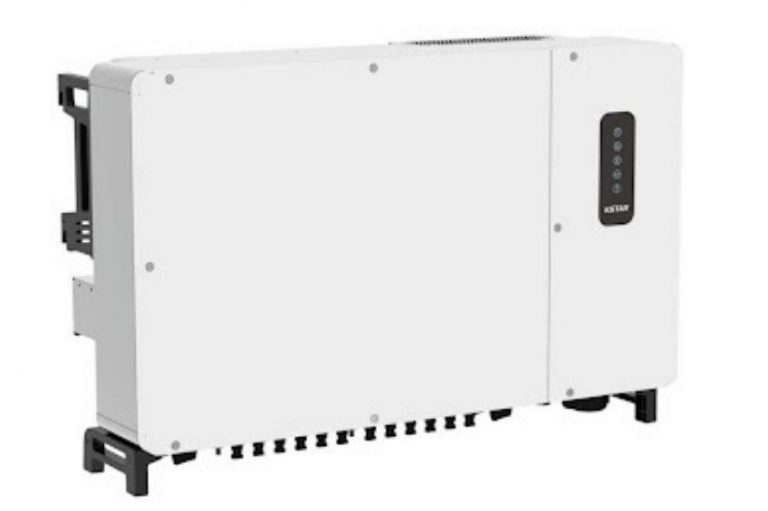
The main feature of these new modules is their higher output current. While a standard module has a short-circuit current of around 9 A, high-power modules already reach currents above 12 A. This requires updating the inverters available on the market so that they can adapt to this new reality. An example of an inverter that has already been updated for high-power modules is Kstar's KSG-250UH.
This is an inverter designed for large-scale plants, with 24 MPPT inputs available. The inverter accepts input currents of up to 20 A per string, perfectly compatible with 182 mm and 210 mm modules. According to the manufacturer Kstar, among the advantages of the KSG-250UH inverter is the possibility of reducing the LCOE (levelized cost of energy) in large solar plants due to the greater number of direct current inputs.
Each input can receive up to two strings, without the need for fuses, which reduces the complexity and cost of installations. In addition, with this extended input current range, the inverters become compatible with bifacial modules, which have higher output power due to radiation reflected by the ground, in addition to being suitable for projects with oversizing of photovoltaic modules.
Read about bifacial modules e oversizing of photovoltaic modules
The equipment can receive strings with power twice the nominal input power of the inverter (100% oversizing). From an efficiency point of view, the KSG-250UH inverter also has important features. According to the manufacturer Kstar, the equipment achieves a maximum efficiency of 99,03%, which also contributes to minimizing the LCOE in photovoltaic projects.
Regarding system safety, this new generation already incorporates a DC switch, has internal DPS class II devices and performs constant monitoring via software of the DC voltage generated by the string, identifying possible failures, which can help in the prevention and diagnosis of problems, bringing significant gains to the installation. Other features of the equipment are the IP66 protection rating and the ability to operate stably and lastingly, according to the manufacturer, in environments with temperatures of up to 60 °C.