
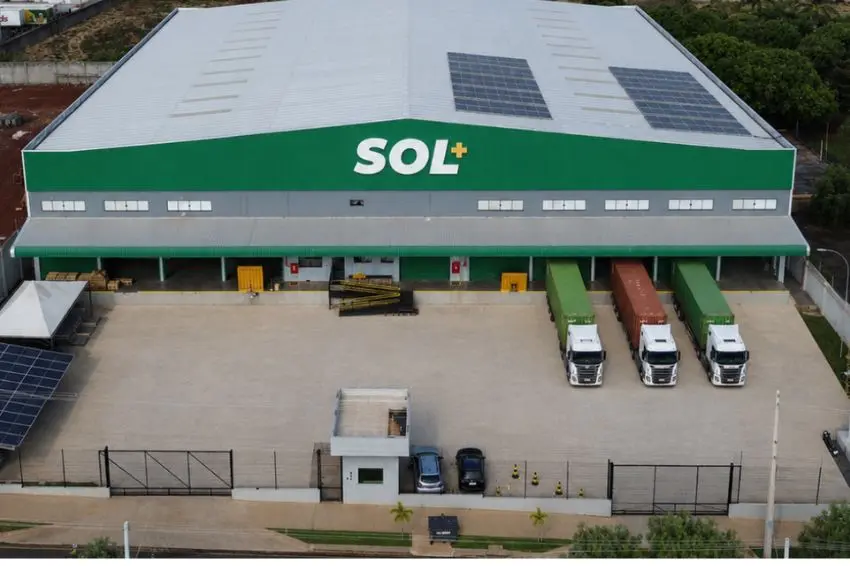
Photovoltaic module manufacturer ZNSHINE Solar has announced a commercial partnership with Solmais Distribuidora with the aim of expanding the presence of its products in the Brazilian market.
According to the manufacturer, the choice of Solmais combines national commercial reach and logistical structure: with distribution centers in the South and Northeast regions, the distributor reduces delivery times and expands the availability of equipment for projects in different regions of the country.
“We have been in Brazil for seven years and are investing more and more in the country (…) Solmais combines national reach, logistical structure and commitment to quality, which makes it the ideal partner to bring ZNSHINE technology to every region of Brazil,” highlights Rudi Alencar, Sales Director Brazil of ZNSHINE Solar.
According to Joaquim Fernandes, Business Director at Solmais Distribuidora, the inclusion of ZNSHINE in the portfolio reinforces the company's strategy of "working with global manufacturers of proven technology, expanding the offer of differentiated solutions for integrators throughout the country," he said.
Technology
Among the technologies that Solmais will begin selling in the Brazilian market is the ZNSHINE line of photovoltaic modules equipped with graphene nanotechnology, considered one of the manufacturer's main technological bets. The company was one of the pioneers in the sector to incorporate graphene directly into the glass of photovoltaic modules.
Unlike coatings applied to the surface, the material is integrated during the manufacturing process, giving the panels self-cleaning properties.
According to the manufacturer, the technology reduces the adhesion of dust and other particles, allowing the modules to maintain higher levels of cleanliness and performance over time. In regions with higher incidence of dust, pollution, or low rainfall, the manufacturer indicates a minimum increase of 2% in generation compared to conventional modules, in addition to reduced operating and maintenance costs.
For the integrator, the differentiating factor translates into a concrete technical argument capable of justifying the cost-benefit of the project to the end customer, highlights ZNSHINE Solar.
all the content of Canal Solar is protected by copyright law, and partial or total reproduction of this site in any medium is expressly prohibited. If you are interested in collaborating or reusing part of our material, please contact us by email: redacao@canalsolar.com.br.


Comments
Comments are moderated before publication.Comments should be respectful and contribute to a healthy debate. Offensive comments may be removed. The opinions expressed here are those of the authors and do not necessarily reflect the views of the author. Canal Solar.