
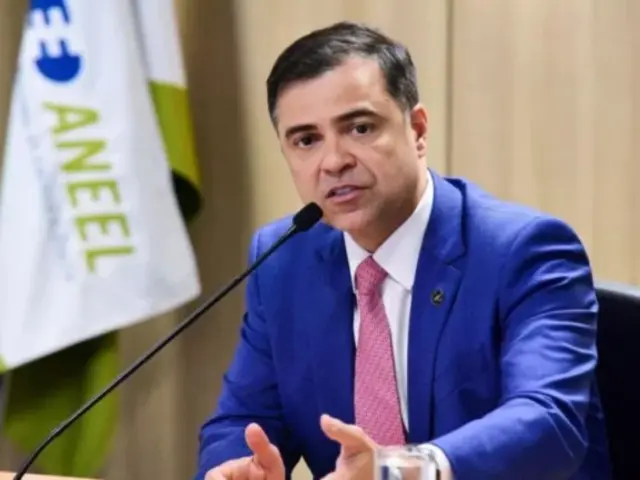
A ANEEL The Brazilian National Electric Energy Agency (ANEEL) has presented a regulatory proposal that clarifies which distributed generation (DG) consumers will be subject to the ECR (Complementary Resource Charge), created by Law No. 15.269/2025.
The mechanism, which will come into effect in January 2027, will be applied to tariff benefits funded by the CDE (Energy Development Account).
According to Joint Technical Note No. 17/2026, consumers classified as GD I, who have acquired rights to the rules prior to Law No. 14.300/2022, will not be subject to the ECR when served by distributors with an annual market equal to or greater than 700 GWh.
The rationale is that, in these cases, the tariff benefits are not financed by the CDE and, therefore, are not subject to the reduction mechanism provided for in Law No. 15.269/2025.
On the other hand, consumers classified as GD I served by distributors with a market of less than 700 GWh per year may be subject to the charge, since its benefits are funded by the sector account.
The ECR may also apply to benefits granted to consumers classified as GD II and GD III, whose funding by the CDE is provided for in Law No. 14.300/2022.
According to the technical area of ANEELThis differentiation does not represent a regulatory exemption for certain consumers, but rather stems from the legislation itself, which establishes which benefits are funded by the CDE.
Energy credits cannot be used to pay for the ECR.
Another relevant point of the proposal is the prohibition of using surplus or credited electricity accumulated in the SCEE (Electricity Compensation System) to settle the ECR.
According to the proposed rules, the amount of compensated energy will continue to be calculated normally, without changes resulting from the application of the charge. However, the amount corresponding to the ECR (Energy Compensation Charge) will be added to the electricity bill.
In practice, this means that consumers will not be able to use their energy credits to offset the new charge, even if they have enough credits to cover their consumption.
A ANEEL It argues that allowing this compensation could compromise the revenue needed to finance the benefits of distributed generation that exceed the limits established by the CDE.
The ECR (Environmental Control Regime) was created by Law No. 15.269/2025 to limit the growth of certain expenses in the sectoral account. When the amounts projected for subsidies exceed the legal limits, the difference will be borne by the beneficiaries themselves, through a proportional reduction in tariff discounts.
Therefore, the charge will not be calculated directly on the total value of the energy bill, but on the benefit originally granted to the consumer.
Six-month transition period
The technical note also recommends adopting a transition period of six billing cycles, between January and June 2027, to allow distributors to adapt their commercial systems to the new rules.
During this period, dealerships will be able to apply the ECR directly to existing discount percentages, without needing to immediately create a specific item on the invoices.
However, distributors must inform consumers of the existence of the charge, its legal basis, the factor applied, and the act of... ANEEL who authorized its collection.
After the transition, the ECR (Energy Recovery Code) should appear prominently on energy bills, along with information about the gross benefit, the factor applied, and the corresponding charge amount.
The easing of restrictions partially addresses the requests made by distributors during Public Consultation No. 28/2026, which highlighted difficulties in adapting their commercial systems, especially in light of the changes required by the tax reform.
Despite the additional time for operational adjustments, the proposal does not change the start date for the implementation of the ECR, scheduled for January 2027. The technical note recommends that the collegiate board of directors of ANEEL approve the billing rules first.
The methodology for calculating the charge, the definition of applicable factors, and other operational aspects will be analyzed in later stages of the regulation.
all the content of Canal Solar is protected by copyright law, and partial or total reproduction of this site in any medium is expressly prohibited. If you are interested in collaborating or reusing part of our material, please contact us by email: redacao@canalsolar.com.br.


Comments
Comments are moderated before publication.Comments should be respectful and contribute to a healthy debate. Offensive comments may be removed. The opinions expressed here are those of the authors and do not necessarily reflect the views of the author. Canal Solar.