
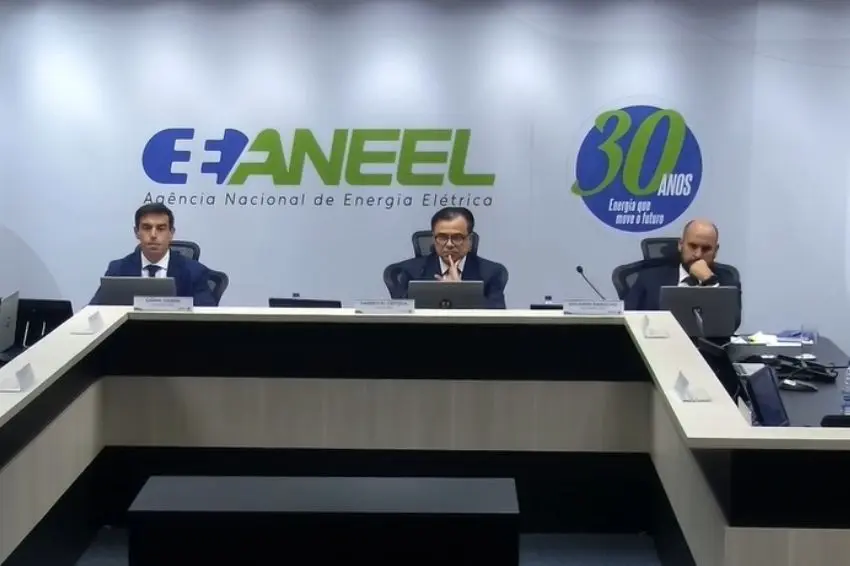
The board of ANEEL (National Electric Energy Agency) unanimously approved this Thursday (21) the result of the LRCAP (Capacity Reserve Auction in the form of Power), ending weeks of litigation and questions about the modeling of the bidding process.
The decision upheld the approval and authorization for contracting the winning power plants in the bidding process, including thermoelectric projects powered by natural gas, coal, fuel oil, diesel oil, and biodiesel, as well as hydroelectric plants.
During the meeting, directors and the Attorney General of the Agency argued that the main structural decisions of the auction, such as the definition of products, the ceiling price, and the bidding criteria, are the exclusive responsibility of the MME (Ministry of Mines and Energy), and not of the Agency. ANEEL.
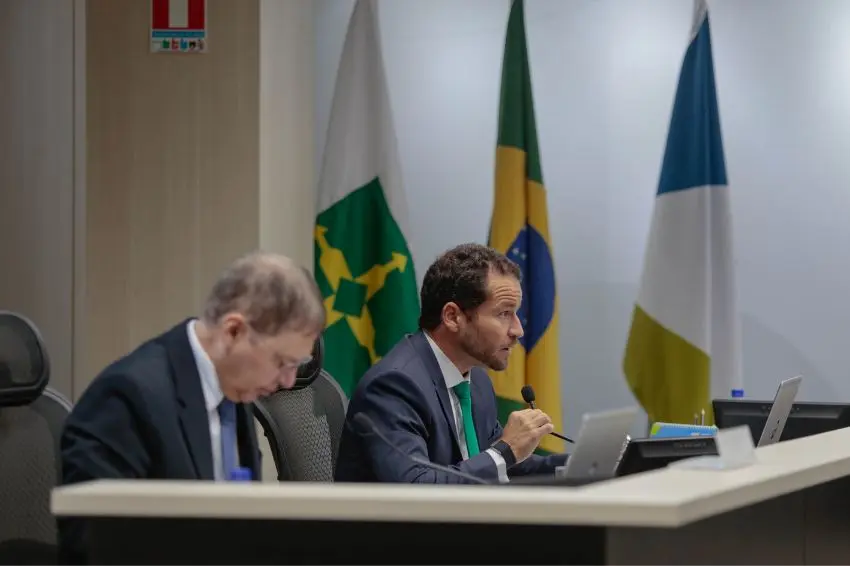
The position was reinforced by the Attorney General of ANEELEduardo Ramalho, who stated during the hearing that discussions involving the choice of sources, definition of demand, and modeling of the bidding process are "decisions that lie exclusively within the technical discretion of the granting authority and not of the..." ANEEL”, He stated.
According to him, the Agency lacks the administrative competence and technical capacity to review or replace structural decisions previously defined by the federal government. ANEEL "It has neither the administrative competence to carry out this review and replacement of the granting authority's decision, nor the technical capacity," he added.
The prosecutor also refuted arguments presented by entities and professionals who defended the possibility of revoking the bidding process due to the prices negotiated in the auction. "The calculation of contracting at the maximum price is expensive, but we also have to do the reverse calculation: what is the cost of not contracting?", he stated.
According to him, the approval would only fail to occur in the event of an irreparable illegality or a supervening fact capable of justifying the revocation of the bidding process in the public interest – a scenario that, in the Attorney General's assessment, did not materialize.
"The existence of this institutional controversy or criticism regarding the merits of the decisions does not, in itself, authorize the suspension of the bidding process," Ramalho stated.
Sandoval reinforces institutional limits.
During the session, the director-general of ANEELSandoval Feitosa also defended the Agency's technical performance and stated that the questions raised about the auction do not involve any irregularities committed by the regulator.
“None of the questions being raised concern the actions of the National Electric Energy Agency,” stated Sandoval, who also highlighted the complexity of the LRCAP, classifying the bidding process as possibly “the largest auction ever held” by the Agency.
The director-general also praised the performance of the bidding committee and reinforced that the ANEEL He is not responsible for defining the structuring parameters of the auction. "Ceiling price, products, guidelines and procedures should be addressed to the Ministry of Mines and Energy," he stated.
According to Sandoval, since 2004... ANEEL It ceased to be responsible for energy supply auctions, a function that was taken over by the federal government within the structure of the electricity sector. ANEEL "It hasn't held any supply auctions since 2004," he stated.
The director also emphasized that the Agency conducted a thorough analysis of the questions raised regarding the bidding process, but stressed that regulatory action has clear institutional limits. "We cannot take justice into our own hands. We live in a democratic state governed by the rule of law, where responsibilities are very well defined," he concluded.
Judicialization marked the debate at LRCAP.
The LRCAP (Brazilian Electricity Contracting and Power Generation Law) has become one of the most sensitive topics in the electricity sector in 2026, facing criticism regarding costs, product modeling, and the contracting of thermoelectric power. In recent weeks, the bidding process has been the target of lawsuits, protests from market players, and questions from regulatory bodies.
The auction contracted thermoelectric projects to reinforce the energy security of the SIN (National Interconnected System), amidst concerns from the Federal Government about meeting power demand in the coming years, especially in scenarios of increased consumption and greater participation of intermittent sources in the Brazilian electricity matrix.
Part of the questions raised by industry agents involved precisely the prices negotiated in the bidding process, the design of the products, and the future tariff impacts of contracting power.
The first LRCAP of the year ends with almost 19 GW contracted; see the highlights.
all the content of Canal Solar is protected by copyright law, and partial or total reproduction of this site in any medium is expressly prohibited. If you are interested in collaborating or reusing part of our material, please contact us by email: redacao@canalsolar.com.br.