
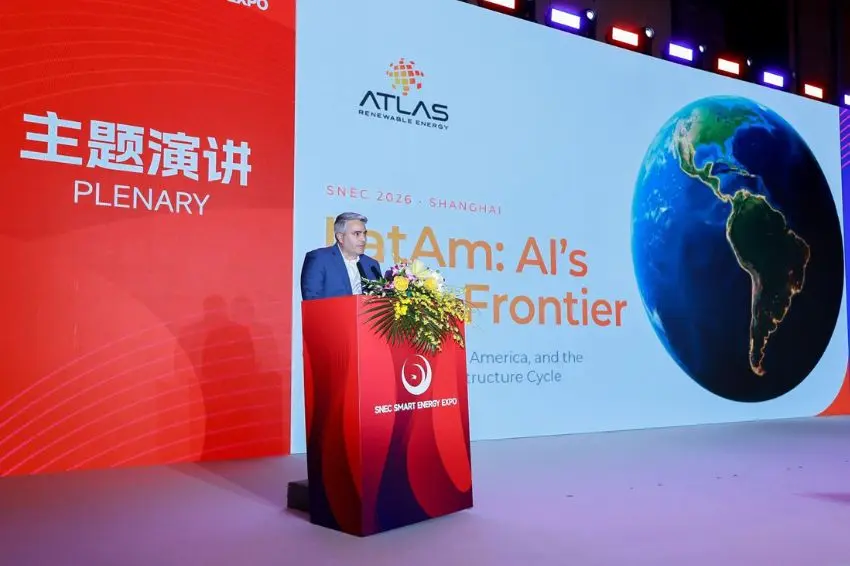
Atlas Renewable Energy has suspended plans to invest US$1 billion in new renewable energy projects in Brazil, amid rising curtailment in the country. The information was given by the company's CEO, Carlos Barrera, to Reuters during the SNEC 2026 solar trade show in Shanghai.
According to the executive, there are at least 1,5 GW of suspended projects in Brazil, where the company had already planned to begin construction. Barrera also stated that the combination of system constraints and the current design of the Brazilian market is making the expansion of new renewable energy projects more difficult.
The speech took place during the executive's participation in SNEC, where he also discussed the advancement of artificial intelligence, digitalization, and data centers and their impacts on global energy demand.
In this context, Barrera argued that Latin America can gain ground in the new growth cycle, supported by renewable resources, expansion of energy infrastructure, and the capacity to deliver clean energy on a large scale.
À ReutersHowever, the executive stated that the Brazilian environment remains pressured by curtailment. According to Barrera, the problem goes beyond the generation cuts themselves: companies whose production is rejected by the operator end up, in some cases, needing to buy energy on the market to honor contracts, paying more than the value for which they originally sold it.
Restrictions on renewable energy projects
The pressure on the sector is also reflected in risk assessments. According to Fitch Ratings, a credit rating agency, the... Renewable energy projects in Brazil are expected to continue facing generation constraints in the coming years., impacting cash flow, debt service coverage ratios, and liquidity.
Fitch Ratings assigned a Negative Outlook to 11 renewable energy project financing ratings and indicated that this scenario could persist until 2030, when the Graça Aranha transmission line is expected to expand the exchange capacity between the Northeast and Southeast regions.
According to Fitch, pressure on projects is likely to continue until other solutions, such as battery deployment and increased energy demand, become viable.
The agency also points out that, in Brazil, the reduction in generation has been driven by the rapid advancement of intermittent renewable sources and by the lag in transmission infrastructure and demand capable of absorbing the capacity increases.
Fitch also points out that so-called energy curtailment (when supply exceeds demand) does not qualify for compensation under current rules and has been one of the categories with the greatest financial impact on power generators.
On another front, the agency reported that it ended its negative outlook for 13 renewable project financing ratings in Brazil, with six downgrades and seven confirmations. Of this group, nine remained with a negative outlook, reflecting the expectation of continued pressure on generation and liquidity.
all the content of Canal Solar is protected by copyright law, and partial or total reproduction of this site in any medium is expressly prohibited. If you are interested in collaborating or reusing part of our material, please contact us by email: redacao@canalsolar.com.br.