

Since January of this year, the state of Goiás has stopped charging ICMS on energy credits generated by distributed generation systems. The change is the result of a lawsuit combined with efforts by entities in the sector, which had been pressuring the state government to review the charge.
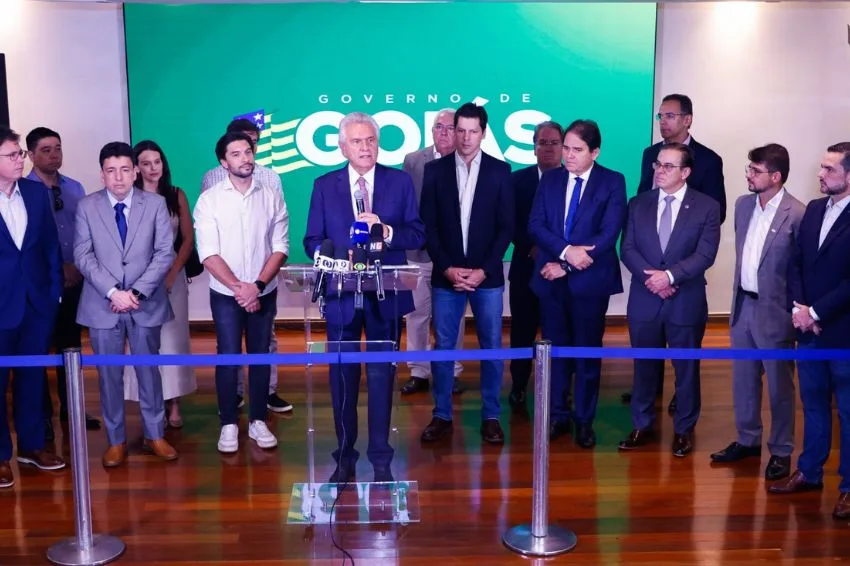
This Friday (11), Governor Ronaldo Caiado announced that the amounts charged unduly will be fully returned to consumers. The measure will benefit 256.782 taxpayers, with the refund of approximately R$31 million.
The amounts correspond to the ICMS charged retroactively for the months of September, October and November, added to the December 2024 invoice. “We are not just not charging, we are taking one more step: returning the money. It is a reduction in the generator's energy bill, which paid an additional amount in December”, stated Caiado.
The charge had been initiated in December of last year based on Federal Law No. 14.300/2022 — the Legal Framework for Distributed Microgeneration and Minigeneration —, which authorized the application of the tax. However, a lawsuit filed by the União Brasil and MDB parties guaranteed, through an injunction in the Court of Justice of Goiás (TJ-GO), the suspension of the charge from 2025.
The main argument taken to the Judiciary is that there is no commercial operation in distributed generation, since the distributor's network is used only to store and compensate energy credits, and not for actual sales.
For João Felipe Prado, president of the Goiás Distributed Generation Front, the decision positions Goiás as a national reference. “The Government of Goiás listened to our demands and responded immediately. For the entire sector, this is a very important and unique action, as in no other state has the government had such a strong role in suspending the tax that was being collected unduly,” he highlighted.
Currently, several states still charge ICMS on solar energy, applying the rate to the Distribution System Usage Tariff (TUSD) — which represents the infrastructure costs of the electricity grid, such as poles, transformers and substations.
According to data from the Brazilian Association of Photovoltaic Solar Energy (ABSOLAR), Goiás currently has 1.925 MW of installed power in distributed generation systems, occupying sixth place in the national ranking. Goiânia, in turn, is the fifth capital in the country in terms of solar energy production.
all the content of Canal Solar is protected by copyright law, and partial or total reproduction of this site in any medium is expressly prohibited. If you are interested in collaborating or reusing part of our material, please contact us by email: redacao@canalsolar.com.br.



Answers of 2
The government of the State of Ceará should take an example and end this charge here in the state of Ceará.
Waiting for other states to do the same and for city halls to explain the high prices charged for public lighting.