
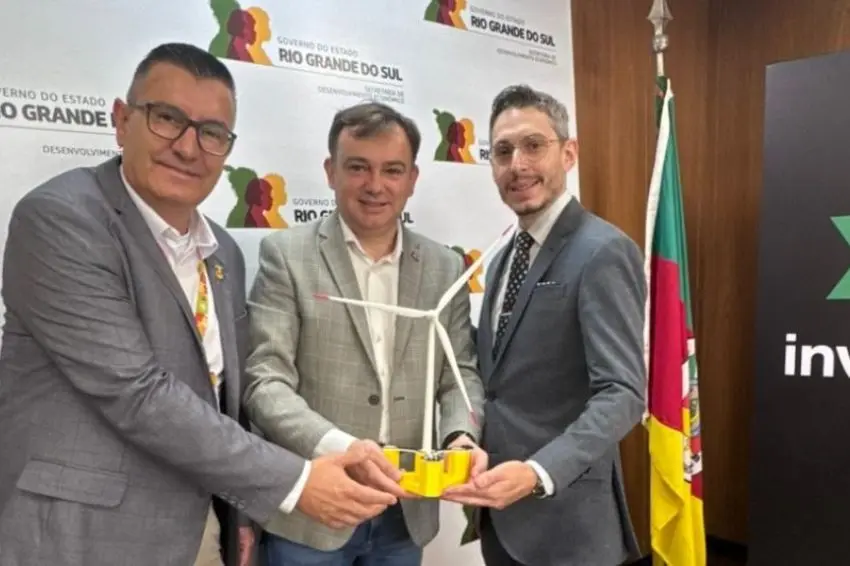
A Japanese company is preparing to deploy the first floating offshore wind energy project in Brazil, with a US$100 million investment in Rio Grande do Sul.
Named Aura Sul Wind, the project is led by JB Energy and is already in its initial phase, with plans for installation near the Port of Rio Grande and an estimated start of operations in 2029.
The structures will be installed in waters deeper than 50 meters, where conventional foundations are not feasible.
Therefore, the floating platforms will be composed of reinforced concrete modules, built in a port area and transported by tugboats to the installation and anchoring site. This model can reduce construction costs and time by up to 50%.
Installing them in areas further from the coast will also contribute to reducing the environmental and visual impact. The structures have an estimated lifespan of 25 years and require less maintenance in a marine environment.
According to the company, the choice of the state takes into account factors such as wind availability, port infrastructure, and the presence of a shipbuilding industry in the municipality of Rio Grande-RS, with experience in offshore projects and the construction of floating structures used in the oil and gas sector.
The installed capacity in the state should also support future operation and maintenance activities of offshore wind farms.
According to Rodolfo Gonçalves, CEO of JB Energy, the project will be presented to local companies, in partnership with Sinduscon-RS, for participation in the construction phases.
The initiative was also taken to UFGRS (Federal University of Rio Grande do Sul) with the aim of involving research groups in the areas of engineering and the environment. The forecast is for the generation of 5 to 10 direct and indirect jobs throughout the project phases.
"This is a very large project, which involves academia, job creation, human resource development, and industry. This is a very large project, which involves academia, job creation, human resource development, and industry," said Gonçalves.
The project already has terms of reference issued by Ibama, and the company has been conducting the environmental licensing procedures from the initial stages.
The initiative is also aligned with the guidelines for promoting renewable energy as outlined in the Economic, Inclusive and Sustainable Development Plan of Rio Grande do Sul, which includes the Natural Resources axis.
You may also be interested
Article 23 of the Bill on offshore wind farms and clean energy generation
all the content of Canal Solar is protected by copyright law, and partial or total reproduction of this site in any medium is expressly prohibited. If you are interested in collaborating or reusing part of our material, please contact us by email: redacao@canalsolar.com.br.