
• Mon, July 6, 2026
Facebook X-twitter Instagram Youtube LinkedIn Spotify
  • GC Solar: 22,51 GW
  • GD Solar: 49,74 GW
  • advertise here
  • About Us
  • Expedient
logo site solar channel
  • News
    • Market & Investments
    • International market
    • Politics & Regulation
    • Projects & Applications
    • Renewable
    • Sustainability & ESG
    • Technology & Innovation
    • Electric Vehicles
  • Articles
    • Opinion Article
    • Manufacturer's Article
    • Technical Article
  • Latam
  • Batteries
  • Blog
  • Solar Energy Companies
    • Integrators
  • Magazine
    • Magazine Canal Solar
    • Conecta Magazine
  • Firmare
  • Courses
  • News
    • Market & Investments
    • International market
    • Politics & Regulation
    • Projects & Applications
    • Renewable
    • Sustainability & ESG
    • Technology & Innovation
    • Electric Vehicles
  • Articles
    • Opinion Article
    • Manufacturer's Article
    • Technical Article
  • Latam
  • Batteries
  • Blog
  • Solar Energy Companies
    • Integrators
  • Magazine
    • Magazine Canal Solar
    • Conecta Magazine
  • Firmare
  • Courses
  • News
    • Market & Investments
    • International market
    • Politics & Regulation
    • Projects & Applications
    • Renewable
    • Sustainability & ESG
    • Technology & Innovation
    • Electric vehicles
  • Articles
    • Opinion
    • technicians
    • Manufacturer Items
  • Latam
  • Blog
  • Solar Energy Companies
  • Integrators
  • Magazine
    • Conecta Magazine
  • About Us
  • Advertise Here
  • CS Consulting
  • Courses
  • International market
  • News
    • Market & Investments
    • International market
    • Politics & Regulation
    • Projects & Applications
    • Renewable
    • Sustainability & ESG
    • Technology & Innovation
    • Electric vehicles
  • Articles
    • Opinion
    • technicians
    • Manufacturer Items
  • Latam
  • Blog
  • Solar Energy Companies
  • Integrators
  • Magazine
    • Conecta Magazine
  • About Us
  • Advertise Here
  • CS Consulting
  • Courses
  • International market
logo site solar channel
Home / News / Market & Investments / Around 300 power plants without permits will have to adapt to the new self-production rules.

Around 300 power plants without permits will have to adapt to the new self-production rules.

Lawyer warns of economic risks and the need to restructure projects.
Follow on Whatsapp
  • Photo by Wagner Freire Wagner Freire
  • July 6, 2026, at 15:23 am
4 min 38 sec read
Canal Solar - Around 300 power plants without permits will have to adapt to the new self-production rules.
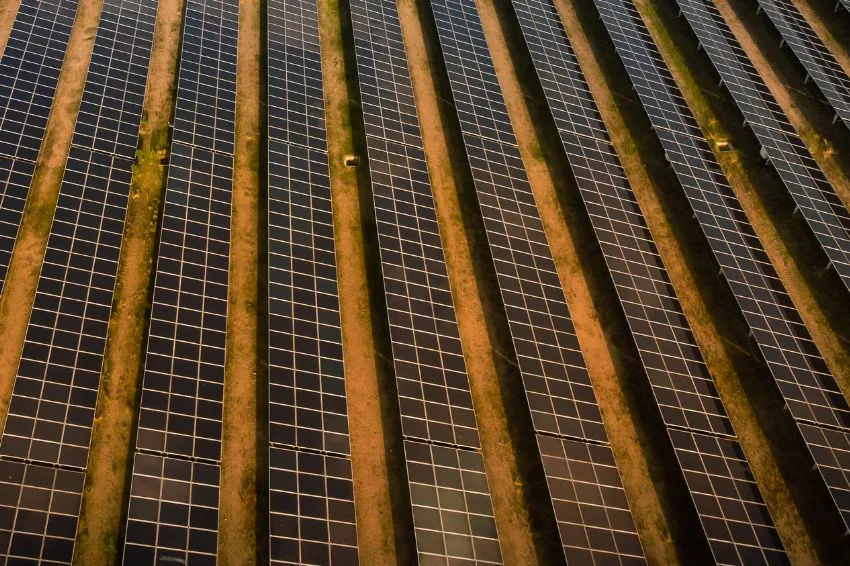
Photo: Canva

The consolidation of the understanding of ANEEL (National Electric Energy Agency) on the Application of Law No. 15.269/2025 to the self-production of energy. This has raised a red flag for approximately 300 power plants generating up to 5 MW of capacity that operate solely on registration, without authorization.

In a decision made at the end of June, the agency defined the guidelines that will guide the updating of the procedures of the CCEE (Chamber of Electric Energy Commercialization), ending one of the main doubts left by the reform of the electricity sector.

In practice, the ANEEL It was understood that self-generation has always been linked to the existence of a generation permit. Therefore, projects that operate solely with registration will have a three-year period to adapt to the new rules.

According to Matheus de Lima, a lawyer specializing in Energy Law at Martorelli Advogados, this was the main impact of the decision. "Those who follow this issue more closely realize that the net is closing in on self-generation," he said.

According to the lawyer, approximately 300 power plants, totaling about 521 MW of installed capacity, fall into this situation. "And the main impact of this decision falls precisely on the plants of up to 5 MW, which were exempt from authorization and operated only with registration," he emphasized.

What has changed?

Although Law 15.269/2025 has tightened the rules for self-production by equivalence – establishing, among other points, a minimum shareholding of 30% and an aggregate demand of at least 30 MW for new classifications – the most recent discussion has involved precisely the power plants without authorization.

Until then, Lima explains, CCEE accepted the use of these power plants in self-production structures, even without formal authorization from the... ANEEL"What was happening was that CCEE allowed these projects to be modeled with power plants that only had registration. The consolidated understanding now is that the legislation on self-production has always referred to granting of authorization. There has never been an express legal provision for registration."

According to the expert, the law did not create a new obligation, but reinforced an understanding that, according to the agency, was already present in the legislation. To avoid an immediate change, the ANEEL It established a three-year transition period, starting from the publication of Law 15.269/2025, in November 2025.

During the analysis of the process, there was disagreement among the agency's directors. Rapporteur Agnes da Costa argued that the transition should follow the validity period of the generation concessions, which is 35 years. However, the majority of directors opted to limit this period to three years.

In Lima's view, the rule avoids an abrupt disruption, but still poses significant challenges to investors. “If the change had been sudden, the scenario of litigation would be much greater. The transition period helps preserve legal certainty. The problem is that three years is still a very short time for those who structured a project thinking about long-term contracts.”

He adds that many ventures may not have recouped their invested capital when they need to completely change their structure. "Perhaps this investor hasn't even recovered their investment yet when they need to change the model. From an economic point of view, this weighs heavily."

What risks do these plants face?

In addition to the need for regulatory adaptation, entrepreneurs will have to review contracts, guarantees, corporate structure, and even how projects are structured within the CCEE (Brazilian Chamber of Electric Energy Commercialization). Depending on the case, it may be necessary to completely change the project's classification.

Despite the concerns, Lima believes that the existence of a transition period reduces the chances of legal disputes. ANEEL "The concern was to create a transition precisely to avoid greater legal uncertainty. This doesn't eliminate the economic impacts, but it reduces the risk of a completely abrupt change," he says.

According to the lawyer, the first step is to understand exactly how each project is classified. “There is no single answer. Each project has different characteristics. The first step is to make a diagnosis and understand the situation of the project. Only after that does it make sense to define the best strategy.”

Among the alternatives available to the agents are: requesting a grant, when technically feasible; migrating to the Independent Power Producer (IPP) model; restructuring contracts and commercial modeling; expanding the installed capacity of the plant to exceed the 5 MW limit, when technically and economically possible; and evaluating other self-production modalities, such as leasing or consortium.

According to Lima, any decision will require a broad analysis, involving regulatory, tax, corporate, and financial aspects. “It’s not just a regulatory decision. You need to consider all the implications of the project. Depending on the alternative chosen, the contract changes, the corporate structure changes, the business model changes. It’s an analysis that needs to be done on a case-by-case basis.”

According to the expert, the decision of ANEEL This confirms a trend that the market has been observing in recent years. "Self-production continues to exist, but it is becoming increasingly restricted to truly energy-intensive consumers. For many players, the time has come to reassess their strategy and understand which path makes the most sense going forward."

all the content of Canal Solar is protected by copyright law, and partial or total reproduction of this site in any medium is expressly prohibited. If you are interested in collaborating or reusing part of our material, please contact us by email: redacao@canalsolar.com.br.
ANEEL (National Electric Energy Agency) self-production of energy CCEE grants solar power plants
Photo by Wagner Freire
Wagner Freire
Wagner Freire is a journalist graduated from FMU. He worked as a reporter for Jornal da Energia, Canal Energy and Agência Estado. Covering the electricity sector since 2011. Has experience in covering events such as energy auctions, conventions, lectures, fairs, congresses and seminars.
PreviousPrevious

Leave a comment Cancel reply

Your email address will not be published. Required fields are marked with *

Comments should be respectful and contribute to a healthy debate. Offensive comments may be removed. The opinions expressed here are those of the authors and do not necessarily reflect the views of the author. Canal Solar.

News from Canal Solar in your Email

Posts

Growatt

Growatt launches webinar series on energy storage.

Canal Solar - Neoenergia Cosern is sued in court; Public Prosecutor's Office and Public Defender's Office allege that the company violated the acquired rights of solar distributed generation customers.

The Public Prosecutor's Office and the Public Defender's Office are taking legal action against Neoenergia Cosern for violating acquired rights in the distributed solar generation sector.

More news

Read More
Canal Solar - Transmission auction: Axia wins three lots, and Alupar acquires the main asset.

Transmission auction: Axia wins three lots and Alupar acquires the main asset.

Almost one-sixth of the energy injected into the grid was lost or stolen last year, he says. ANEEL

Almost one-sixth of the energy injected into the grid was lost or stolen last year, he says. ANEEL

Canal Solar - ANEEL It says there are regions of Brazil with no room for new projects to connect for the next 4 years.

ANEEL It says there are regions of Brazil with no room for new infrastructure developments for the next 4 years.

It is a news and information channel about the photovoltaic solar energy sector. Channel content is protected by copyright law. Partial or total reproduction of this website in any medium is prohibited.

Facebook X-twitter Instagram Youtube LinkedIn Spotify

Site Map

Categories

  • News
  • Articles
  • Interviews
  • Consumer Guide
  • Authors
  • Videos
  • Projects
  • Magazine
  • Electric Vehicles

Channels

  • About Us
  • Contact
  • Privacy
  • Quality Policy
  • Work with us
  • Expedient
  • advertise here

Membership and certifications

Copyright © 2026 Canal Solar, all rights reserved. CNPJ: 29.768.006/0001-95 Address: José Maurício Building – Mackenzie Avenue, 1835 – Floor 3, – Vila Brandina, Campinas – SP, 13092-523

We use cookies to make your experience on this site better Find out more about the cookies we use or turn them off in your .

Receive the latest news

Subscribe to our weekly newsletter

Fill in the information above and receive your free copy of Canal Solar magazine.

Canal Solar
Powered by  GDPR Cookie Compliance
Privacy

This website uses cookies so that we can provide you with the best user experience possible. Cookie information is stored in your browser and performs functions such as recognizing you when you return to our website and helping our team to understand which sections of the website you find most interesting and useful.

Cookies strictly required

Strictly Necessary Cookie should be at all times so that we can save your preferences for cookie settings.

Cookies for third parties

This website uses Google Analytics to collect anonymous information such as the number of visitors to the site, and the most popular pages.

Keeping this cookie enabled helps us to improve our website.