
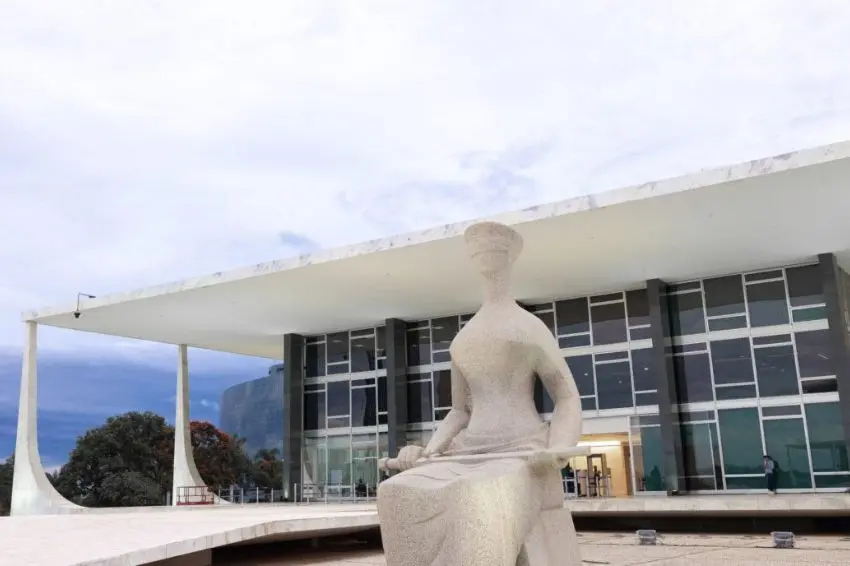
The Brazilian Supreme Court (STF) ruled that states cannot charge ICMS (Tax on the Circulation of Goods and Services) on money that the federal government transfers to electricity companies to help reduce electricity bills for low-income consumers.
The mechanism, called an economic subsidy, uses public resources to contribute to reducing energy tariffs for these families. The legal dispute arose because the State of São Paulo included these amounts in the calculation of the ICMS (a state sales tax), considering that the subsidy was part of the price of electricity.
The Supreme Federal Court (STF), however, ruled that this charge is improper, since the amount transferred by the Federal Government does not represent payment for energy consumed, but rather a public resource intended to subsidize the tariffs of these families.
The case reached the Supreme Federal Court (STF) after Siesp (the Energy Industry Union of the State of São Paulo) challenged a decision by the Superior Court of Justice (STJ) that deemed the inclusion of the subsidy in the ICMS calculation valid.
Most of the Supreme Court justices agreed with the opinion of the rapporteur, Cristiano Zanin, who understood that the subsidy is not part of the price of energy supplied to the consumer.
According to the minister, the distributors receive these funds to restore the financial balance of the concession contracts, and not as payment for electricity consumed by families.
For this reason, the money transferred by the Union cannot be included in the calculation of ICMS (a Brazilian state tax). Only Flávio Dino and Gilmar Mendes voted against this interpretation. The decision has general repercussions and should be followed by courts throughout the country in similar cases.
all the content of Canal Solar is protected by copyright law, and partial or total reproduction of this site in any medium is expressly prohibited. If you are interested in collaborating or reusing part of our material, please contact us by email: redacao@canalsolar.com.br.

Comments
Comments are moderated before publication.Comments should be respectful and contribute to a healthy debate. Offensive comments may be removed. The opinions expressed here are those of the authors and do not necessarily reflect the views of the author. Canal Solar.