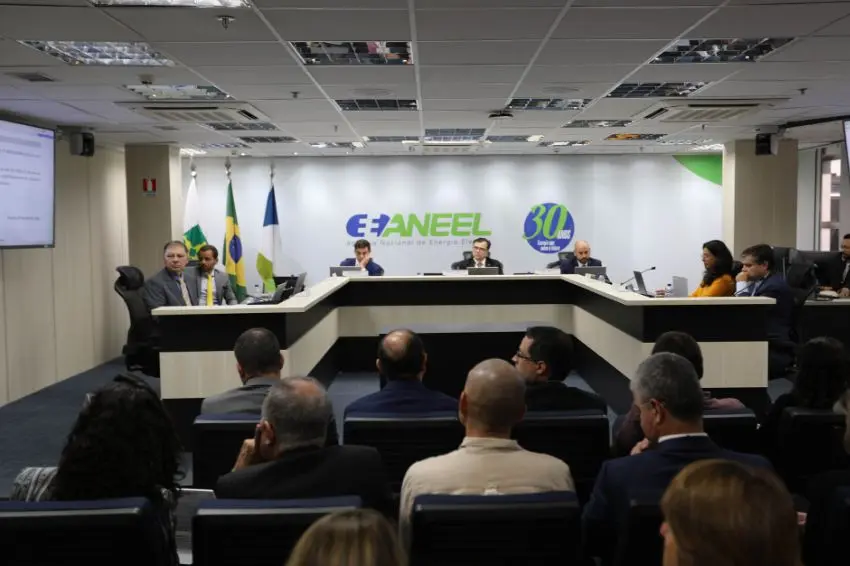

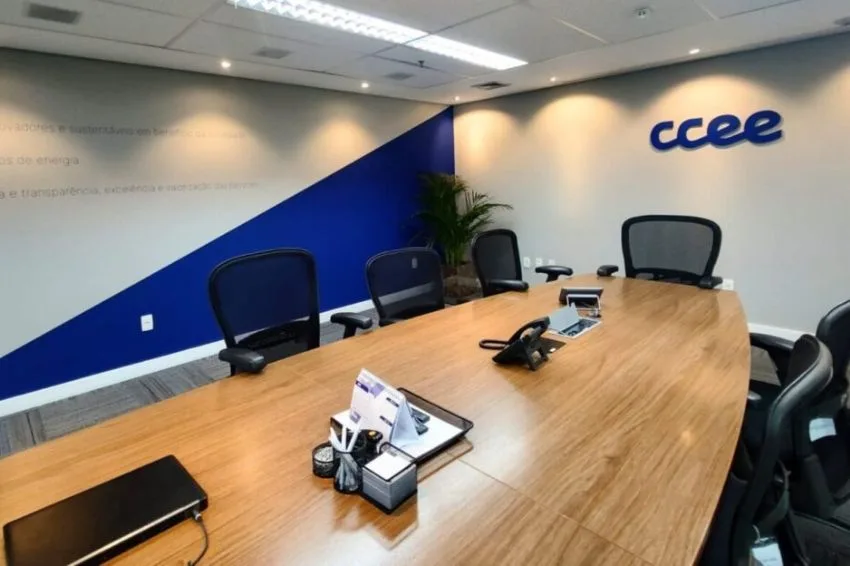
One of the most sensitive and debated topics in the Brazilian electricity sector may take a new turn in the coming days. The discussion about the new governance structure of CCEE (Chamber of Electric Energy Commercialization) has returned to the agenda with the expectation that the board of directors of ANEEL (National Electric Energy Agency) will finally present a conclusive position on the matter at the first in-person meeting of 2026, scheduled for tomorrow, the 20th.
The process, which has been dragging on for months, is under review by the agency's director-general, Sandoval Feitosa, and is being closely monitored by market players. The point of greatest tension is the new composition of the CCEE's board of directors. The original proposal seeks to increase the government's direct influence, allowing the ministry to appoint the chairman and a majority of the board members.
Aneel's statement is seen as critical to unlocking an agenda considered strategic. The definition of CCEE's governance involves not only formal aspects of administration, but has direct repercussions on the conduct of the energy market, institutional security, and the balance between the different interests represented in the chamber.
History of controversies
Discussions surrounding the topic intensified starting in 2024, when disagreements arose regarding the composition and operational model of the new CCEE Board of Directors presented by the MME (Ministry of Mines and Energy).
The issue has taken on political and regulatory dimensions, with questions raised about nomination criteria, representativeness of the segments, and the role of... ANEEL in the process of validating the new structure.
The market fears that a private entity, maintained exclusively by contributions from generators, traders, and consumers, could lose its technical autonomy and instead serve government agendas, compromising the impartiality necessary for the financial settlements of the system.
The process has since undergone successive postponements and deadline revisions. The absence of a definitive decision has fueled uncertainty in the market, especially because CCEE occupies a central position in the operationalization of electricity trading in the country.
For stakeholders, associations, and experts, prolonged uncertainty weakens the sector's governance and increases the risk of political interference in an environment that demands predictability and institutional neutrality.
The formal resumption of the process to appoint members to the new council, with the redefinition of deadlines, has put the issue back on the regulatory agenda. Nevertheless, concerns persist regarding the outcome and potential consequences of a decision that fails to balance technical and institutional interests.
Any perception of institutional fragility or political capture tends to generate distrust, with potential impacts on investments and long-term decisions.
Transfer from EMAE
The agenda for the first in-person meeting of the board of directors of ANEEL This year's agenda also includes the annual tariff adjustment for Roraima Energia, which will take effect from January 25, 2026.
Furthermore, there is the opinion on the process of transferring EMAE (Metropolitan Water and Energy Company) to the control of Sabesp (Basic Sanitation Company of the State of São Paulo), as well as a Request for a Precautionary Measure aimed at suspending the reimbursement for constrained-off payments to wind and solar power generators as a result of... Lei nº 15.269/2025.
all the content of Canal Solar is protected by copyright law, and partial or total reproduction of this site in any medium is expressly prohibited. If you are interested in collaborating or reusing part of our material, please contact us by email: redacao@canalsolar.com.br.